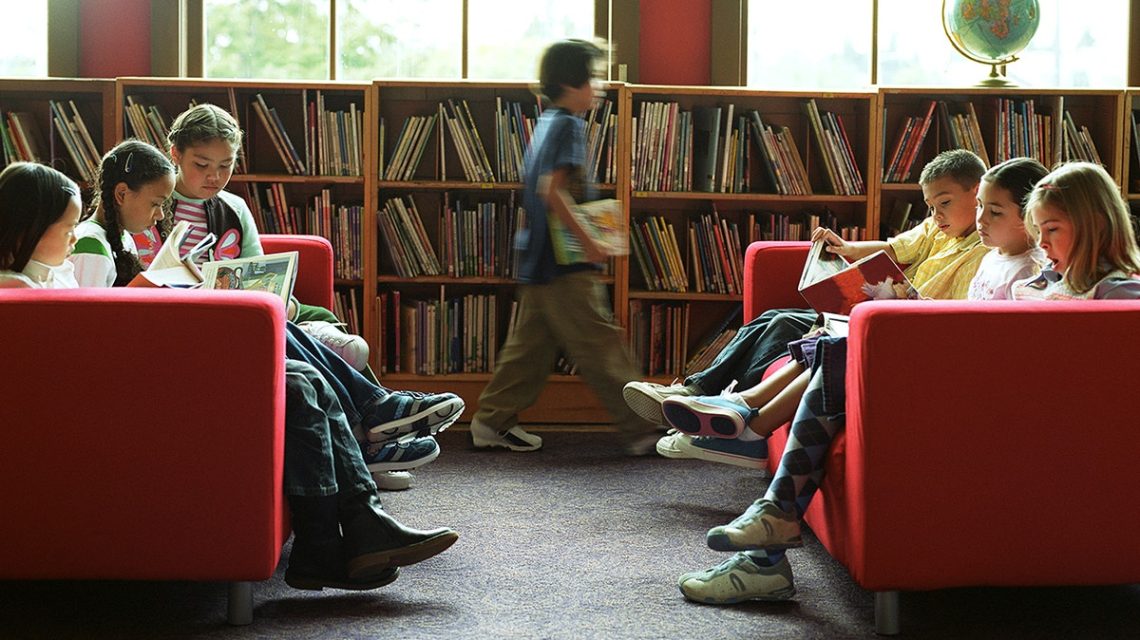
September has arrived. Children are back in school, routines settled, and reading lists established. What’s being read? Government school textbooks, often committee-designed with specific agendas, range from uninspiring to overtly agenda-driven. Alternatively, much of children’s curriculum may present through lifeless and impersonal computer screens.
However, there’s another path. Over a century ago, British 19th-century reformer Charlotte Mason (1842-1923) revolutionized children’s education. Though largely unknown in public schools, Mason’s ideas profoundly influence homeschooling in America. Her approach offers valuable insights for all educators and parents.
Mason’s ideas extend beyond homeschooling. Her thoughts on children and reading remain relevant. She championed exposing students to great books rather than ordinary textbooks. This enriches learning far beyond the dullness of standard educational materials.
Mason aimed to inspire a thirst for knowledge and a lifelong love of learning. Her belief: children need mental nourishment of ideas like the physical nutrients vital for life. Rather than conventional textbooks, exposure to great art, music, and books of high literary quality were essential.
Textbooks in public schools often lack depth or subtly push agendas. Mason contended that great ideas arise from consistently engaging with art, music, and particularly, books. She stated, “For the best thought the world possesses is stored in books … anything less than the best is not good enough.” Books should be vibrant, engaging, and written by a single passionate author.
Examples include “The Trumpet of the Swan,” “Black Beauty,” and “A Little Princess” for young readers. Middle schoolers benefit from “My Side of the Mountain,” “Around the World in 80 Days,” and “To Kill a Mockingbird.” High school students can delve into “Pride and Prejudice,” “David Copperfield,” and “The Lord of the Rings” trilogy.
These books spark curiosity through genuine authorship. Unlike textbooks, authors engage students with stylistic narratives, drawing them into plots and characters, stimulating imagination and emotions.
For example, “My Side of the Mountain” and “To Kill a Mockingbird” intertwine complex concepts within approachable narratives, aiding children’s connection and identification with the material. Children can recollect these details and themes long after returning the book to the shelf.
Such books introduce challenging vocabulary, expanding young readers’ language skills. Contrary to the misconceptions of some educators, texts like Dickens’s novels or the King James Bible enrich rather than repel young minds, enhancing their grasp of English and supporting their intellectual growth.
E. B. White, known for classics like “Charlotte’s Web,” believed in challenging readers with words like “radiant” and “humble,” convinced of children’s capabilities.
He stated, “You have to write up, not down. Children are demanding … Children are game for anything.” Living books transform student learning from passive memorization to active engagement, developing lasting communication and analytical skills.
Consider introducing living books to children. Works like Louisa May Alcott’s “Little Women” teach values of family, sacrifice, and generosity; Mark Twain’s “The Adventures of Huckleberry Finn” discuss friendship, loyalty, and moral courage.
Charlotte Mason emphasized, “Education is an atmosphere, a discipline, a life.” Embracing living books can restore this vision not only for children but for everyone.
Beth Herman is a visiting fellow at Independent Women’s Education Freedom Center, completing her master’s degree in Classical Education at the University of Dallas.
 David Madigan Appointed as USC’s Chief Academic Officer
  North American Values Institute Questions Pittsburgh Schools’ New Curriculum
  Debate Over Proposed English-Only Rule for Head Start Programs
  Impact of Removing Regents Requirement on Education
  Impact of College Rankings on Lesser-Known Institutions
  Evaluating Accountability in Missouri’s Education System