
As artificial intelligence technology progresses, more people are using it to manage tasks on their behalf. This brings the question: Are we ready for a world primarily dominated by machine interactions?
The A.I.-Driven Job Market
If you haven’t applied for a job recently, the typical process might surprise you. On one side, job seekers employ A.I. chatbots for creating resumes and cover letters. On the other, employers rely on A.I. to sort through these applications. Both sides claim they need these tools to keep pace. However, the outcome often seems impersonal and frustrating. The question arises: Are these tools helping people better connect?
A.I. in Everyday Interactions
This phenomenon is evident in numerous areas. For instance, a high school student might use A.I. to draft an essay submitted to a teacher, who then grades it with A.I. Or someone uses a chatbot for a witty message to a romantic prospect, only for the recipient to respond using another chatbot. Similarly, someone could engage with a company’s automated customer service using their own A.I. agent.
“We’ve officially reached the point where customer support is just two large language models locked in a recursive loop of ‘I understand your concern,’ while the actual humans on both ends just watch the credits roll,” a Reddit user mentioned.
In recent years, many have adjusted to the idea of chatbots as conversational partners. But as A.I. becomes integrated into daily tasks, these interactions often lead to what can be dubbed “bot loops” — situations where both parties in an interaction rely on A.I.
Future of A.I. Interactions
Some people see potential in these bot-driven interactions for enhancing work efficiency and personal lives. An example is an A.I. voice agent handling a call to the Department of Motor Vehicles on behalf of its human owner. If another A.I. agent answers, that could save a trip to the DMV.
Whitney Wolfe Herd, CEO of the dating app Bumble, predicted A.I. personas could go on dates and relay the outcomes back to users. One colleague who tried this experiment found it less than successful, emphasizing the challenges and possibilities for improvement.
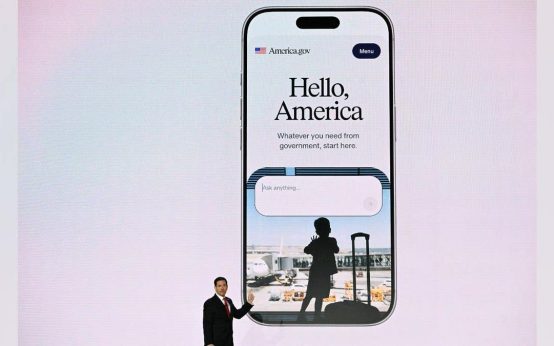 Trump Unveils AI-Powered America.gov Platform
  Trump’s 2024 Campaign Targets Young Men Through Cryptocurrency
  How Modern Windows Improve Home Insulation
  State Department Simplifies Passport Process with Online Applications
  Senate Democrats Block Data Center Bill Over Efficiency Concerns
  Future Cities: Ambitious Projects Aiming for Innovation and Sustainability