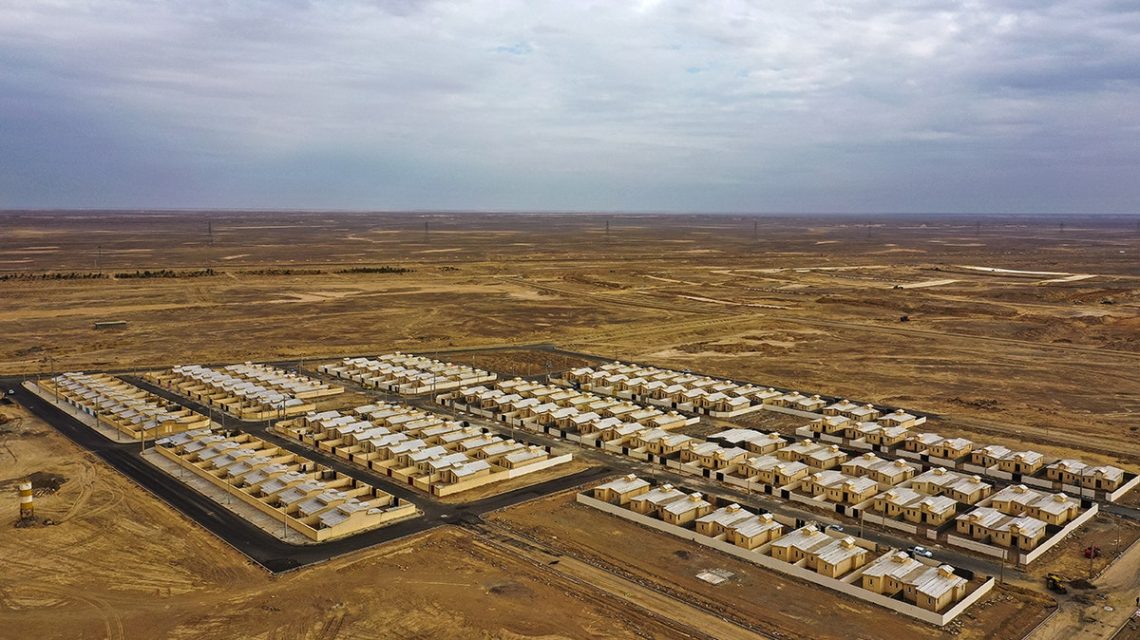
An Iranian opposition coalition has intensified armed attacks against the clerical regime in the southeastern provinces of Sistan, Baluchistan, and Kerman. This coalition, known as the People’s Fighters Front (JMM), has executed six notable strikes. These actions have raised concerns about potential instability in these areas and whether armed resistance might expand further in Iran.
Sistan and Baluchistan is a Sunni-majority province within Iran, a predominantly Shiite Muslim nation. The Iranian Sunni population has historically faced discrimination. As Iran’s second largest province, this area has become a focal point for recent unrest. Mardo Soghom, an Iran expert, suggested these conflicts could strain the regime’s military and security operations.
The involvement of foreign adversaries in supporting these forces remains unclear, with speculations about Gulf Arab states, Israel, or the U.S. potentially playing a role. In late 2023, human rights reports indicated a rise in violent incidents in the region, with 18 recorded violent acts within a brief reporting period.
The JMM coalition formed in 2025 through the collaboration of Baloch nationalist organizations and the militant group Jaish al-Adl. Data from the Human Rights Activist News Agency (HRANA) showed 63 armed incidents between March and October 2026, resulting in at least 94 deaths.
The coalition stunned the regime with targeted assassinations, including high-profile members of the Basij paramilitary. The Basij is considered a terrorist group by the U.S. because it falls under Iran’s Islamic Revolutionary Guard Corps (IRGC).
Jason Brodsky, from United Against Nuclear Iran (UANI), noted increased unrest in Sistan and Baluchistan, viewing it as a security concern. Brodsky emphasized the importance of preserving Iran’s territorial unity. The Artesh, Iran’s regular military, operates separately from the IRGC and Basij, focusing on traditional military branches.
According to Baluch activist Khalilullah Balochi, the intensification of attacks marks a shift in the regional resistance landscape. Navid Mohebbi, a Persian media analyst, stated the JMM’s attacks have drawn public attention due to their targeting of mid-level officials and security personnel. These actions occur amidst increasing executions by the Iranian government.
Despite the JMM’s efforts, Mohebbi cautioned that the Iranian public remains wary of the coalition. Distrust stems from fears of separatism and radical Islamist influences. However, the JMM’s recent statements avoid separatist rhetoric, focusing instead on dismantling oppressive regimes.
Beni Sabti of the Institute for National Security Studies in Israel highlighted the coalition’s substantial armament and its regional impact. Despite limitations to the Baluchistan region, Sabti described an ongoing armed rebellion. Challenges remain in obtaining accurate information due to scarce media presence.
Benjamin Weinthal, reporting on the situation, suggests that while the JMM can continue sporadic attacks, their reach remains restricted to regional boundaries. For further details, follow him on Twitter @BenWeinthal or contact him at [email protected].
 In-Flight Altercation on Qatar Airways Leads to Police and FBI Response
 Virginia Residents Sue Over Alleged Immigration Violations
 Updates on Key International and Domestic Events
 Pope Leo XIV Completes South American Tour with Farewell Mass in Peru
 President Trump’s Critical Asia Trip: Key Meetings and Implications
 U.S. Plans to Restrict AI Chip Exports Before Trump-Xi Meeting