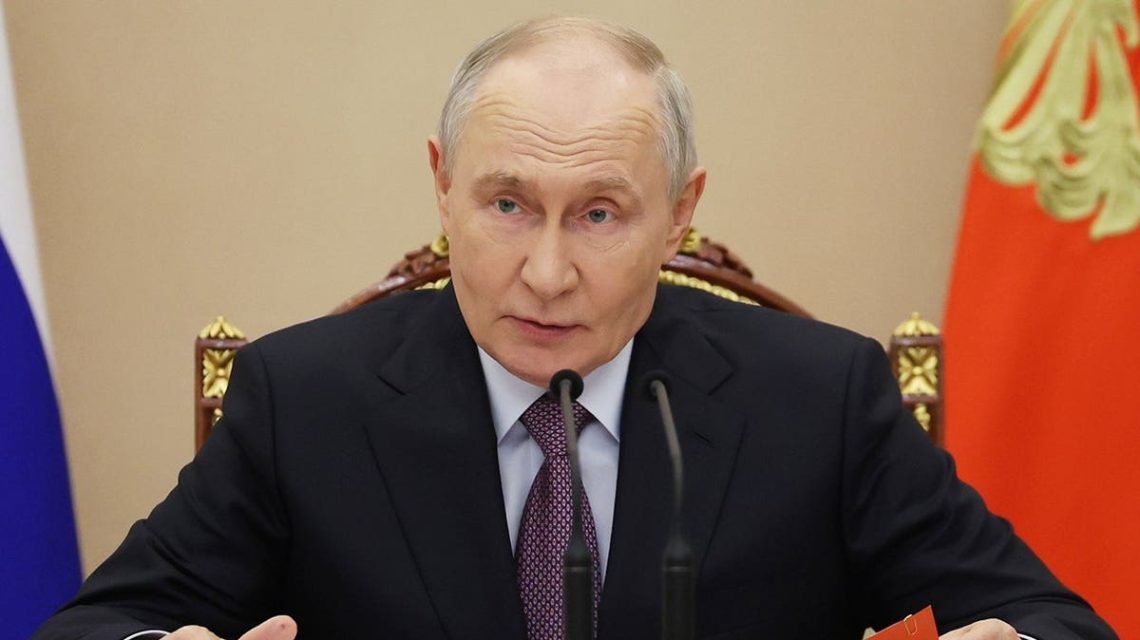
Recent reports highlight that Russian President Vladimir Putin could potentially target a NATO member in the coming years. This information stems from new U.S. intelligence findings, according to The Wall Street Journal.
Previously, U.S. intelligence believed Putin would avoid engaging with NATO countries amid the ongoing conflict in Ukraine. However, as Ukraine makes progress, Putin seems to be seeking a victory, increasing tensions with NATO. For instance, a drone incident hitting a Romanian apartment building in May, followed by cruise missiles landing in Poland, indicates possible probing tactics.
Understanding NATO’s Article 5
Article 5 of NATO is a collective defense clause. It states that an attack on one member is considered an attack on all allies. Current assessments suggest any potential Russian assault would be limited, ranging from cyberattacks to small-scale incursions, focusing on the Baltics or Poland. Such actions could occur anytime between this fall and 2029.
Heather Conley, senior fellow at the American Enterprise Institute, noted the uncertainty about the U.S. response. She emphasized that Russia aims to challenge NATO’s credibility by attempting to separate the U.S. from its allies.
NATO’s Preparedness and Skepticism
Some reports claim the U.S. munitions stockpile is strained due to supporting Ukraine and engaging in actions related to Iran. Chief Pentagon spokesman Sean Parnell refuted these claims, asserting the U.S. has sufficient resources at its disposal to defend interests decisively. He warned adversaries not to mistake media reports for American vulnerability.
The least likely scenario is a land incursion, as it would invoke Article 5. Yet, responses to cyberattacks remain ambiguous, posing a crucial challenge for NATO in avoiding escalation.
A recent report indicates Russia’s use of a ‘shadow fleet’ to probe NATO’s drone defenses further complicates the situation. Polish authorities investigating a suspected missile site following strikes in Ukraine demonstrate the ongoing friction.
Col. Martin O’Donnell, a NATO spokesperson, expressed that NATO continually prepares for potential scenarios, committing to deterrence and defense strategies.
 Dutch Review Board’s Euthanasia Ruling and International Debate
  Israeli PM Commends Heroic Actions in Flight Emergency
  Rabbi and Jewish Leaders Criticize Adam Brody for ‘Genocide’ Comment
  Flydubai’s Emergency Landing Highlights Cockpit Security
  Former Israeli PM Naftali Bennett Commends Passengers and Crew for In-Flight Heroism
  Diplomatic Complexities Unfold at U.S. National Archives Visit