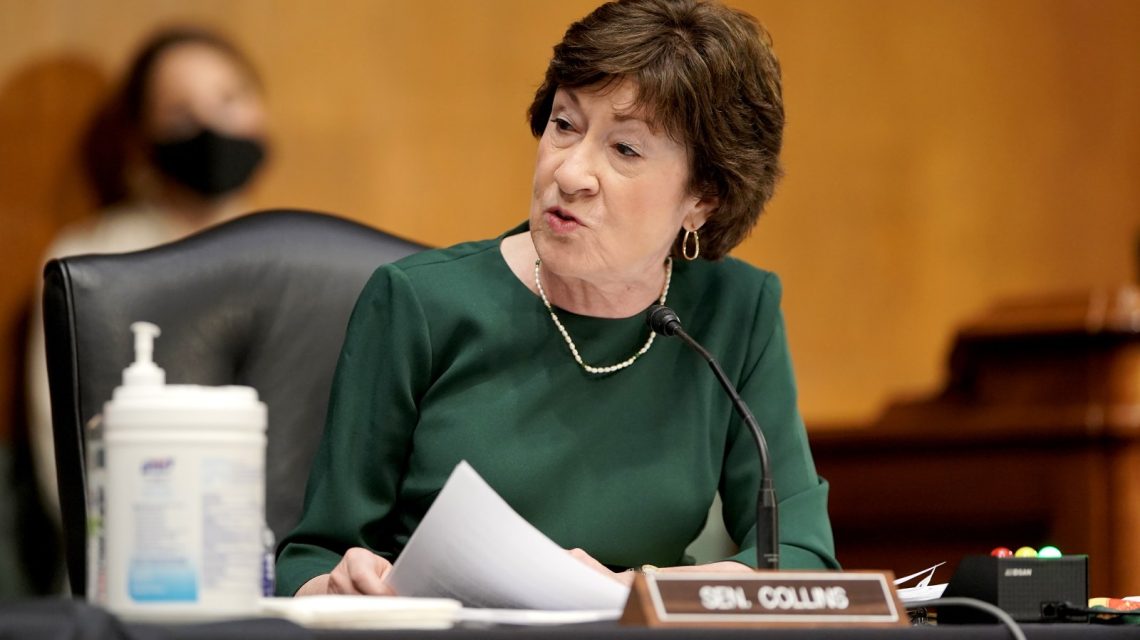
Senator Susan Collins has criticized the Trump administration for what she views as a move to politicize federal health research funding. This dispute concerns control over National Institutes of Health (NIH) grants and comes during a highly competitive reelection campaign for Collins. Recent polls indicate a tight race against Democrat Troy Jackson, with a CNN/SSRS poll showing Jackson slightly ahead at 48 percent to Collins’ 45 percent. Major election analysts consider the race a toss-up.
The tension arose following a report by The Washington Post stating that President Donald Trump might issue an executive order to form a commission that would review NIH grants. This could give political appointees influence over how the NIH distributes its nearly $50 billion in biomedical research funding. White House budget chief Russell Vought criticized the NIH, arguing it funded initiatives conflicting with Trump’s priorities.
Collins Challenges White House
In a statement, Collins warned that the proposal would overstep boundaries. “The Office of Management and Budget (OMB) should not influence agency grant awards,” Collins stated. She emphasized that any political involvement in NIH grantmaking contradicts congressional intent.
Collins argued that inserting political reviews into the NIH’s grantmaking process could undermine the existing system based on scientific merit. “Subjecting awards to political review after a thorough scientific evaluation erodes the principle of funding based on scientific merit, not political ideology,” she added.
The statement followed concerns from bipartisan congressional leaders. Collins, alongside Senate Appropriations Committee Vice Chair Patty Murray and House Appropriations Committee member Rosa DeLauro, pushed back against expanding White House control over NIH grants.
Grant Fight Started Months Ago
Collins has been against this approach since July. In a letter to Vought, she urged the OMB to retract portions of a proposed rule affecting grant-making. Collins argued that the rule would hinder scientific research and impose burdens on small communities. Her concerns centered on potential additional reviews by political appointees tasked with aligning research with the President’s priorities.
She highlighted that unplanned grant terminations might disrupt long-term studies and impact patients relying on those research projects. For instance, halting clinical trials could leave patients without treatments and cause significant financial losses.
These ongoing concerns explain Collins’ strong opposition to the potential executive order regarding NIH grant processes.
Oval Office Clash Reported
The controversy peaked during an Oval Office meeting involving Trump, Vought, and NIH Director Jay Bhattacharya. Reports indicated debates over NIH continuing to fund projects clashing with the administration’s agenda. Bhattacharya defended NIH’s review process. An NIH spokesman affirmed their commitment to biomedical research funding and rejected suggestions of budget cuts.
Further reports on drafting an order for a committee with authority over grant decisions caused additional friction between OMB and NIH. Vought pushed for more oversight of what he termed “woke” grants, while Bhattacharya has pledged to allocate congressionally approved funds.
A congressional resolution temporarily delaying the proposed OMB grant-making rule underscores legislative resistance to these changes. Collins reiterated that utilizing an executive order to achieve similar ends defies congressional intent.
Bipartisan Opposition Emerges
Lawmakers from both parties criticized the proposal. “Decisions about funding lifesaving research should be based on scientific merit, not political influence,” stated Murray. She warned that political intervention could jeopardize essential research without scientific cause.
Murray accused Trump of politicizing scientific funding and called on Republicans to resist any efforts aimed at politicizing medical research funding, whether through an OMB rule or executive order.
Maine Race Remains Tight
The NIH funding dispute unfolds as Collins faces a challenging reelection campaign. Polls reflect a competitive race with her opponent Jackson. A CNN/SSRS poll indicated a mixed favorability rating for both candidates, alongside significant disapproval of Trump in Maine.
Various polls, including those from Fox News and the University of New Hampshire, show Jackson holding a slight edge over Collins among likely voters. However, Collins has shown resilience in past elections, often overcoming negative polling. This record includes her 2020 Senate victory despite trailing her opponent in most pre-election surveys.
For more information, contact Newsweek editor Edward T. Cummins.
 Significant Funding Boosts Ken Paxton’s Texas Senate Campaign Amid Tight Race
  U.S. States Extend Gas Tax Waivers Amid Rising Fuel Costs Due to Iran Conflict
  USCIS Raises Immigration Fees
  The Surveillance Threat to U.S. Federal Agents
  Trump Administration Distributes ACA Refund Checks
  Trump Administration’s Approach to Illegal Alien Deportations