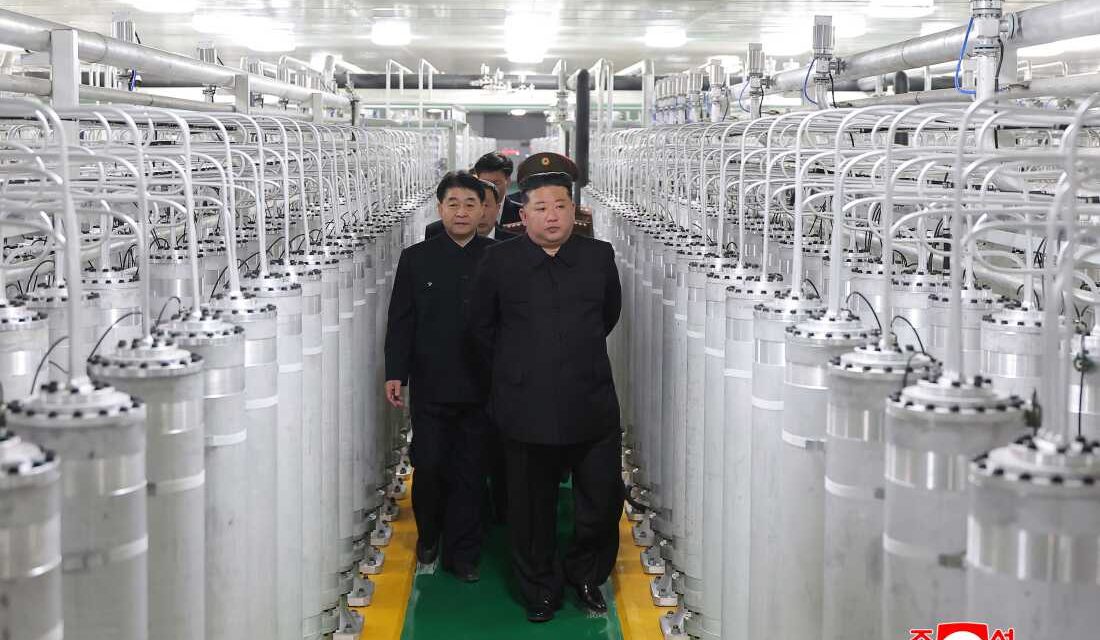
South Korea is revising its approach towards North Korea’s nuclear capabilities. President Lee Jae Myung acknowledged a ‘harsh reality,’ prompting a shift from demanding full denuclearization to freezing the current nuclear program. This policy change involves reciprocal concessions and focuses on stopping further development of nuclear weapons rather than dismantling existing arsenals.
The adjustment comes as North Korea strengthens relations with Moscow and Beijing. Ukrainian President Volodymyr Zelenskyy announced plans for Russia to receive 30,000 North Korean troops for its conflict with Ukraine. International consensus on pressuring Pyongyang seems less coordinated now. President Trump’s language describing North Korea as a ‘nuclear power’ contrasts with previous U.S. stances. The latest National Security Strategy did not acknowledge North Korea or denuclearization, diverging from past doctrines. China’s President Xi Jinping also recently omitted mentioning denuclearization during a visit to Pyongyang, veering away from China’s typical nuclear-free Peninsula support.
North Korea continues to rebuff denuclearization calls, with Kim Jong Un’s sister, Kim Yo Jong, labeling nuclear arsenal expansion as an ‘irreversible final conclusion.’ She dismissed ASEAN’s calls for denuclearization, stating the concept is outdated. According to Lee Ho-ryung of the Korea Institute for Defense Analyses (KIDA), reversing the nuclear program would incur significant political and military costs for North Korea. Kim Jong Un has enshrined nuclear status in the nation’s constitution, marking a significant achievement distinguishing him from his predecessors.
International sanctions have weakened, making it less costly for North Korea to maintain nuclear arms. China and Russia face accusations of undermining sanctions by supplying petroleum and importing coal from North Korea, contravening UN sanctions. Both reject these claims. North Korea’s capabilities are growing. Kim Jong Un indicated a doubled production capacity for weapons-grade fissile material over five years. Estimates suggest the nation possesses 60 nuclear warheads with the potential for at least 30 more. The Stockholm International Peace Research Institute indicates diversification in delivery systems, spanning naval and tactical forces.
Despite South Korea’s shift, experts doubt North Korea will negotiate for peace and stability on the Korean Peninsula. Seoul’s goal is to reduce military tension and advocate for coexistence, hoping to eventually persuade the North towards denuclearization. KIDA’s Lee Ho-ryung views Seoul’s policy change as largely rhetorical with no substantial difference from prior strategies. North Korea’s strengthening alliance with Moscow raises further skepticism about its return to negotiations. Professor Yang Moo-jin notes the war between Russia and Ukraine has emboldened North Korea and Kim Jong Un. Russia’s Foreign Minister, Sergey Lavrov, explicitly endorsed North Korea’s nuclear force right. Lavrov stated denuclearization of North Korea is irrelevant for Russia, stressing that North Koreans see nuclear armament as essential for sovereignty protection.
 Activists Push for Nationwide Ban on Child Marriage in the U.S.
  Democratic Hopes and Historical Warnings in 2026 Senate Race
  Republicans Face Challenges Amidst Cost of Living Concerns
 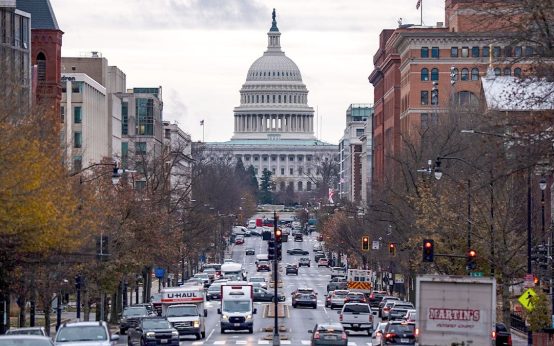 A Different Kind of Fall for Congress This Year
  Investigation into Alleged Incident at Cornell University
 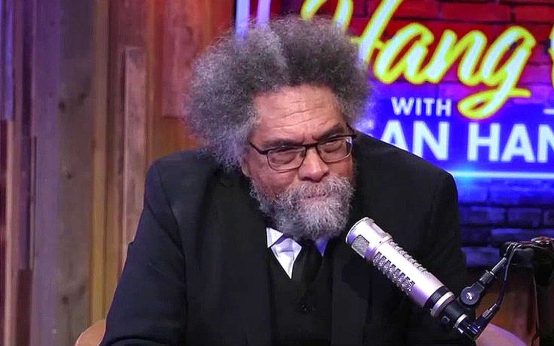 Cornel West and Sean Hannity Discuss Differences on Podcast