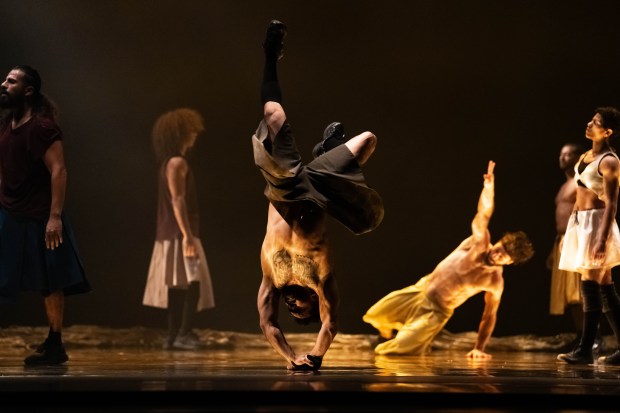
Choreographer Hervé Koubi’s latest work, “Sol Invictus,” is described as a “manifesto for life.” This ambitious creation was showcased by Koubi’s company during its Chicago premiere at the Harris Theater. Koubi expressed his goal for the piece as “bright, generous, universal.”
The French dance company primarily engages with street dance forms. During a personal journey to Algeria, Koubi absorbed these influences to reconnect with his cultural roots. This cultural exchange has birthed a unique style of breakdancing in Algeria that many American viewers might recognize.
The performance features 16 extraordinary performers. Koubi purposefully selected a diverse group of dancers from different nationalities; they represent countries or faiths historically at odds with one another. This adds a deeper layer of meaning, transforming the performance into an act of unity and joy.
In “Sol Invictus,” traditional B-boy tricks blend with playful elements reminiscent of childhood, such as skips, cartwheels, and somersaults. These movements are interspersed with gestures from capoeira, the Afro-Brazilian martial art, creating an energetic and dynamic piece.
The choreography draws on folk dance styles from around the globe, creating a sense of a communal celebration. The dancers synchronize in duets, trios, and quartets, offering surprising and delightful visuals that hold the viewer’s attention.
The sound score adds depth to the experience, featuring compositions by Swedish composer Mikael Karlsson, Maxime Bodson from Brussels, Steve Reich, and Beethoven. The funeral march from Beethoven’s Symphony No. 7 marks one of the darker moments in the piece.
While the choreography feels cohesive in its diversity, pacing is a challenge. At 90 minutes, the performance may seem prolonged and repetitive in parts. Breaks appear in the form of artistic tableaux framed by periods of darkness.
The piece, named for the Roman sun god Sol Invictus, aims to envelop its audience in warmth and brilliance. Much of this effect is due to the lighting design by Lionel Buzonie. A significant prop, an expansive piece of billowy gold lamé, acts as a central focus, enhancing the visual impact toward the end of the performance.
This shimmering fabric transforms the stage into a space where diversity in dance thrives, embodying the notion that people who “are absolutely not supposed to dance together” find harmony. Through “Sol Invictus,” Hervé Koubi offers a vision of unity and vitality.