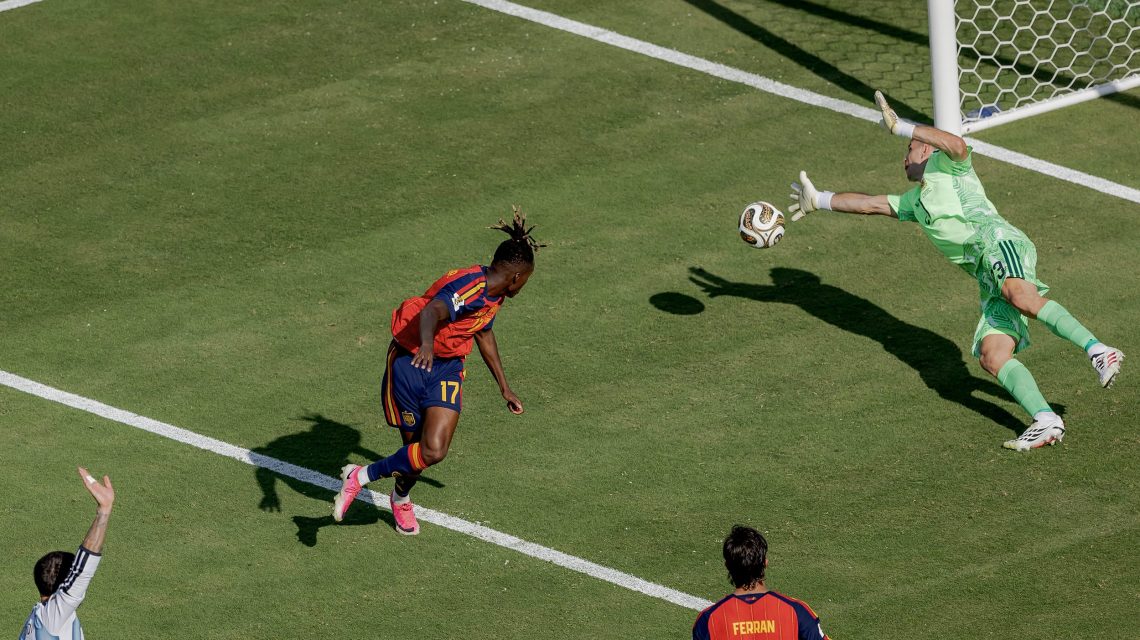
Spain clinched their second World Cup title with a late goal, reflecting their past success in 2010 when Andrés Iniesta scored the decisive goal against the Netherlands. In the 2026 final in New Jersey, Ferran Torres netted the winning goal in the 106th minute, becoming only the second substitute to score a winning goal in a World Cup final.
Spain’s Future Prospects
With Argentina’s loss, no country has reclaimed consecutive World Cup championships since Brazil’s victories in 1958 and 1962. Spain now has the chance to achieve this feat in the 2030 tournament. In 2014, as defending champions, Spain was eliminated in the group stage, but they have since rebuilt and shown strong performances.
Messi’s Future Uncertain
Lionel Messi indicated that this World Cup would be his last, as he will be 43 by the next tournament in 2030. Although he suggested the 2022 World Cup was his final major event, it remains possible he might participate in the 2028 Copa America.
Final Match Recap
Spain dominated the final with a 1-0 victory over Argentina, holding Argentina without a single shot on goal. Spain maintained a defensive stance throughout the tournament, conceding only one goal. Torres’ goal sealed the win as Argentina was reduced to 10 men, preventing them from winning back-to-back World Cups and potentially marking the end of Messi’s illustrious international career.
Key Moments in the Match
Lionel Messi’s chance from a corner saw Giuliano Simeone’s volley fly over the goal. Mikel Merino played a significant role in blocking a powerful Messi shot with his head, requiring medical evaluation afterward.
Spain’s decisive moment came from Torres, who capitalized on a pass from Nico Williams just after the second-half water break.
With Spain’s relentless attacks, Argentina aimed for penalties, opting for a defensive strategy by introducing another center-back and changing their formation.
Tactical Play and Game Dynamics
The game saw an intense defense from Spain and tactical plays that kept Argentina at bay. When a Spanish goal by Nico Williams was ruled out due to Merino’s foul, the match’s officiating decisions sparked controversy. Nonetheless, Spain continued to attack and capitalize on their man advantage, while the Argentine team gradually grew more frustrated.
Spain’s advantage increased after Enzo Fernández received a red card, reducing Argentina to 10 men. This defensive struggle saw Spain consistently pressing for a goal, aiming to find the net within the extra time.
The match had entered extra time, with both teams vying for the winning goal. Fans were on edge, anxious to see if Spain could break the deadlock.
Highly-anticipated Performance Intermission
The first-ever World Cup halftime show featured artists like Justin Bieber, Madonna, Shakira, and BTS, adding a new dimension to the event. Youngest fans, like Lamine Yamal’s brother, also captured hearts during this tournament with their endearing presence.
Additional Highlights
Argentina’s challenges were compounded by a strong Spanish defense. Spanish players like Dani Olmo utilized spaces effectively, threatening continuously. Argentina, on the other hand, strived to create holes in Spain’s steadfast defense through physical play.
Despite continuous pressure, Argentina’s defense held off most of Spain’s attempts, thanks to Émiliano Martínez’s impressive saves, including crucial stops from Nicolás Otamendi.
Messi’s quiet first half reflected Spain’s thorough defensive strategy, making it challenging for Argentina to capitalize on opportunities.
 British Police Arrest Man Suspected of Terror Plot
  Nick Saban’s Comments on ESPN Spark Debate Over College Sports Regulations
  Activists Push for Nationwide Ban on Child Marriage in the U.S.
  Freddy’s American Adventure: From Soccer to College Football
  Investigation into Alleged Incident at Cornell University
  Rising Drone Threats Highlight Vulnerabilities in Moldova’s Airspace Defense