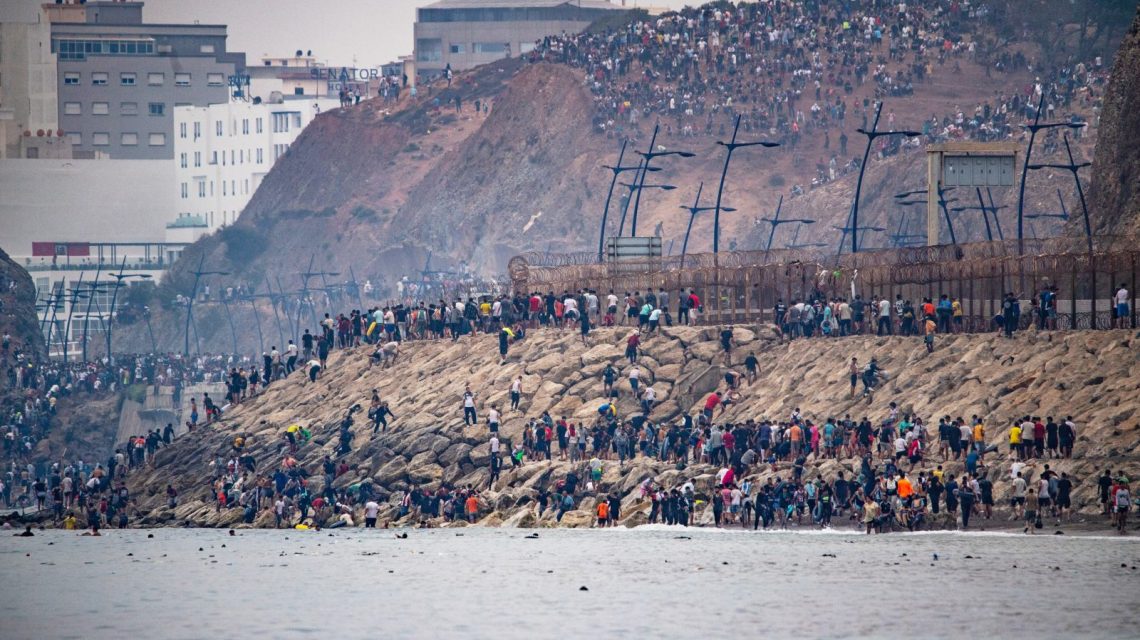
Spanish Prime Minister Pedro Sánchez has criticized certain European allies regarding their “selfish, polarizing and unlawful” actions in response to a migration crisis in Ceuta, a Spanish enclave in Africa. Sánchez argues that suggestions to suspend Spain from the Schengen area are associated with “prejudice, fake news, ignorance or political interest.” Over recent days, between 50,000 and 60,000 migrants have entered Ceuta from Morocco, but most have since returned home, according to Spain’s interior ministry.
The Spanish government reported that 67 individuals have died due to the crisis. Causes of death include drowning and a stampede near a breakwater.
Sánchez’s Response and Actions
In a correspondence with European Commission President Ursula von der Leyen, Sánchez stated his administration successfully restored border control within 48 hours, offered humanitarian aid, and repatriated “virtually all” irregular entrants. Cooperation with Moroccan authorities was crucial, although Spain received “very little support” from other European nations.
Italy has briefly reinstated border checks on arrivals from Spain, and officials from Finland and Denmark have advocated for Spain’s suspension from the Schengen area due to crisis handling. Despite Ceuta being surrounded by Moroccan territory in North Africa and separated from mainland Spain by sea, there is no evidence indicating migrants traveled from Ceuta to the mainland.
The Letter’s Content
Sánchez used his letter to affirm Spain’s migration record, asserting that national policies have “dramatically” reduced irregular entries, establishing Spain as the “second most secure external border in the EU.” Between 2021 and 2026, Spain recorded half as many irregular entries as Italy.
Spain has supported other member states during past migration emergencies, such as accepting individuals reaching Eastern Europe via Belarus in 2021 and arrivals on Italy’s Lampedusa island in 2023. Sánchez highlighted the importance of EU unity and asked the Irish presidency of the EU Council to organize an urgent videoconference of interior ministers to create a “common response” to such crises.
Europe’s Division
The crisis has uncovered divisions in Europe regarding border management and support for front-line countries. Italian Prime Minister Giorgia Meloni, alongside leaders from 22 countries, called for emergency discussions to strengthen external EU borders, dismantle smuggling networks, and hasten migrant repatriations. Italy’s foreign minister pointed to Spain’s recently concluded program for regularizing undocumented migrants as promoting human trafficking. Madrid denies such claims.
European Commission President Ursula von der Leyen expressed a more conciliatory approach, thanking Spanish and Moroccan authorities for containing the border situation. She credited Spain with preventing any migrants from reaching mainland Spain or the EU.
France opposed suspending Spain from the Schengen area. French Interior Minister Laurent Nuñez stated suspension is “absolutely out of the question,” emphasizing continued security cooperation between France and Spain.
Ceuta’s Situation
Mass crossings into Ceuta began as entry points increased along the Moroccan border. Individuals entered the enclave by climbing fences, swimming from nearby Moroccan towns, and moving around breakwaters. Migrants faced an arduous journey, some swimming several miles.
Ceuta, together with Melilla, offers the EU’s only land link with Africa and is a historic migration corridor into Spain. Entering Ceuta does not guarantee access to the Schengen area, as travelers face additional identity checks before proceeding to mainland Spain. The sudden influx overwhelmed local facilities, forcing migrants to sleep outdoors.
Madrid deployed military personnel and additional police, as local authorities struggled to manage. Causes of the surge are debated; Spanish officials blame trafficking networks, while critics associate it with Spain’s undocumented migrant regularization initiative. However, only those residing in Spain before January 1 are eligible.
Spain is constructing a containment barrier extending roughly 1,600 feet into the sea along Ceuta’s border with Morocco, aiming to deter further sea crossings. Soldiers continue monitoring the shoreline.
 The Trump Team’s Challenge to the Military Leadership
  Maryland First State to Restrict Electronic Pricing in Grocery Stores
  British Police Arrest Man Suspected of Terror Plot
  Activists Push for Nationwide Ban on Child Marriage in the U.S.
  Democratic Hopes and Historical Warnings in 2026 Senate Race
  Republicans Face Challenges Amidst Cost of Living Concerns