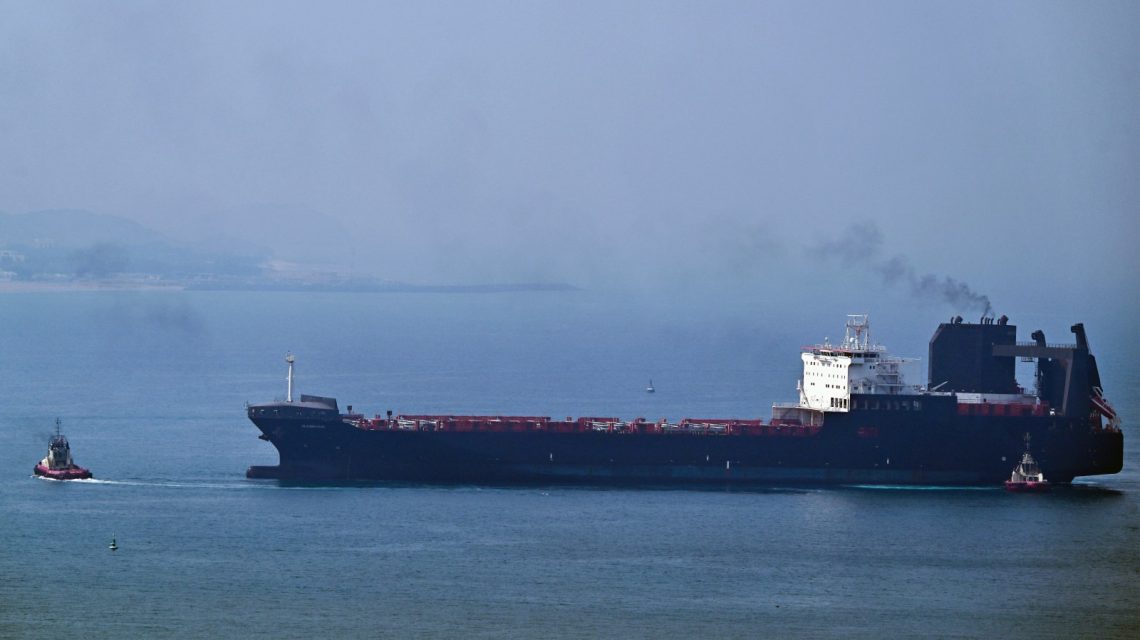
The U.S. military announced fresh strikes aimed at reducing Iranian forces’ capacity to threaten commercial shipping through the Strait of Hormuz. This escalation has prompted Gulf oil producers to search for alternative ways to export oil. Before the conflict, the strait served as a key conduit for about 20% of the world’s hydrocarbons. Now, an Iranian closure and a U.S. blockade have disrupted operations in the area. Gulf countries, therefore, seek alternative transport options.
New Routes and Strategies
Major shipping companies have developed overland routes to ease congestion near the strait. Meanwhile, Gulf states are planning long-term strategies, including new pipeline and port developments. Tamsin Hunt, a senior analyst at security firm S-RM, explained these efforts in an interview with Newsweek.
The Danger of the Strait
The International Maritime Organization (IMO) has cautioned that the Strait of Hormuz is currently too hazardous for commercial transit. Earlier, the IMO initiated an evacuation plan to rescue seafarers trapped inside the Persian Gulf. In response, Gulf countries are taking preemptive actions. The United Arab Emirates (UAE) plans to construct a new port and terminal on its east coast. This new infrastructure will reduce reliance on the Jebel Ali hub. Reports indicate that Dubai-based DP World aims to develop a port in Fujairah. The UAE also uses tankers to move crude oil outside the strait for transfer to larger ships heading to Asia, according to Andy Lipow of Lipow Oil Associates.
Saudi Arabia’s Pipeline
Leon Schulz, spokesperson for shipping giant Hapag-Lloyd, stated that despite recent hostilities, the company’s operations remain unaffected. They adjusted their network to avoid the strait for the time being. Operations continue through alternative routes like Salalah, Jeddah, and Khorfakkan, using third-party services. However, these routes are less efficient than those through the strait. Saudi Arabia diverts about four million barrels per day through its 750-mile east-west pipeline to Yanbu on the Red Sea. There, tankers load the oil for global distribution, but this route presents risks, especially near the Bab el-Mandeb Strait due to threats from Iranian-backed Houthis.
Although the Strait of Hormuz remains crucial, Gulf oil producers recognize the need for diversification. Pipelines and alternative shipping, however, cannot fully replace the strait’s capacity, affecting countries like Kuwait, Iraq, and Qatar.
Long-Term Alternatives
Building long-term alternatives beyond the Strait of Hormuz will take significant time. Iraq’s Oil Minister Bassem Mohammed Khudair discussed a U.S.-backed strategy to diversify export routes. The plan involves companies like TI Capital, Qatar’s UCC, and U.S. major Chevron. New routes might span from Basra through Haditha to Kirkuk and on to Ceyhan, as well as from Basra to Baniyas. However, maritime expert Yörük Işık notes that such projects could take over a decade to implement.
He expects Saudi Arabia and the UAE to invest heavily in improving Red Sea ports and infrastructure. Specifically, the UAE plans to shift focus from the Persian Gulf towards the Sea of Oman, investing in Fujairah’s growth as a port hub. The region’s geopolitical landscape continues to influence long-term infrastructure and strategic planning.
 British Police Arrest Man Suspected of Terror Plot
  Activists Push for Nationwide Ban on Child Marriage in the U.S.
  Investigation into Alleged Incident at Cornell University
  Rising Drone Threats Highlight Vulnerabilities in Moldova’s Airspace Defense
  Bolivia Faces Security Test Amid Unrest
  Incident on FlyDubai Flight Raises Security Concerns