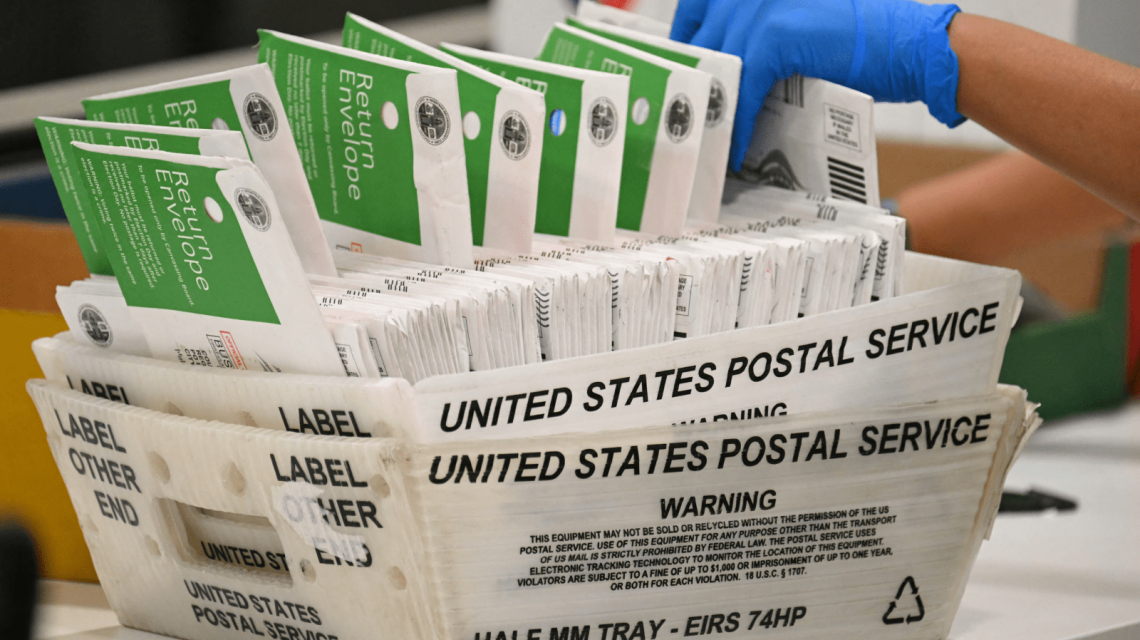
The Trump administration has urged the Supreme Court to reinstate new postal restrictions on mail ballots. This move could compel election officials to adapt established systems as voting begins. The administration asserts that the changes are essential for safeguarding election integrity. Meanwhile, opponents caution that these alterations might disrupt voting in states where mail-in ballots are customary.
Under the proposed changes, states would have to utilize United States Postal Service (USPS)-approved voting envelopes with unique bar codes. They would also need to provide voter information through a federal system before dispatching ballots. When asked for comment, USPS directed Newsweek to a prior statement, indicating it was finalizing the Federal Ballot Mail Portal. The agency aims to allow election officials to voluntarily familiarize themselves with the platform as part of its ongoing efforts to manage election mail “securely, reliably, and efficiently.”
USPS has emphasized its adherence to court orders, noting that verification procedures before acceptance are currently suspended under the temporary restraining order. The agency remains committed to “transparency, accountability, and constructive collaboration” with election officials, Congress, the courts, and other stakeholders.
Supreme Court Request
On September 3, the Trump administration requested the Supreme Court to overturn a lower-court decision blocking the enforcement of key provisions before the upcoming election. A swift ruling is crucial due to pivotal contests in mail-voting heavy states. Newsweek has pinpointed eight significant races in Arizona, Nevada, Colorado, and California.
The administration seeks judicial approval to implement rules requiring voter lists, individual bar codes, and federally reviewed ballot envelopes.
Newsweek’s analysis highlights two gubernatorial races and six House contests in mail-heavy states. Market trends favor Democrats in these races, suggesting administrative challenges could arise rather than a clear partisan shift. The Supreme Court has requested responses by September 8, leaving the status of the policy unresolved.
Why It Matters
USPS claims the rule would enhance tracking and uphold federal law. However, challengers argue the executive branch lacks proper authority to enforce state election administration changes. A federal judge has temporarily blocked the mandatory provisions while considering a longer injunction.
Tight Implementation Timeline
The final USPS rule was issued on August 26, just 69 days before the election. States need to provide names, addresses, and unique ballot identifiers via a federal portal. USPS is permitted to reject noncompliant submissions.
The timeline is crucial for states with common mail voting practices. Federal data from 2024 shows 74.7 percent of Arizona voters and 44.1 percent of Nevada voters opted for mail ballots. Arizona delivered 3.58 million mail ballots, while Nevada sent 2.07 million.
Impact on Midterm Races
Newsweek has identified eight midterm races likely to be influenced by this policy change. States face the risk of altered mail-ballot procedures as elections approach.
- Arizona Governor: Heavy reliance on mail voting places the gubernatorial contest between Katie Hobbs and Andy Biggs in a vulnerable position.
- Arizona’s 1st Congressional District: The contest between Amish Shah and Jay Feely is a Toss-up.
- Arizona’s 6th Congressional District: Juan Ciscomani faces JoAnna Mendoza in another Toss-up race.
- Nevada Governor: Joe Lombardo faces Aaron and Danielle Ford, with mail voting capable of statewide impact.
- Nevada’s 3rd Congressional District: Susie Lee holds an advantage against Martin O’Donnell, raising operational disputes.
- Nevada’s 4th Congressional District: Steven Horsford clashes with Cody Whipple, with ballot distribution concerns.
- Colorado’s 8th Congressional District: The district sees intense attention as Gabe Evans and Manny Rutinel compete.
- California’s 22nd Congressional District: David Valadao versus Randy Villegas exemplifies potential federal consequences.
Potential Supreme Court Outcome
The administration follows a plausible procedural path, given the Supreme Court’s prior lifting of an injunction against Trump’s executive order. The USPS has introduced a final rule amid states’ readiness concerns. The temporary block may soon be replaced by district-court actions.
The justices may uphold the order, permit rule operation, or await more detailed actions. Timing remains crucial: as days pass, election offices have less flexibility to modify systems without affecting voters.
 State Department Simplifies Passport Process with Online Applications
 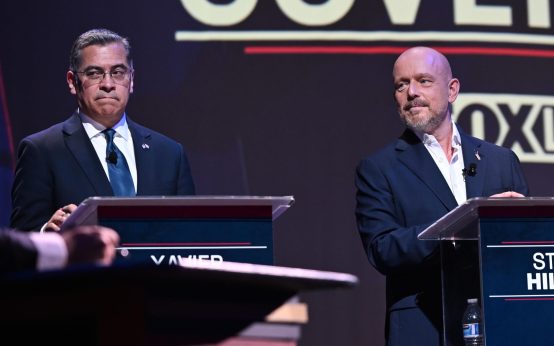 Becerra and Hilton Clash in California Gubernatorial Debate
  California Voters to Decide on $7.5 Billion State Research Fund
 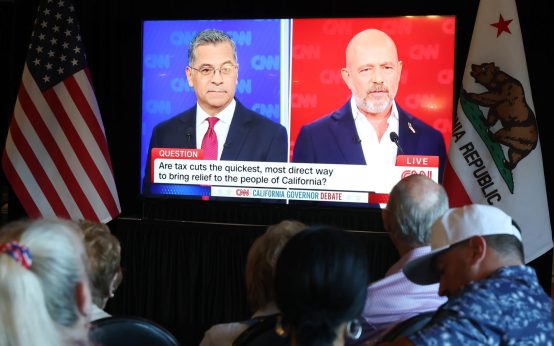 Highlights from the California Gubernatorial Debate: Becerra vs. Hilton
  Becerra vs. Hilton: The Debate and Key Issues in the California Governor Race
  Senate Confirms New Labor Secretary