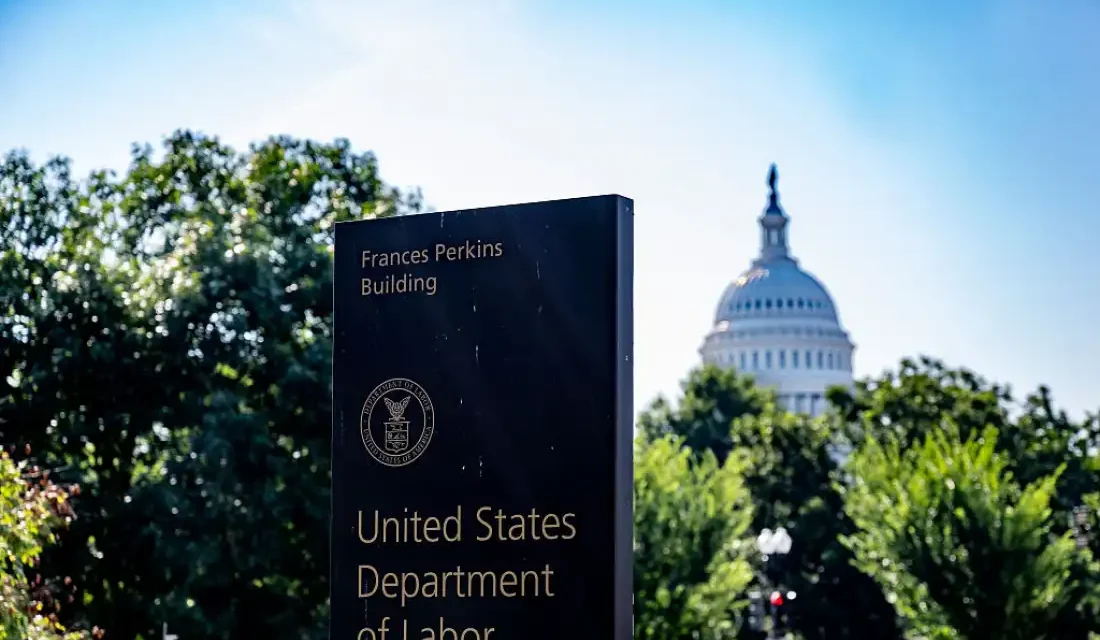
The U.S. Supreme Court deliberated on a pivotal case that could significantly impact federal regulatory agencies. The case questions the authority of these agencies to impose fines on businesses violating federal laws. Historically, farmers have utilized a federal immigration program allowing temporary employment of migrant workers for crop-picking. This program mandates farm owners to provide essentials like housing, meals, and water.
The Department of Labor oversees compliance to ensure foreign workers do not lower job opportunities for domestic laborers. Sun Valley Orchards, a New Jersey-based company, received a $500,000 fine from the department. The charges included unsanitary housing, unsafe drinking water, and other violations like not paying promised wages. Sun Valley disputes the constitutionality of these fines, arguing the process bypasses their right to a jury trial on appeal in federal court.
During the court proceedings, Chief Justice John Roberts hinted that the executive branch, including previous administrations, might have overstepped its powers, potentially encroaching on judicial authority. In discussions with Deputy Solicitor General Sarah Harris, Roberts expressed concern over the executive’s broad authority.
“It seems to me you’re just trying to leverage … the broad authority [of the executive branch] beyond the justification for its application,” Roberts remarked.
Justice Sonia Sotomayor inquired about the ramifications if federal courts replaced agencies in law enforcement. Harris warned this approach would severely disrupt various programs, like Medicare, Medicaid, and federal student loans.
Justice Elena Kagan queried, “Why not just go to court always?” Harris responded that relying solely on courts would massively under-enforce laws due to limited resources.
Representing Sun Valley, lawyer Robert Johnson argued that penalties should be decided by federal courts, not administrative agencies. Justice Ketanji Brown Jackson countered that such a stance challenges Congress’s intent to protect domestic workers.
Justice Brett Kavanaugh noted that Johnson’s proposal could lead to confusion and systematic issues. Justice Samuel Alito likened Johnson’s idea to a confusing legal opinion.
Harris emphasized the significant implications for the government and the potential chaos if the ruling favored Sun Valley. She highlighted that many regulatory frameworks might collapse, necessitating congressional intervention.
 Mayor Mamdani’s Policing Reform Plans
 Gen Z Voter Shifts and Their Impact on the 2026 Midterm Elections
 Disappearance of US Senate Candidate Raises Questions
 DOJ Rule Change Reduces Appeal Time for Immigrants Facing Deportation
 Former Hospital Security Guard Convicted for Sexual Conduct with a Dead Body
 Hakeem Jeffries’ Bid for House Speaker Faces Progressive Hurdles