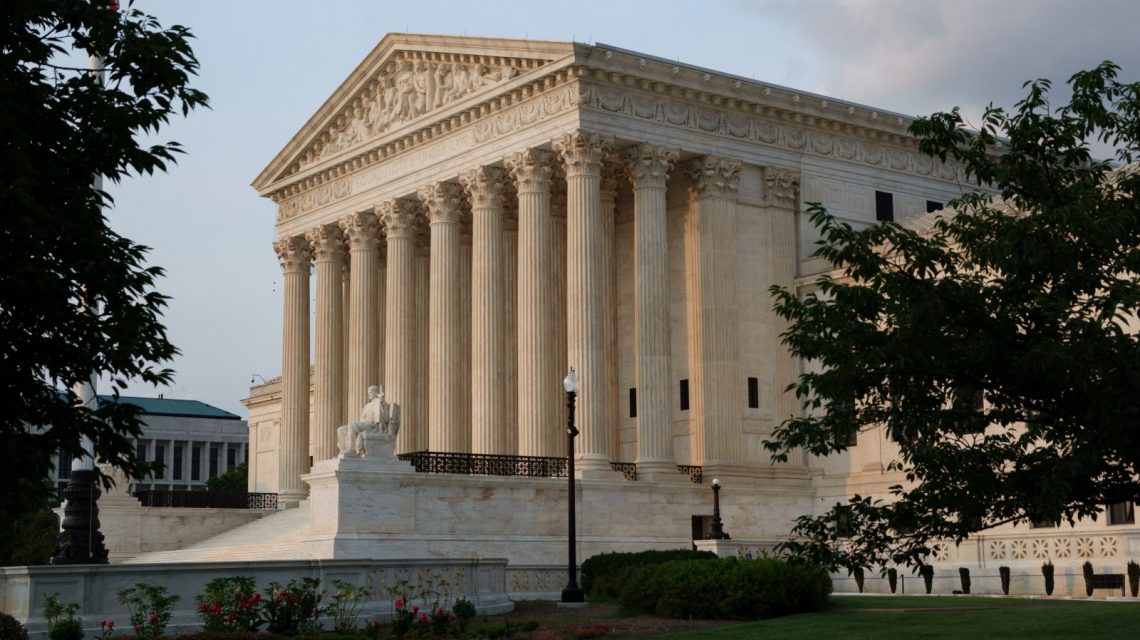
Supreme Court’s Consideration
The U.S. Supreme Court is assessing whether the Trump administration can introduce new requirements for mail ballots before the upcoming midterm elections. The administration has appealed an order by U.S. District Court Judge Indira Talwani in Boston. This order stops the U.S. Postal Service (USPS) from enforcing the new rule during the midterms. Many states and voting rights groups opposed the rule through lawsuits.
A federal judge chosen by Trump also blocked the USPS from acting on the executive order. The Supreme Court’s decision will impact how mail ballots are processed and whether the administration’s election-security plan can move forward. The USPS rule supports Trump’s March executive order, which mandates federal agencies to compile lists of eligible voters and requires USPS to send mail ballots only to those on these lists.
Importance of the Decision
Nearly a third of voters use mail ballots. The decision holds significant implications for voting practices, especially in states where mail voting is widespread. Proponents of Trump’s plan demand stronger measures to ensure electoral integrity, addressing issues like voter-roll accuracy and ballot verification.
Opponents argue that such measures may confuse voters and risk disenfranchising eligible individuals before the midterms, with congressional control at stake as Republicans aim to maintain their House and Senate presence.
Supreme Court’s Role and Arguments
The Supreme Court, with its 6-3 conservative split, will decide whether to lift Talwani’s injunction against the USPS’s plan. They are not considering the legality of Trump’s executive order. In a September 6 application to Justice Ketanji Brown Jackson, U.S. Solicitor General D. John Sauer said Talwani’s order hampers efforts to prevent mail voter fraud.
Conversely, attorneys for California and others deem the rule a risky and unlawful experiment with voting rights. They argue this could interfere with the election process for millions and urged for the stay to remain.
Previous Court Decisions
The Trump administration sought Supreme Court involvement before the 1st U.S. Circuit Court of Appeals could conclude its appeal. The appeals court, with judges nominated by President Joe Biden, upheld Talwani’s injunction, citing that the president cannot overhaul state election policies.
On September 4, Judge Talwani reinforced an earlier order against the USPS rule. Another judge, Carl J. Nichols in Washington, said that key parts of the USPS rule exceed the agency’s authority.
Legal Expert Insights
Legal experts express doubts over implementing changes before the elections due to the USPS rule’s readiness. Michael Morley, a law professor at Florida State University, suggests it is late to enforce the rule nationwide this election cycle. He notes that the USPS online portal intended for states is not operational yet.
David Schultz, a political science professor, echoed these concerns, stating the court’s delay reduces the chance of lifting the injunction. Ongoing early voting complicates the potential enactment of the executive order.
Experts anticipate the president losing this legal battle based on the law and Constitution, though they acknowledge the Supreme Court’s conservative composition could influence the outcome.
 The Surveillance Threat to U.S. Federal Agents
  Trump Administration Distributes ACA Refund Checks
  Trump Administration’s Approach to Illegal Alien Deportations
  New Jersey Voter Fraud Prompts Renewed Push for SAVE Act
  Concerns Over Changes to Voter-Registration Form for Americans Abroad
  Trump’s 2024 Campaign Targets Young Men Through Cryptocurrency