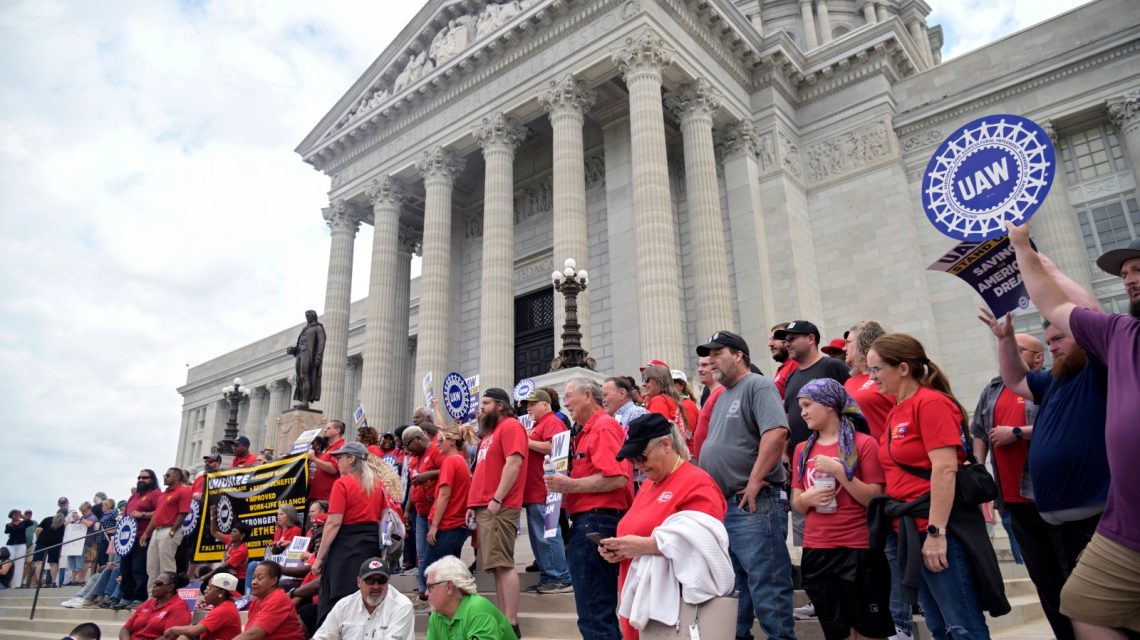
For the third time this month, the Supreme Court has rejected efforts to reinstate Missouri’s Trump-backed congressional map for the November midterm elections. This decision ends a protracted legal battle that risked causing electoral confusion as absentee voting had already commenced. The justices, in an unsigned opinion, stated that altering maps at this stage would result in “electoral chaos” and reaffirmed the use of Missouri’s post-2020 census districts. Republicans had aimed for the revised map to secure an additional House seat. Consequently, Missouri voters will use the same district lines from the 2022 and 2024 elections.
Governor Mike Kehoe expressed his disappointment on the platform X: “It is disappointing that today’s decision by the United States Supreme Court means Missouri will conduct its November general election under a different congressional map than its primary election. Voters deserved consistency and certainty, and not for the rules to be changed between elections. Nevertheless, Missouri will follow the Court’s order.”
The court noted that the election process had already progressed significantly. “Ballots using the 2022 map have been printed and mailed,” the justices wrote. “Absentee voting has already begun, as has military and overseas voting.” They further highlighted statements from Missouri election officials, who deemed it “practically impossible” to revert to the 2025 map at this point.
Richard von Glahn, from People Not Politicians Missouri, addressed the ruling, saying, “We are done with corrupt politicians trying to force their map into effect outside the process outlined in the Missouri constitution. We have said from the beginning, people, not politicians will be the final deciders on this DC power grab. We are moving forward to vote NO on Proposition A.” The ruling follows a series of conflicting judicial decisions over Missouri’s map use.
Missouri lawmakers approved a new congressional map in 2025, endorsed by President Donald Trump, to realign state districts ahead of the midterms. The Missouri Supreme Court ruled on September 3 that the map couldn’t be activated without voter approval, instructing the use of the 2020 census districts for future elections. The U.S. Supreme Court maintained this ruling on September 8, despite a contradictory order from U.S. District Judge Stephen Clark. The Supreme Court quickly blocked Clark’s directive on September 10.
Changes and Challenges in Missouri’s Congressional Map
The 2025 map proposed significant changes to Missouri’s 5th Congressional District, including Kansas City and represented by Democratic Representative Emanuel Cleaver. New boundaries pushed parts of Kansas City out of the district, stretching it farther east into Republican regions. These alterations also impacted other districts. Currently, Republicans control six of Missouri’s eight U.S. House seats and sought the new map to potentially gain a seventh seat.
Though the revised districts were used in Missouri’s August primary, the November election will proceed under previous boundaries. Voters in Missouri will decide in November whether to approve the 2025 map. Republican State Senator Rick Brattin, who won the GOP primary for the 5th District under the new lines, remains a candidate in the general election, joined by Representative Cleaver, who ran unopposed in the Democratic primary. Despite boundary changes, both candidates continue in the race.
The legal fight over Missouri’s redistricting involved at least 16 lawsuits in state and federal courts. Challenges argued the mid-decade redistricting breached the state constitution and failed compactness criteria. On August 4, Secretary of State Denny Hoskins rejected a petition seeking a statewide map vote on the legal deadline day. He claimed referendum petitions didn’t apply to congressional redistricting.
The Missouri Supreme Court upheld the referendum petition’s validity on September 3, halting the new map’s use and directing the adoption of the 2022 districts from the 2020 census data. The U.S. Supreme Court allowed this ruling on September 8. Judge Clark’s conflicting order, almost immediate, was blocked by the Supreme Court on September 10, with the Missouri Supreme Court temporarily holding Hoskins in contempt for attempting to use the new map per Clark’s order.
Ultimately, the Eighth Circuit supported the Trump-endorsed map, setting up the Supreme Court’s final decision to reject changes. Missouri moves forward with existing district boundaries for the upcoming election.
 Defense Secretary Emerges as Key Player in the Trump Administration
  Hegseth’s Vision for the Military: Balancing Tradition and Innovation
 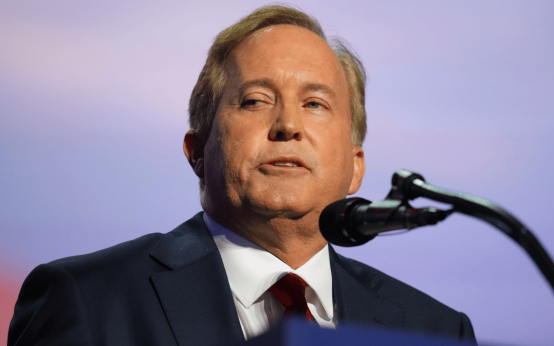 Significant Funding Boosts Ken Paxton’s Texas Senate Campaign Amid Tight Race
  U.S. States Extend Gas Tax Waivers Amid Rising Fuel Costs Due to Iran Conflict
  USCIS Raises Immigration Fees
 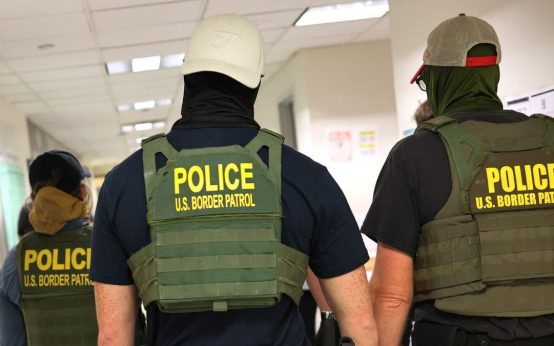 The Surveillance Threat to U.S. Federal Agents