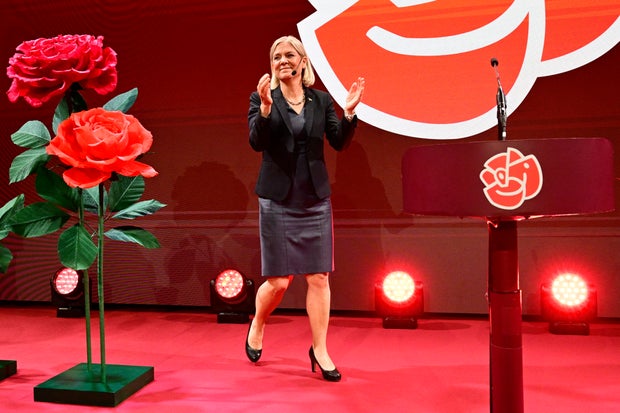
Sweden is experiencing political uncertainty following a thrilling election on Sunday that saw the left-wing opposition maintain a narrow lead as more votes awaited counting. The election also marked a surprising setback for the far-right Sweden Democrats, who lost ground for the first time since entering parliament 16 years ago.
Leadership and Coalition Challenges
Magdalena Andersson of the Social Democrats, leading the left-wing opposition, and outgoing conservative Prime Minister Ulf Kristersson both expressed intentions to explore coalition options to secure power and form a new government. However, both leaders face the need for substantial concessions to achieve a majority.
Expected Difficult Negotiations
With the left-wing holding a slight lead, the bloc anticipates difficult negotiations to form a government. These talks might extend over several weeks, with the earliest possible parliament vote on a new prime minister set for September 29.
After Sweden’s 2022 national election, the government formation took 37 days, significantly shorter than the 134-day period in 2018. Political analyst Mats Knutson from public broadcaster SVT predicts both blocs are likely to enter a “stalemate,” leading to a prolonged and challenging government formation process, possibly ending in a snap election.
“One or several parties may need to abandon their ‘red lines,'” he commented.
Uncertain Results and Close Vote Counts
As of Monday, 95% of votes were counted. The four opposition parties held a three-seat majority in the 349-seat parliament over Prime Minister Kristersson’s right-wing alliance, including the anti-immigration far right. However, observers cautioned that these results might still change, with some votes not expected to be counted until Wednesday.
Polarized Political Climate
“The situation is really tight, and Sweden has become increasingly polarized in recent years,” said Mikko Duvaldt, a 48-year-old construction worker, reflecting on the challenging circumstances each side faces in government formation.
Challenges in Coalition Formation
Should the left-wing majority be confirmed, Andersson, a proponent of Sweden’s welfare state, will strive to form a government with three other left-leaning parties: the Greens, the Left, and the Center. Despite sharing a coalition interest, the bloc struggles with deep ideological differences.
The Center Party has declared it won’t back any government involving the Left, while the Left insists on being part of any government it supports. Outgoing Prime Minister Kristersson might attempt to court the Center Party—which was part of the right-wing bloc until 2019—to gather a majority on his side.
“Even if tonight’s result stands, I plan to explore possibilities within this non-socialist parliamentary majority for a workable government constellation,” Kristersson announced to his supporters on election night.
Reluctance for Alliance with Far-right
Annika Freden, associate professor in political science at Lund University, speculated that Kristersson’s approach to the Center is expected but is unlikely to succeed, as the Center fundamentally opposes alliances with the far-right.
Freden believes parties will exert effort to avoid new elections. The negotiations among the left parties will evaluate “how much they can get through,” affecting if and when the red lines are relaxed. She emphasized Sweden’s tradition of negotiation and reluctance to call snap elections.
Decline in Far-right Popularity
The anti-immigration Sweden Democrats saw a decline, from over 20% of the vote share four years ago to 17.6%, placing them third behind the Social Democrats and Kristersson’s Moderates.
The Sweden Democrats, linked to Sweden’s extreme-right fringe, have steadily moved toward the center over two decades. The party first entered parliament in 2010 and became the second-largest party by 2022, supporting Kristersson’s minority government externally, gaining substantial influence over immigration, crime, and other policies.
Observers noted the decrease in popularity stemmed from strict migration and crime policies becoming mainstream. “Migration issues peaked in 2015-2016, and now many parties favor restrictive policies, leaving Sweden Democrats unremarkable on other issues,” Freden noted.
 State Department Simplifies Passport Process with Online Applications
 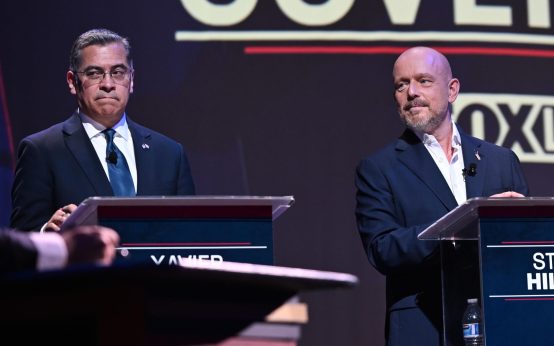 Becerra and Hilton Clash in California Gubernatorial Debate
  California Voters to Decide on $7.5 Billion State Research Fund
 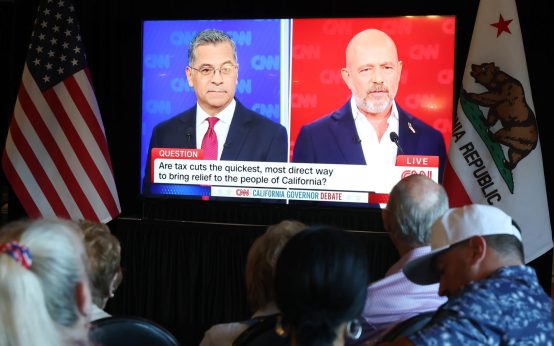 Highlights from the California Gubernatorial Debate: Becerra vs. Hilton
 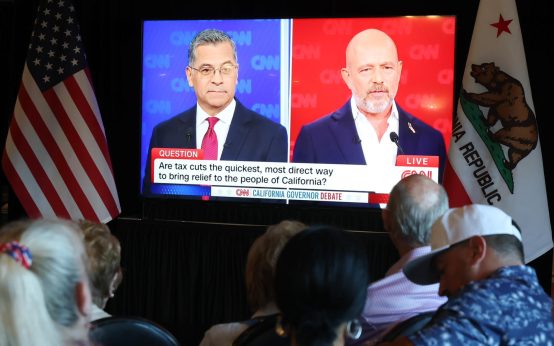 Becerra vs. Hilton: The Debate and Key Issues in the California Governor Race
  Senate Confirms New Labor Secretary