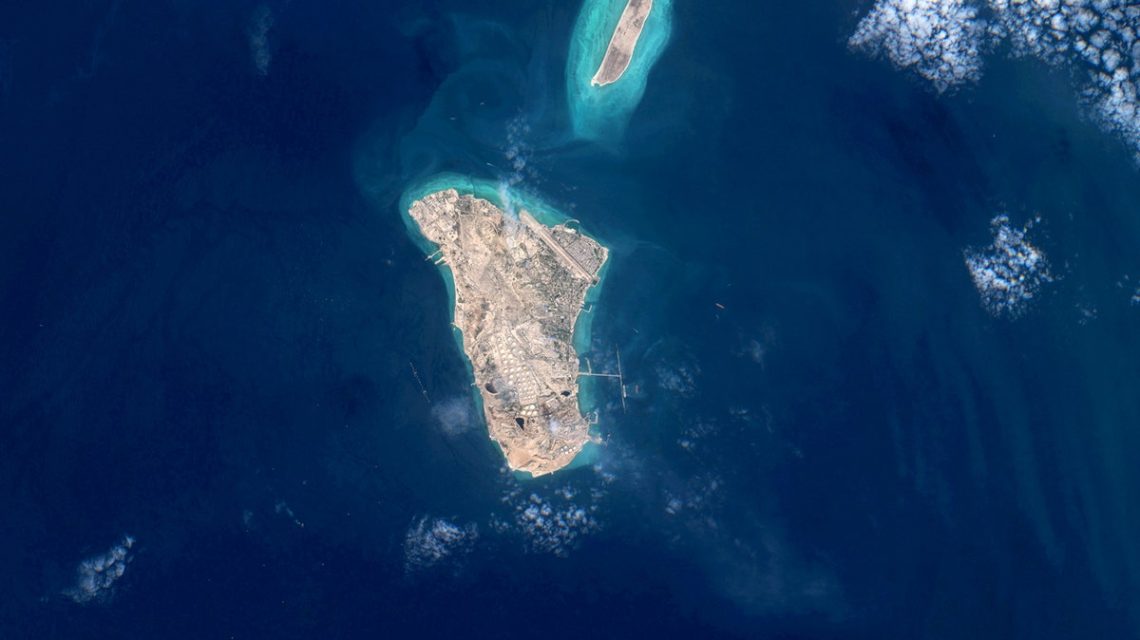
The potential U.S. military operation to take Iran’s Kharg Island raises significant strategic questions. Experts envision an aggressive start, with Marines landing and Navy warships and jets dominating air and sea. A final warning to Iranian forces: surrender or face conflict. Kharg Island handles 90% of Iran’s crude oil exports. Its capture would be central to Washington’s strategy against Tehran.
President Donald Trump, in a recent interview, did not dismiss the idea of seizing the island, emphasizing the economic impact. He mentioned that past U.S. strikes aimed to avoid the island’s oil facilities due to their global economic importance.
There are a lot of ways to skin this cat,said Vice Adm. (Ret.) Robert Harward, explaining that an assault would aim to capture the island while preserving the oil infrastructure for future governance.
For Harward, minimizing risk to U.S. and Iranian lives, and preventing damage to critical facilities, is crucial. Trump echoed this, highlighting the importance of maintaining the global economy by avoiding damage to the oil terminal.
Experts note that capturing Kharg may be straightforward, but defending it is complex. The island, situated just 16 miles from Iran’s coast, is within range of Iranian missiles and drones. Holding the island could provoke a direct conflict with Iran.
Historically, Kharg’s importance predates the oil industry. British forces occupied it to pressure Tehran in the 19th century. Today, Iran has developed its defenses, including missiles and drones, to deter U.S. forces.
Harward acknowledges that once U.S. forces secure Kharg, the primary threat shifts to missile and drone attacks. Effective intelligence on Iranian defenses and potential booby traps is essential.
If Iran retaliates, it risks damaging its economic lifeline. Capturing the island is one challenge; defending it against proximity-based attacks is another.
Some argue against targeting Kharg, suggesting smaller islands near the Strait of Hormuz as more feasible military objectives. These islands could pose strategic dilemmas for Iran without the need for an assault on Kharg.
Harward emphasizes the broader strategy, highlighting economic and political pressure to complement military efforts. He suggests restricting overland routes and air traffic to bolster the blockade against Iran.
The ultimate aim is long-term stability in the region. This would require a shift in Iran’s government focus from revolutionary goals to serving its population, ending nuclear ambitions, and ceasing support for proxy groups.
While taking Kharg might only take hours, managing regional escalation and securing a lasting resolution is a complex challenge.
Efrat Lachter is an investigative journalist and filmmaker with extensive experience in war reporting. She has been recognized for her work and continues to contribute to global journalism.
 The Trump Team’s Challenge to the Military Leadership
  Maryland First State to Restrict Electronic Pricing in Grocery Stores
  British Police Arrest Man Suspected of Terror Plot
  Activists Push for Nationwide Ban on Child Marriage in the U.S.
  Democratic Hopes and Historical Warnings in 2026 Senate Race
  Republicans Face Challenges Amidst Cost of Living Concerns