
The President of the United States, Donald Trump, faces a challenging scenario. Reaching an agreement with Iran, crucial for reopening the Strait of Hormuz, may require actions contrary to his usual approach. The narrow strait is vital for the global economy, as it previously accounted for 20% of the world’s traded oil.
Experts suggest that any concession would be tough for Trump, especially given his consistent denial of declining popularity, economic slowdown, and reduced military arsenal after a prolonged conflict with Iran. This war, started with Israel over five months ago, exacerbates the situation.
Eliot Cohen, a former State Department adviser under George W. Bush, states that Trump views the world in binaries of winners and losers. Admitting defeat, Cohen believes, would be intolerable for him. The central issue has been control over the Strait of Hormuz, where before the war, 20% of the world’s oil was transported.
Though both parties claim an agreement is near, Trump’s administration rejects any arrangement giving Iran more control, including imposing transit fees. Iran, on the other hand, insists on maintaining some control and indicates the strait will not return to its former open international status.
Despite numerous US attacks, Iran can still launch drones and missiles against vessels, asserting a suffocating grip on commercial shipping. Cohen argues that yielding to Tehran is difficult for Trump, even when high gas prices and electoral issues loom large.
“This is a concession he might be willing to make,”says David Schenker, a Washington Institute for Near East Policy research fellow. He hints at increasing economic pressure nudging Trump towards compromise.
The President claims the US still has substantial military supplies, countering reports of frustration with his Secretary of Defense, Pete Hegseth, over dwindling advanced weaponry. Trump assured the public of mass production and threatened legal actions against information leaks about armament stocks.
The Washington Post reported discontent during a recent Camp David meeting. A senior official described discussions on Iran as constructive, emphasizing no heated debates took place. However, the US military reportedly faces shortages, such as advanced missile interceptors, that shield troops from Iranian attacks.
The Center for Strategic and International Studies, using budget documents, highlights dwindling arsenals. When questioned about weapon stocks, Trump expressed the continuous need for more supplies, despite asserting some munitions were abundant, others were not.
Defending a Republican spending package for additional Pentagon funding at a private Senate meeting, Hegseth emphasized the necessity amid weapons shortages. Democratic Senator Mark Kelly criticized the war’s lack of clear objectives beyond the assault on over 14,000 targets. He argued a defined mission could have reduced unnecessary expenditure.
Trump’s claim of superior poll numbers has drawn skepticism. Although he touts achievements like employment growth and alleged Iranian denuclearization, an AP-NORC survey shows two-thirds of Americans believe the Iran war isn’t worthwhile. Democrats, independents, and about 37% of Republicans share this view.
While the US holds a record-high employment figure without including farmworkers, job growth has slowed under Trump’s second term. Additionally, Trump insists the Strait of Hormuz remains open, despite last week’s maritime incidents including ship strikes and threats from Iranian Revolutionary Guard entities.
According to Lloyd’s List Intelligence, vessel traffic increased to 84 passages recently, but these numbers lag behind the pre-crisis rate of over 700. There’s speculation about a temporary US-Iran agreement that could facilitate Persians Gulf entry via routes controlled by Iran and exit through those managed by Oman.
The Trump administration opposes any solution involving Iranian tolls or other barriers. A US official insists any temporary maritime route should remain toll-free. Diplomatic channels, Trump believes, remain advantageous in negotiations with Iran, as he maintains significant leverage.
Contributors to this report include AP journalists Lisa Mascaro, Darlene Superville, and Michelle L. Price.
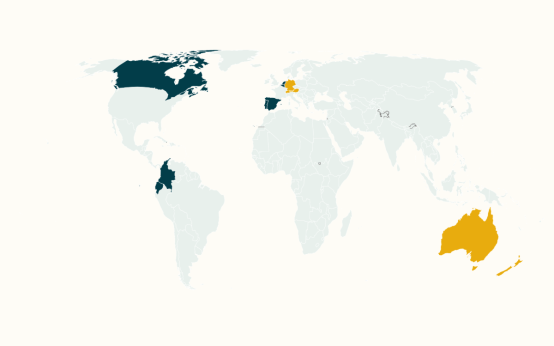 Dutch Review Board’s Euthanasia Ruling and International Debate
 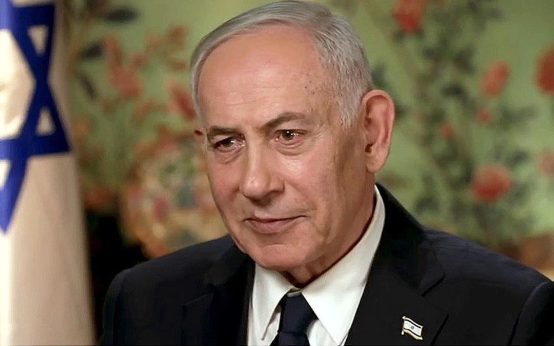 Israeli PM Commends Heroic Actions in Flight Emergency
  Rabbi and Jewish Leaders Criticize Adam Brody for ‘Genocide’ Comment
  Flydubai’s Emergency Landing Highlights Cockpit Security
 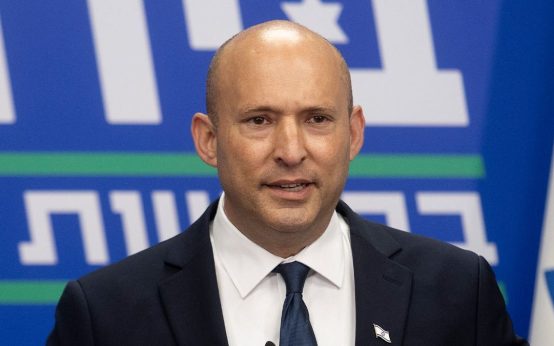 Former Israeli PM Naftali Bennett Commends Passengers and Crew for In-Flight Heroism
 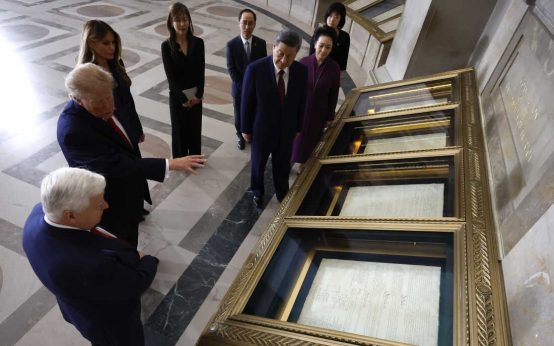 Diplomatic Complexities Unfold at U.S. National Archives Visit