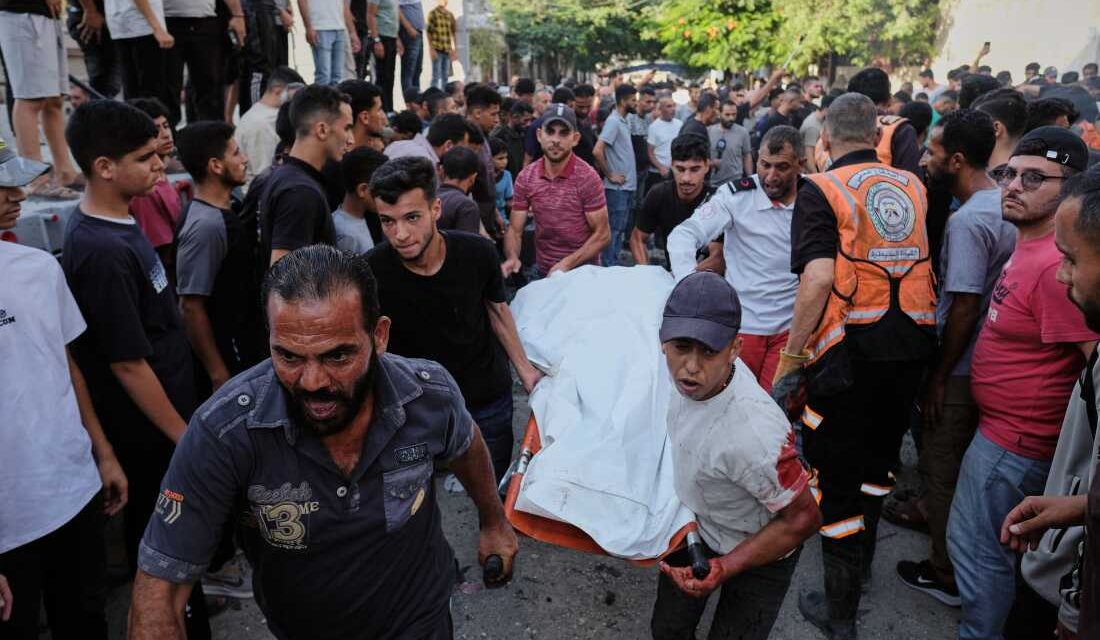
Israel has raised serious security concerns with the U.S. government regarding a proposed disarmament deal with Hamas. Israeli strikes, occurring overnight and into Sunday evening, have resulted in the deaths of at least 17 individuals in Gaza, including several children. Doron Spielman, spokesperson for Israeli Prime Minister Benjamin Netanyahu, commented on the situation following U.S. President Donald Trump’s announcement of the agreement.
Spielman stated to The Associated Press that Israeli intelligence believes Hamas remains focused on rebuilding its military. As a result, Israel would not consider withdrawing from Gaza until Hamas is disarmed. He stressed that disarmament means fully relinquishing weapons.
If we redeploy before Hamas is truly disarmed, it will quickly expand its presence throughout Gaza, rebuild its terrorist infrastructure, and threaten Israeli communities. Disarming means physically giving up the weapons. Nothing less.
Spielman’s comments come after Hamas stated its willingness to begin disarming, part of a U.S.-brokered ceasefire agreement signed nine months ago. While the deal could represent a shift toward resolving the conflict, multiple challenges remain. Hamas’ agreement to disarm has been a significant sticking point in past negotiations.
Trump’s 20-point ceasefire plan demands that Hamas surrender weapons, dismantle its tunnel network, and foster a technocratic Palestinian government. This plan also proposes the withdrawal of Israeli forces and deployment of international security, but it faces complex obstacles.
The agreement specifies that all weapons held by Hamas-run police will be transferred to a U.S.-backed Palestinian committee once established. Disarming will involve decommissioning heavy artillery and halting military production. This process will coincide with phased Israeli troop withdrawals.
Many parts of Gaza under Israeli control have been severely damaged and depopulated. Around 2 million Palestinians live in other areas, where conditions are harsh, with many residing in makeshift camps.
Netanyahu faces pressure regarding these issues as he approaches re-election. His far-right coalition partners encourage maintaining pressure on Hamas. Meanwhile, opponents criticize his handling of previous Hamas attacks.
Despite Trump’s commitment to Israeli security, Spielman argues that intelligence indicates Hamas continues to rearm and recruit.
The White House has not detailed Israel’s conveyed concerns, yet it confirms ongoing involvement in negotiations. Anonymous sources revealed that Israel communicated various issues to former British PM Tony Blair, part of the Trump-led Board of Peace. These included a desire for operational freedom in Gaza and a requirement for weapons’ destruction post-confiscation.
Since last October’s ceasefire, Israeli airstrikes in Gaza have persisted, reportedly targeting Hamas infrastructure. Recent strikes have claimed 17 lives, including children. The Israeli military asserts these actions are aimed at militant operatives.
 British Police Arrest Man Suspected of Terror Plot
  Activists Push for Nationwide Ban on Child Marriage in the U.S.
  Investigation into Alleged Incident at Cornell University
  Rising Drone Threats Highlight Vulnerabilities in Moldova’s Airspace Defense
  Bolivia Faces Security Test Amid Unrest
  Incident on FlyDubai Flight Raises Security Concerns