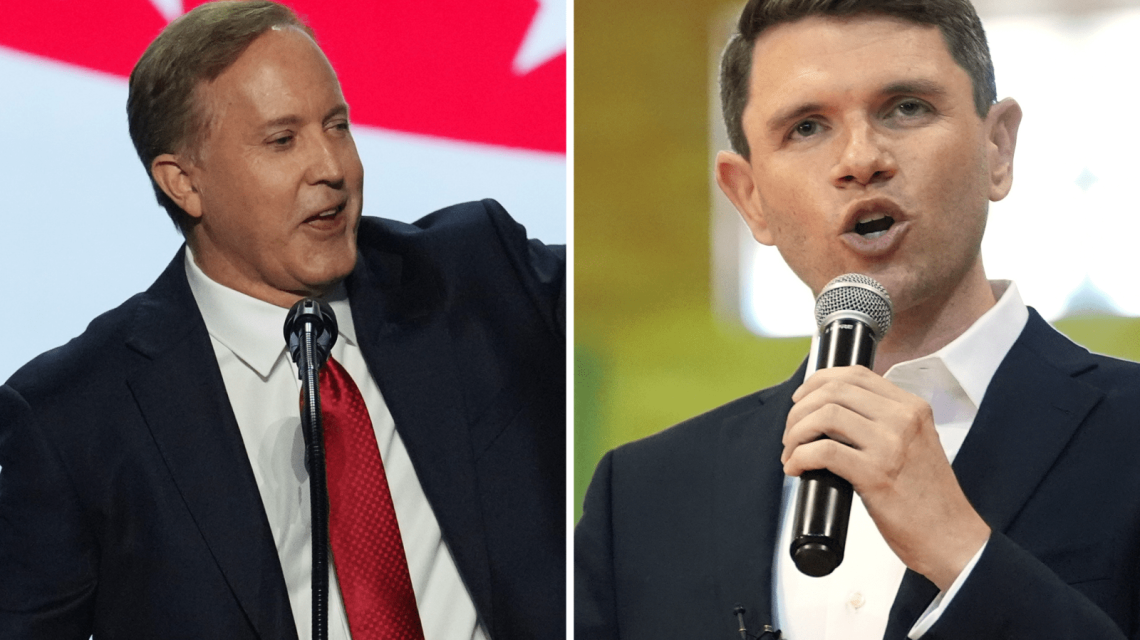
Recent polling in Texas reveals a competitive political landscape, with Democrats showing potential gains in key races. A Siena College/ReconMR poll indicates Democrat James Talarico leading Republican Ken Paxton 49% to 43% in the U.S. Senate race, while Democratic State Representative Gina Hinojosa leads Republican Governor Greg Abbott 49% to 45%.
An Emerson College Polling/Nexstar survey presents a closer contest: Talarico at 47% and Paxton at 46%, with Abbott ahead of Hinojosa 49% to 46%. Political analyst Jacob Rubashkin describes these findings as challenging for Republicans, suggesting a potential shift in political dynamics, should these numbers hold.
Texas Republican strategist Brendan Steinhauser emphasizes the party’s efforts to stave off significant losses, especially in light of recent public disagreements within the GOP. These divisions became apparent after a controversial photo by the Texas Republican Party triggered racism-related backlash, exposing differences within the party’s ranks.
Poll Details and Reactions
The Siena College/ReconMR poll, conducted among 614 likely voters from September 8-11, shows increasing leads for Democrats since July. The governor’s race now shows Hinojosa overtaking Abbott, shifting from his previous slight lead. Similarly, Talarico’s advantage over Paxton in the Senate race has also grown.
Steinhauser notes that polling over the past eight weeks has consistently indicated the competitiveness of Texas races, cautioning that while Republicans may still prevail, it’s equally possible for Democrats to achieve victories. The poll also highlights a tight contest in the lieutenant governor’s race, with Vikki Goodwin leading Dan Patrick by 47% to 46%. In the attorney general race, Mayes Middleton leads Nathan Johnson 45% to 44%.
The generic congressional ballot leans slightly Republican, at 47% to 46%. Independent voters are notably influencing trends, with Hinojosa and Talarico both holding strong leads among this group.
The ReconMR survey’s margin of error is ±4.3 percentage points, while the Emerson survey, conducted among 1,000 likely voters from September 12-14, has a credibility interval of ±3 percentage points, revealing a closer Senate race than ReconMR. Both surveys, however, show competitive dynamics.
Steinhauser attributes these close races partly to national issues like affordability and rising costs, coupled with Talarico’s strong campaign appeal. Hinojosa is seen as favorable by 48%, with 27% unfavorable, while Abbott’s unfavorable rating sits at 53%.
On key issues, voters favor Hinojosa over Abbott for managing affordability and water supply. Abbott leads on border security and safety concerns.
Internal GOP Controversies
The fallout from Texas Republican Bo French’s controversial comments about South Asian students has highlighted internal party tensions. Texas Republicans, including Senator John Cornyn and Governor Greg Abbott, criticized these remarks, seeking to distance the party from such views.
State Senator Lacey Hull expressed disappointment, urging French to retract his posts. French’s comments fueled discussions about the party’s direction and inclusivity, ultimately leading figures like former Southlake Mayor John Huffman to call for French’s apology and withdrawal from his electoral campaign.
The Texas GOP’s subsequent social media posts inadvertently stoked further controversy. The party shared a convention photo involving attendees of color, which triggered a flood of racially charged comments and criticism.
Karl Rove, a seasoned Republican strategist, labeled French’s comments as bigoted, announcing support for Democrat Jon Rosenthal over French. This decision reflects broader tensions within the Republican Party regarding its political identity and future direction.
Broader Political Divisions
The divide within the Texas GOP isn’t isolated to this controversy. The recent Senate primary highlighted significant split tensions within the party, as Ken Paxton defeated an established figure, showcasing a split between the conservative base and the traditional establishment.
Further division stems from economic issues, such as the rise of data centers in Texas, pitting party leaders against local opposition. Republicans face challenges in maintaining support while addressing critical issues like the economy, immigration, and voter demographics.
Steinhauser remarks that while polling suggests close races, historical Republican dominance in Texas remains influential. However, he cautions that ongoing internal conflicts and shifting demographics could reshape future outcomes.
 New Jersey Voter Fraud Prompts Renewed Push for SAVE Act
  Concerns Over Changes to Voter-Registration Form for Americans Abroad
  Trump’s 2024 Campaign Targets Young Men Through Cryptocurrency
  Trump’s White House Visitor Center Proposal Gains Bipartisan Support
  State Department Simplifies Passport Process with Online Applications
  Becerra and Hilton Clash in California Gubernatorial Debate