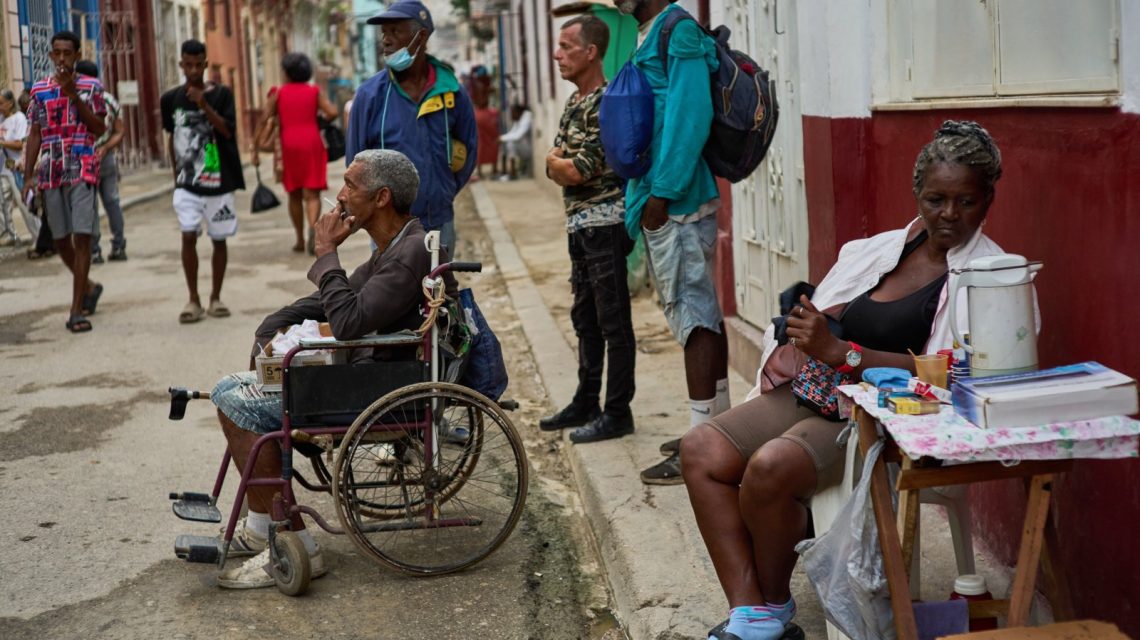
Time travel may be fiction, but a trip to Cuba can feel like stepping back in time. The U.S. has maintained an economic embargo on Cuba, a country just 90 miles away, for 64 years. The goal was to pressure Cuba’s communist leaders into change. This strategy has not worked, but the lives of ordinary Cubans are increasingly challenging as their surroundings degrade.
In January, an unexpected event took place. Venezuelan President Nicolás Maduro was taken in a dramatic and likely illegal U.S. military operation. This move quickly dissolved long-standing hostility between the U.S. and Venezuela. Soon after, Maduro’s deputy granted the U.S. control over Venezuela’s valuable oil fields.
For weeks, it seemed the White House viewed Cuba as the next target. However, events elsewhere took precedence. As a result, the focus shifted away from Cuba.
Despite reduced attention, the U.S. has continued its pressure on Cuba by tightening economic restrictions. These actions have severely impacted Cuba’s infrastructure, with multiple power grid failures leading to prolonged blackouts. Nonetheless, political results are scarce.
Military intervention in Iran changed the dynamics, reallocating resources that might have been used against Cuba. The Iran war’s unpopularity made any subsequent military action against Cuba politically riskier.
“I do think the war in Iran fundamentally altered the calculation around Cuba…” said Christopher Hernandez-Roy, acting director of the Americas Program at the CSIS.
Domestically, differing strategies are at play. President Trump speaks of military triumphs, while the secretary of state, Marco Rubio, emphasizes a gradual approach. Rubio aims for a long-term transformation, with potential political benefits for himself in future elections. For Rubio, the quest for change is deeply personal, having focused on Cuba throughout his political career. While some of his supporters are eager for more direct action, Rubio maintains a strategy of patience.
Those in favor of a strong stance view it as a dual strategy: intimidation and economic strangulation. The intent is to weaken the authority within Cuba’s regime without military engagement.
Cuba presents a different challenge compared to Venezuela. The country’s political structure is tightly controlled by a single party, limiting potential for internal opposition unlike Venezuela, which maintained some political pluralism.
“Despite the ideological intimacy between the two, Venezuela never became fully totalitarian…” said Sebastián Arcos, director of the Institute for Cuban Studies at Florida International University.
Replacing Cuban leaders does not guarantee more cooperative successors. The regime prioritizes power over the well-being of citizens, making negotiations limited.
Cuba’s government has weathered historical challenges, including the Soviet Union’s collapse and economic crises, and appears prepared to endure another administration.
Cubans face the consequences of entrenched political standoffs. Economic mismanagement, compounded by U.S. restrictions, leads to shortages of basics like food, medicine, and electricity.
The U.S. also risks backlash. As humanitarian conditions worsen, international opinion may shift blame from the Cuban regime to the U.S.’s aggressive tactics.
If economic cooperation were to result from a leadership change, President Trump might claim victory. However, Rubio and others are more concerned with achieving fundamental political reform in Cuba.
At a recent United Nations meeting, efforts to gather support against America’s blockade showed limited progress. While fewer countries supported lifting the sanctions, considerable opposition and abstentions remain.
Cuba’s government stands resilient, while its economy deteriorates. Rubio envisions a drawn-out political shift, whereas Trump expects swift success.
Between a steadfast government and a powerful nation struggling to impose change, ordinary Cubans await a future neither side can currently provide.
 In-Flight Altercation on Qatar Airways Leads to Police and FBI Response
 Mayor Mamdani’s Policing Reform Plans
 Virginia Residents Sue Over Alleged Immigration Violations
 Gen Z Voter Shifts and Their Impact on the 2026 Midterm Elections
 Disappearance of US Senate Candidate Raises Questions
 DOJ Rule Change Reduces Appeal Time for Immigrants Facing Deportation