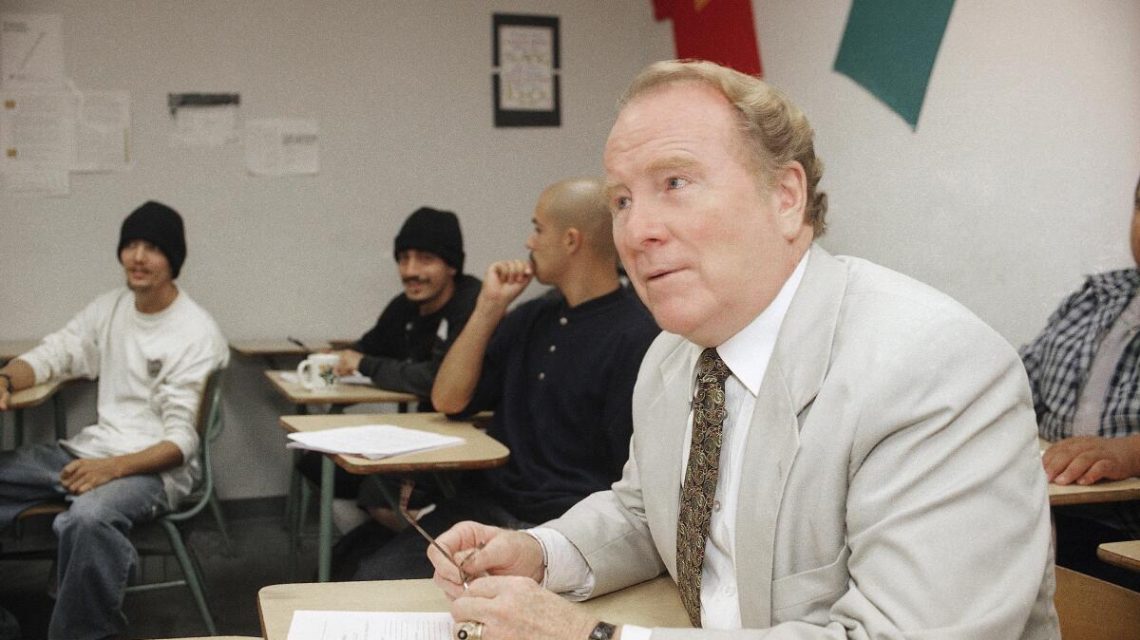
Thirty years ago, Republican politician Bob Dornan accused electoral fraud after losing a close race. The defeat by Loretta Sanchez was attributed to voter fatigue with Dornan’s divisive politics. His Latino-majority district sought representation that reflected their community, and Dornan, known for his ideological stance, offered little benefit for his constituents.
Dornan suggested a conspiracy involving illegal immigrants voting against him. California’s political climate at the time, which leaned towards anti-immigrant sentiment, provided fertile ground for Dornan’s claims. Republicans embraced these claims, leading to a congressional investigation and proposed voter ID laws echoing tactics from the segregationist South.
The investigation concluded in 1998, confirming that noncitizens voted in insignificant numbers—less than 1% of total votes, insufficient to alter the election result. No charges followed for illegal voting or improper registration. Sanchez decisively defeated Dornan once again in 1998.
This episode remains a part of my curriculum in O.C. history classes. It serves as a lesson on the dangers of political parties following leaders who deflect blame onto others for their failures. Notably, Dornan influenced the belief that illegal immigrants skew elections towards Democrats, a view persisting among many Republicans today.
Currently, President Trump’s stance mirrors Dornan’s rhetoric. His fixation on losing to Joe Biden in 2020 leads to speeches filled with unfounded election fraud theories. Trump’s demands for voter ID laws before midterms echo similar past efforts by California politicians like Carl DeMaio and Tony Strickland, promoting Proposition 39 to mandate voter ID.
Federal law requires U.S. citizenship to vote in national elections, with select municipalities permitting noncitizen voting in localized elections. Despite Trump’s assertions, evidence of widespread noncitizen voting remains isolated.
Parallels to Dornan’s claims extend to Republican responses to the California primaries. President Trump argues predetermined outcomes should favor Republicans, citing slow vote counts as fraudulent despite historical voting patterns favoring Democrats for the past two decades.
California’s Prop. 39 sees divided support among voters, contrasting Trump’s ongoing election fraud rhetoric. The Republican focus on noncitizen voters obscures shifts within their base that have increasingly distanced them from broader, urban demographics.
Diversifying GOP appeal to immigrant and Latino voters yields positive electoral results, as seen in the 2024 elections, with increased Latino representation and Trump’s gains in the Latino electorate. This achievement emerged when Republicans emphasized concerns like unchecked migration and economic growth over paranoia about noncitizen voting.
Despite these lessons, Trump’s focus on baseless voter fraud accusations risks further isolating the GOP, a scenario reminiscent of Bob Dornan’s political trajectory. As Election Day approaches, the need for introspective strategies becomes crucial for Republican success.
 State Department Simplifies Passport Process with Online Applications
 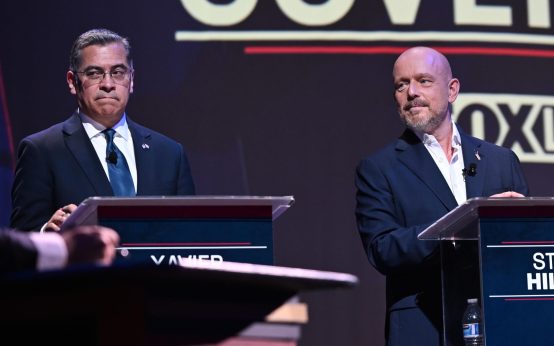 Becerra and Hilton Clash in California Gubernatorial Debate
  California Voters to Decide on $7.5 Billion State Research Fund
 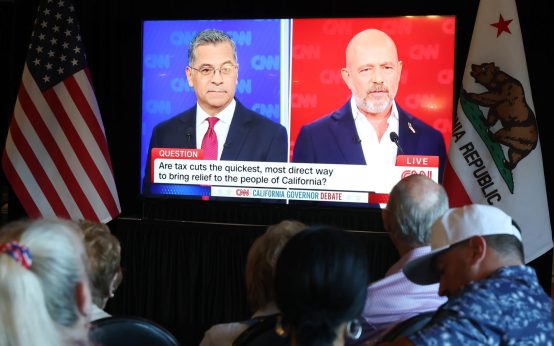 Highlights from the California Gubernatorial Debate: Becerra vs. Hilton
  Becerra vs. Hilton: The Debate and Key Issues in the California Governor Race
  Senate Confirms New Labor Secretary