Graffiti has been a fixture in Los Angeles for generations. For some, it represents vandalism. For others, it is viewed as an art form. Often seen marking gang territories or used as political dissent, graffiti reflects various facets of the city.
L.A.’s graffiti culture is undergoing significant changes. Traditional surfaces like walls, windows, and street signs remain primary targets. However, modern taggers leverage social media and high-profile locations to gain recognition, attracting wider audiences.
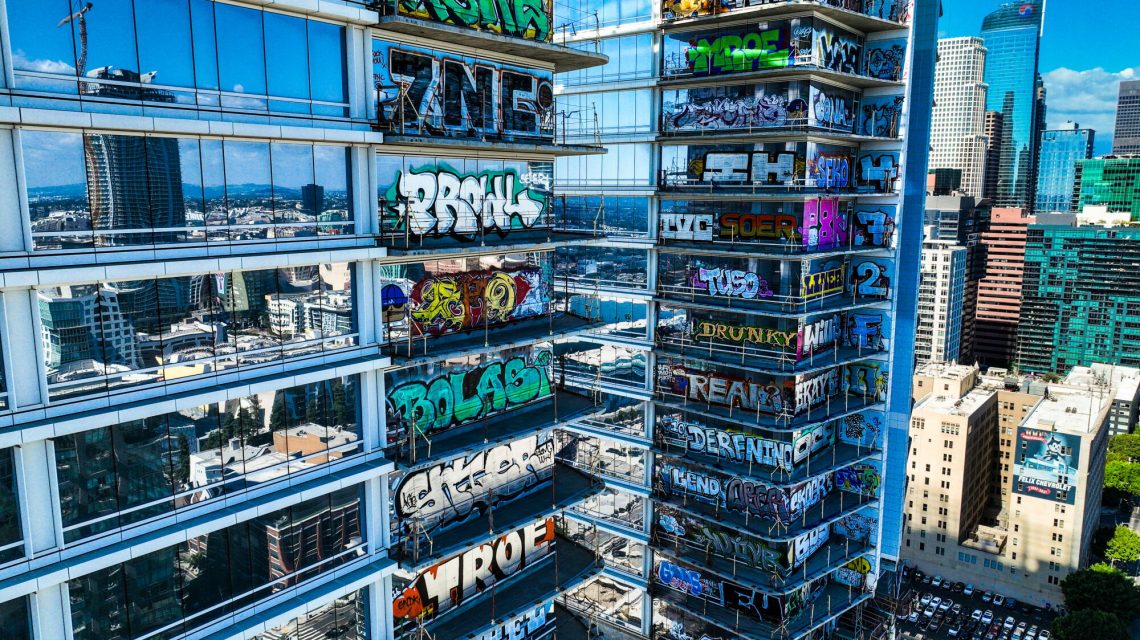
The shift began last year when abandoned downtown high-rises became canvases for graffiti, altering the skyline. Taggers also expanded to vacant Hollywood Hills mansions. According to Bruno Hernandez, executive director of the STP Foundation, the graffiti scene has grown bigger and more daring, encompassing these lofty targets.
Taggers favor risky, noticeable spots like abandoned buildings, where apprehension risks are minimized. Social media has increased their visibility, making these exploits appealing and shareable.
In the 1980s, graffiti emerged as part of the street art scene with taggings on buses and buildings. The 1992 riots expanded graffiti territories to include walls around burnt city blocks. Stefano Bloch, a former graffiti artist and now criminology professor, notes that these sites became renowned among graffiti artists.
“The skyscrapers in downtown were perfect examples… graffiti writers said, ‘Well, nobody cares about it, but I’m going to go up there to paint my name for everyone to see.'” – Stefano Bloch
Arturo Gonzalez, founder of the artist collective East Side of the River, recalls graffiti as an escape during his upbringing in East L.A. He acknowledges that tagging over work is part of the artist’s experience.
Social media’s role in graffiti culture cannot be understated. Taggers today aim for notoriety by choosing abandoned or neglected properties, painting them with vivid expressions. Los Angeles-based taggers agree that social media amplifies their reach and influence.
A notable case in 2015 involved Oceanwide Plaza, where halted construction left unfinished towers as prime graffiti locations. This became a space for taggers to express themselves on a grand scale. These towers caught international media attention, especially after being visibly adorned with bright graffiti earlier this year.
In Hollywood Hills, a neglected mansion faced a similar fate, becoming a target for graffiti. City Councilmember Nithya Raman highlights challenges in addressing these properties, proposing streamlined processes to tackle neglect.
The city has historically had mixed responses to graffiti. In 2002, efforts were made to prioritize graffiti removal. A decade later, the city pursued legal actions against taggers involved in a major graffiti event at the L.A. River. Though the case was dismissed, it highlighted ongoing challenges in managing city graffiti.
Los Angeles still spends millions annually on graffiti cleanup, yet the locations remain undisclosed. Councilmember Kevin de León advocated for action against property owners of the defaced skyscrapers, though the outcomes remain unclear.
Amidst these efforts, mainstream culture is adopting elements of graffiti. Hernandez received unusual requests from venture capital firms interested in graffiti as team-building activities, reflecting a complex relationship between graffiti culture and wider society.
 Jordan McClanahan on Her Unique Mormon Experience
 Chicago Area Celebrates Diwali and Hanukkah
 The Emergence of The Reader: Reviving Book Reviews
 Understanding the Superstition of Friday the 13th
 Brie Bella: From WWE Fame to Business Success
 Nania Lee’s Debut Novel Brings Unlikely Siblings Together