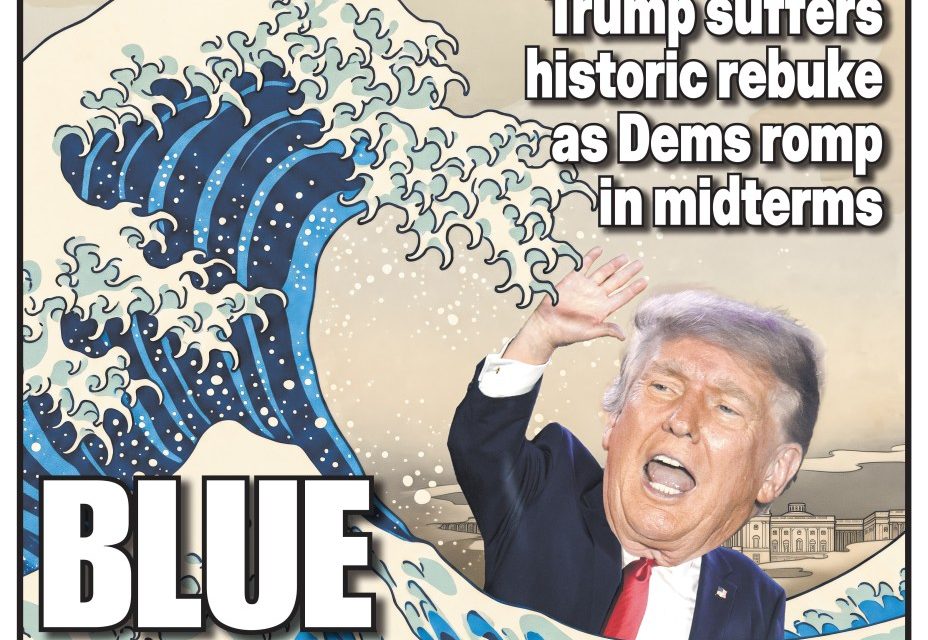
The results from Tuesday’s elections were not merely a blue wave; they represented a blue tsunami that significantly altered the Republican power dynamics. This outcome was anticipated, as recent polls indicated widespread dissatisfaction with President Trump and the GOP Congress. Predictions that the House would switch control materialized early in the evening. Similarly, the Senate saw a shift, signifying a major political change.
President Trump’s call for Republican voters to act as if his name were on the ballot might have been heard by some, but it resonated more powerfully with Democrats and independent voters who rejected his policies. The president’s approval ratings have been consistently below 40%, with dissatisfaction linked to the Iran war’s impact on energy prices and inflation. Despite warnings, Trump dismissed negative polls and public concerns as “fake news.” This lack of acknowledgment contributed to the political upheaval.
An AP poll from last month showed that 65% of adults blamed Trump’s policies for high prices, and only 17% approved of his handling of the cost of living issues. These statistics fueled the anti-GOP sentiment and demonstrated that voters wanted change.
A total repudiation of the president and the Republican Party occurred on Tuesday.
Historic precedents align with this outcome. In 2014, Republicans gained nine Senate seats midway through Obama’s second term. Obama’s response to 2010’s election results, which he termed a “shellacking,” demonstrated a lack of understanding that led to continued challenges in his presidency. Similarly, Trump faced significant challenges but previously managed to retain Senate control during his first term despite losing House seats.
Now, Trump faces new obstacles with the White House. It might be beneficial for him to publicly accept responsibility for the electoral outcome. Though unlikely, such an acknowledgment is crucial to reset his leadership focus.
From tariffs affecting domestic prices to his tendency for branding, these issues require attention. Scaling back on unchecked practices could help in shaping his presidency positively in its final years.
The Democrats, sensing vulnerability, are poised to act. Rep. Robert Garcia issued a direct warning by advising the president and his team to prepare legally. With Garcia likely leading House investigations, the warning is not to be taken lightly.
New York elections mirrored the national trend. Gov. Hochul’s re-election reinforced the Democratic stronghold, despite GOP efforts to challenge her on economic grounds. Her victory indicates continued Democratic influence throughout New York and beyond.
 Mayor Mamdani’s Policing Reform Plans
 Gen Z Voter Shifts and Their Impact on the 2026 Midterm Elections
 Disappearance of US Senate Candidate Raises Questions
 DOJ Rule Change Reduces Appeal Time for Immigrants Facing Deportation
 Hakeem Jeffries’ Bid for House Speaker Faces Progressive Hurdles
 Ohio Judge Dismisses Defamation Lawsuit by Rep. Max Miller