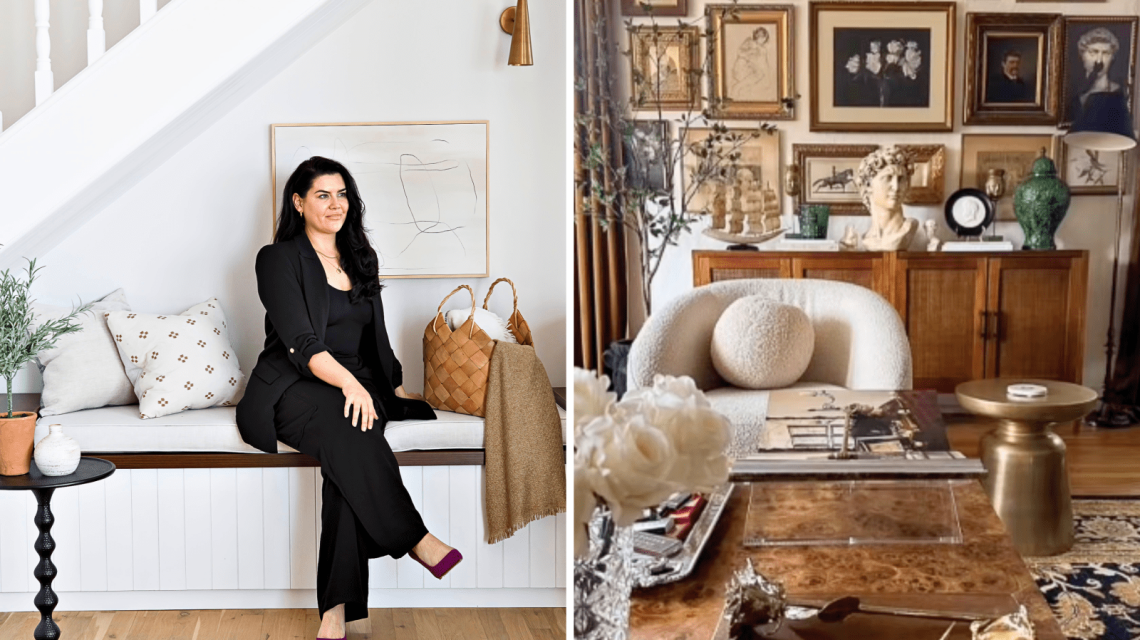
The granny chic aesthetic experienced a surge in popularity on social media platforms like Pinterest and Instagram. Recognized for its warm woods, gold accents, and vintage allure, it captured many imaginations. However, designers believe its mainstream appeal might be fading quickly.
Understanding Trend Lifecycles
Trends today evolve rapidly. They typically start on mood boards, make their way to magazine spreads, and then are easily accessible through platforms like Amazon. This quick transition often leads to a loss of uniqueness. A curated aesthetic soon becomes a mass-produced version, as seen with granny chic.
This look, marked by well-lit rooms filled with antiques, dark wood, and botanical prints, suggested a home filled with history. It stood in contrast to prior cold, minimalistic designs. Rooted in the ‘light academia’ aesthetic, it brought warmth and character, replacing mirrored, plush velvet interiors.
Designers’ Perspective on the Granny Chic Trend
According to designers in both Europe and America, the broad acceptance of granny chic has reached its apex. Aoife Maria Tobin, creative director of Style So Simple, highlights the appeal of the trend. She notes the desire for warmth and character after minimal interiors.
‘Buy actual vintage or antique pieces, not replicas,’ Tobin advises. Mass production diminishes the authentic value found in genuine vintage items.
Tobin compares the trend’s path to that of modern farmhouse style, which lost its allure with heavy replication. Likewise, granny chic’s charm is waning as retailers mass-produce weakened versions. The initial appeal of accumulated history and authenticity fades once reduced to a checklist.
Social Media’s Influence
Samantha-Jane Agbontaen, founder of House Designer, observes that granny chic resonated with those tired of minimalism. The look offered a sense of history, suggesting rooms evolved over time rather than appearing purchased all at once.
Social media accelerates the trend cycle. Styles connected to social media often date quickly due to Gen Z’s influence. According to Agbontaen, trends rooted in deep craftsmanship endure longer.
An Industry in Continuous Flux
The furniture market is on a rapid growth trajectory. Forecasts predict it to reach approximately $996.38 billion by 2034, a rise from $597.71 billion in 2025. This growth prompts faster trend shifts due to increased products and choices.
Fitted furniture data shows earthy tones receiving 18,000 searches monthly, growing 22% year-on-year. For chocolate brown interiors, search interest rose 120%, while khaki interiors grew 100%.
Agbontaen suggests people still seek warmth and personality in homes but are introducing antique elements more sustainably.
Tobin remains fond of quality versions of granny chic, akin to appreciating well-executed gray interiors and modern farmhouse styles.
The challenge isn’t the variation itself; rather, the issue lies in overproduction and loss of originality.
 Effective Skincare Routine for Men with Particle Moisturizer
  Rising Trend: Solo Travel Gains Popularity
  Prepare for Rainy Fall Weather with Discounted Rain Jackets
  Review: Stokke Nighti 3-in-1 Convertible Cot Bed
  Embrace Failure: Turning Setbacks into Success
  Unusual In-Flight Behavior Leaves Passengers Stunned