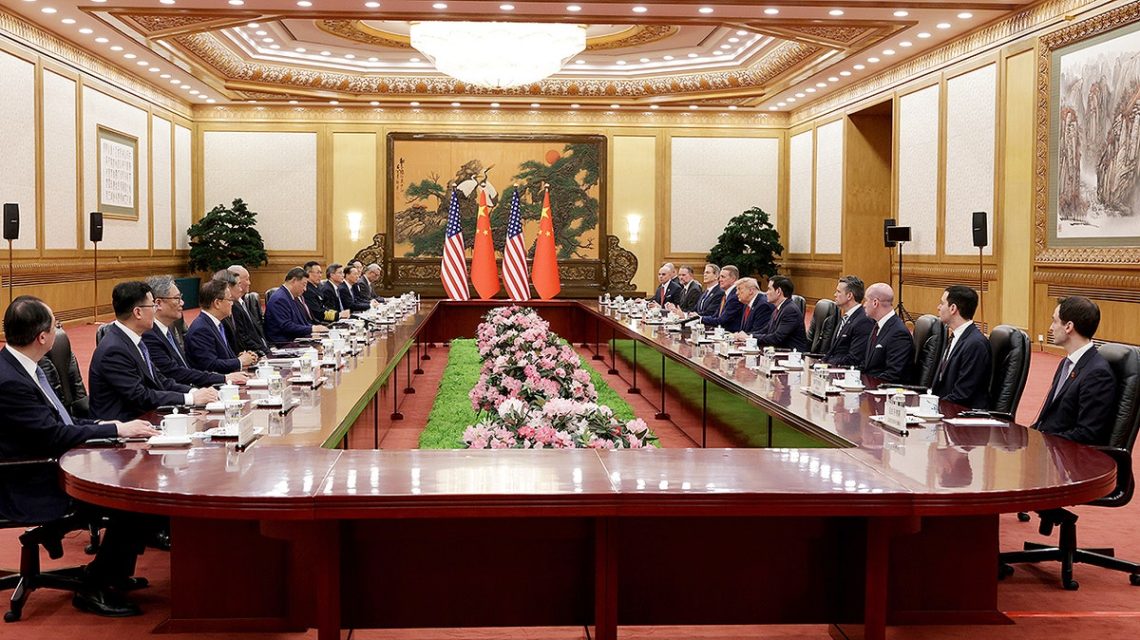
As President Donald Trump prepares to meet Chinese President Xi Jinping in Washington this week, several crucial topics will be discussed: trade, tariffs, national security, among them artificial intelligence (AI), a key factor in shaping the future balance of economic and military power. This competition extends beyond AI models to the underlying technology, including semiconductors and computing infrastructure.
Historically, the U.S. has led in AI technology and semiconductor design, but China’s ambition to reduce its dependency on U.S. tech poses a challenge. Huawei has played a pivotal role in this effort, drawing attention from Washington. Regulations have been implemented to limit China’s access to advanced technology, intending to strengthen national security by curbing military advancement.
However, this has spurred China to develop its own AI ecosystem. Huawei has expanded its AI-chip roadmap and Chinese developers are bolstering domestic capabilities. Demand for Huawei’s AI computing hardware exceeds supply, indicating rapid growth and urgency in China’s tech sector.
Washington must address a strategic shift. The challenge is not only maintaining tech security but ensuring global preference for American technology. If U.S. tech becomes inaccessible, China intensifies efforts to create alternatives. Huawei aims to supply these substitutes globally, encouraging international adoption.
At present, the battle is about more than chip sales; it concerns ecosystems. America aims for global adoption of its technology stack, contending against China’s ambitions. Huawei seeks to establish a Chinese-controlled tech framework, limiting U.S. influence.
President Trump distinguishes national security technology from broader commercial markets. His administration rewrote AI rules to focus on technology critical to security, offering selected products to approved Chinese clients under stringent conditions.
No one advocates unrestricted technology transfer enhancing China’s military capabilities. Yet, comprehensive restrictions might accelerate China’s innovation efforts to replace American tech commercially. Huawei’s objective transcends survival under policies; it wants its chips and systems to dominate markets globally.
The contest, therefore, centers on software developers, computing systems, chip manufacturers, and overarching technology stacks. America retains advantages with leading semiconductor designers, top AI firms, and innovative culture. But those advantages require active defense.
Current discussions contemplate slowing AI development or imposing wider restrictions for safety. While AI presents legitimate risks, each measure bears consequences concerning global tech leadership.
Washington must decide if restrictions enhance security without ceding technological ground to China. Competition remains fierce, with Huawei forging ahead, meeting demand for AI systems globally.
The U.S. must focus on maintaining control over AI infrastructure, avoiding past mistakes. Semiconductors symbolize strategic power, influencing multiple sectors like medicine, intelligence, and military. Hence, the Trump-Xi summit bears significance beyond economic dialogue.
The meeting underscores the broader competition: establishing 21st-century tech infrastructure. Protect sensitive technology while harnessing commercial opportunities to maintain global preference for U.S. tech.
Ben Ferguson, a syndicated radio host and author, emphasizes the AI Cold War’s ongoing nature and the centrality of semiconductors in this geopolitical landscape.
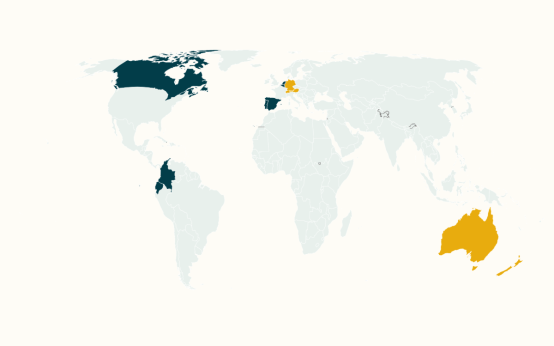 Dutch Review Board’s Euthanasia Ruling and International Debate
  Israeli PM Commends Heroic Actions in Flight Emergency
 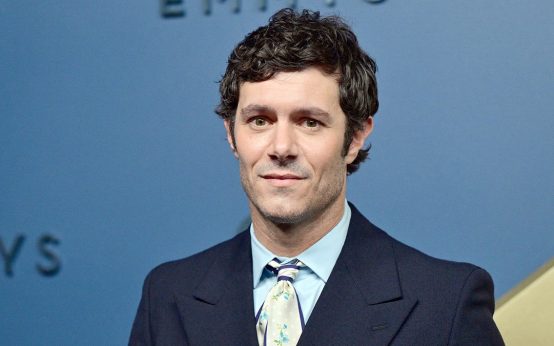 Rabbi and Jewish Leaders Criticize Adam Brody for ‘Genocide’ Comment
  Flydubai’s Emergency Landing Highlights Cockpit Security
 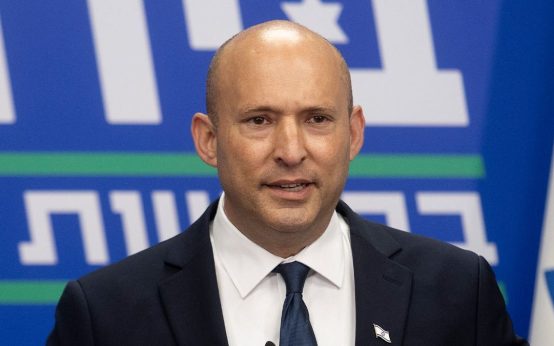 Former Israeli PM Naftali Bennett Commends Passengers and Crew for In-Flight Heroism
 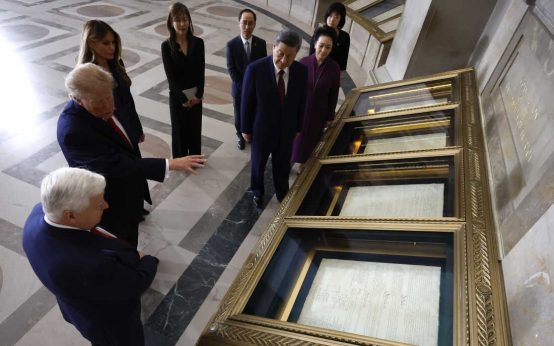 Diplomatic Complexities Unfold at U.S. National Archives Visit