Everyone knows the story of the Titanic, the opulent British ocean liner that struck an iceberg and sank. However, few are familiar with the Cap Arcona, a German counterpart to the Titanic. Before World War II, it was a cruise ship serving affluent passengers. By the war’s end, it became a floating concentration camp for the Nazis. Anchored in Lübeck Bay, the ship was attacked hours before liberation, leading to the deaths of nearly everyone onboard.
Germany’s Baltic coast, on sunny days, appears peaceful and idyllic. Yet, beneath this beauty lies a grim history, remembered through a beachside marker bearing the name Cap Arcona alongside words representing fear, panic, and grief.
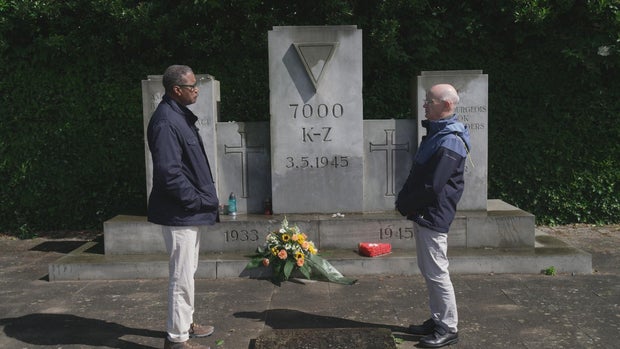
British historian Bill Niven has dedicated much of his career to studying the Holocaust. He met with us at Lübeck Bay, still haunted by the memory of the Cap Arcona and another smaller cargo ship bombed on May 3rd, 1945.
The memorial on this site honors the victims, with representations of various nationalities, including Americans, Greeks, Italians, and the Jewish people symbolized by the Star of David.
Every year on the attack’s anniversary, a ceremony is held to remember those who perished and suffered. Bruno Neurath-Wilson came to honor his father, Willi, one of the survivors who was a political prisoner on the Cap Arcona. With only about 400 survivors, Bruno reflects on his father’s harrowing experience.
The Cap Arcona was launched in 1927 and became a symbol of luxury in its prime, transporting passengers between Europe and South America in just two weeks. It was fitted with a tennis court, a heated swimming pool, a remarkable restaurant, and exquisite first-class cabins.
However, as Adolf Hitler rose to power in 1933 and the Nazis invaded Poland in 1939, the ship’s purpose drastically changed. On one of its last cruises before the war, the Cap Arcona carried some German Jews to South America. Most Jews, however, had no escape.
Manfred Goldberg was forcibly removed from his hometown in Kassel at the age of 11 and sent to concentration camps. He vividly recalls the cruelty he witnessed and endured during these years.
Among Goldberg’s memories is the tragic disappearance of his younger brother Hermann, taken by the SS from the camp. He also recounts the emotional bond they shared, reading stories together to cope with their dire situation.
George Schwab, another young boy in the camps, recounts the brutality his family faced after the German soldiers invaded their hometown of Liepāja, Latvia.
Bruno’s father, Willi, was arrested for distributing anti-fascist fliers in opposition to the Nazi regime. As a political prisoner, he experienced the grueling conditions of Neuengamme work camp.
Willi Neurath, Schwab, Goldberg, and many others ended up at Lübeck Bay as the Allies closed in. With the Allies nearing, the Cap Arcona was repositioned there, now bearing huge rust and wear.
SS Chief Heinrich Himmler commanded the evacuation of concentration camps, transferring prisoners to the ship and other vessels in Lübeck Bay. The Cap Arcona, currently unable to harbor its 1,500 intended capacity, was flooded with over 4,000 prisoners.
Himmler’s order aimed to eliminate prisoners as evidence of Nazi atrocities. Crammed to capacity, the conditions of survival diminished significantly on the ship and barges.
Manfred Goldberg describes the cramped conditions on the barges where his group was held during transport.
Despite these hardships, a few prisoners attempted escape and relocated the barge closer to shore. George Schwab recounts how Norwegian prisoners improvised sails to move towards land.
The Cap Arcona was anchored offshore until May 3, 1945, when 13-year-old George Schwab was prepping to board another ship destined for it. Bombers appeared overhead, signaling impending horror.
British Typhoon fighters struck the ship, mistakenly believing it was a Nazi escape vessel. The attack resulted in a fiery disaster, with over 4,000 dying onboard.
Bill Niven explains the horrific nature of the attack and the British military’s awareness of the concentration camp prisoners before pursuing the strike.
The incident was compounded by previous wartime intelligence and decisions leading to tragic consequences. Despite urging further investigation, no follow-up inquiry occurred.
Approximately 7,000 lives were lost across multiple vessels, with survivors detailing the chaos and devastation.Daniel Long, who authored a detailed thesis on the Cap Arcona, explored the aftermath and documentation.
Ultimately, for those who survived, like Bruno Neurath-Wilson’s father, the Cap Arcona became a site of tragic reunion.
Bruno recalls the improbable circumstances that led to his parents reuniting onshore after the bombings.
Survivors like George Schwab and Manfred Goldberg leveraged their experiences into influential lives. George Schwab achieved political success, contributing to Latvia’s induction into NATO, while Goldberg became an advocate, sharing his story as a reminder of Nazi crimes.
The Cap Arcona lay sunken in Lübeck Bay for several years before dismantlement. Its story persists through commemorations that ensure the world remembers.
Manfred Goldberg passed away in 2023 at the age of 95, ensuring his life work and experiences endured.
 Activists Push for Nationwide Ban on Child Marriage in the U.S.
  Investigation into Alleged Incident at Cornell University
  Rising Drone Threats Highlight Vulnerabilities in Moldova’s Airspace Defense
  Bolivia Faces Security Test Amid Unrest
 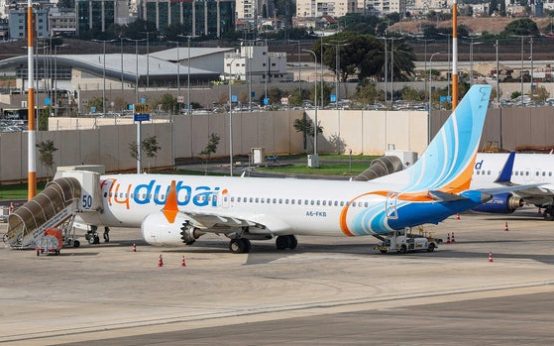 Incident on FlyDubai Flight Raises Security Concerns
 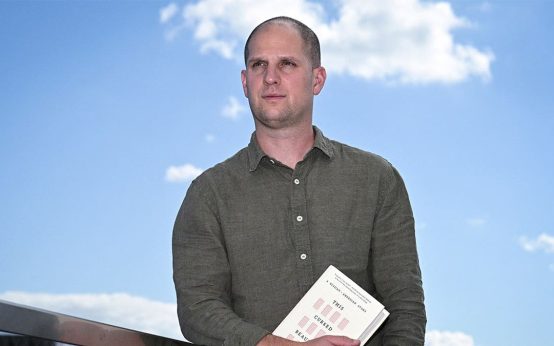 Journalist Gershkovich Discusses Wrongful Detention and Release in Russian Prisoner Swap