
President Donald Trump announced that his administration will cease using federal Medicaid funds to cover gender-affirming surgeries and hormone therapies for transgender minors. This decision raises questions about the continued availability of such care in states that have enacted protections for transgender youth.
Implications of the Decision
This move is part of a broader effort by the Trump administration to limit protections and services for transgender youth. Policies to restrict transgender students’ participation in school sports have also been supported by the administration, amidst a backdrop of Republican-led states banning transgender athletes from competing on teams matching their gender identity.
States that protect gender-affirming care can continue offering treatment and may leverage state funding to cover services. Trump conveyed this policy change via Truth Social, emphasizing that Medicaid would no longer fund surgeries and hormones for minors. He stated his administration aims to protect children by ending what he termed “barbaric surgeries and practices.”
According to the Centers for Medicare & Medicaid Services (CMS), the new rule will stop federal Medicaid funding for gender-affirming surgeries and hormone therapies for minors, also barring the Children’s Health Insurance Program (CHIP) from funding these treatments for individuals under 19. The policy is slated to go into effect in October.
States That Maintain Access
The national landscape of access to gender-affirming care remains deeply divided. As of May, 27 states have laws or policies limiting youth access to such care, meaning not all states restrict access. The Kaiser Family Foundation (KFF) tracker indicates that about half of transgender youth aged 13 to 17 reside in states with care restrictions.
States generally protecting access include those on the West Coast and Northeast, such as California, Oregon, Washington, Colorado, Minnesota, Illinois, New York, and Massachusetts. Many have adopted “shield” laws to protect providers and patients seeking legal medical care. Despite this, Trump’s Medicaid action may impact families in those states due to the federal funding’s role in state Medicaid programs. Although care may remain lawful, the loss of federal reimbursement could pose coverage challenges for low-income families.
Why Care Continues
KFF’s tracker reveals that restrictions on gender-affirming care are predominately managed at the state level. While some states prohibit treatments like puberty blockers or hormone therapy for minors, others explicitly protect access. Court cases are ongoing nationwide, with KFF reporting 18 states facing legal challenges to their restrictions. The Supreme Court’s 2025 decision in United States v. Skrmetti upheld Tennessee’s ban on gender-affirming care, granting states more legal authority to enforce restrictions. However, this ruling does not mandate states to ban care, resulting in a mix of different policies.
Perspectives from Advocates and Opponents
The Trump administration asserts that the policy aims to protect children from treatments it claims could cause irreversible harm. Health and Human Services Secretary Robert F. Kennedy Jr. stated the government would stop funding procedures that “fail to meet the evidentiary standard our children deserve.” Dr. Mehmet Oz, CMS administrator, cited a commitment to “following the science” and safeguarding children.
LGBTQ+ advocates strongly contest this stance. Kelley Robinson, Human Rights Campaign president, argued the policy interferes with medical decisions made by families and doctors. Major medical organizations, including the American Medical Association and the American Academy of Pediatrics, continue to back access to gender-affirming care based on clinical guidelines.
While the Trump administration’s policy changes eliminate Medicaid funding for gender-affirming care for minors, it does not remove access nationwide. State laws will continue to play a significant role in access, with many states maintaining policies to protect transgender youth and healthcare providers serving them.
 State Department Simplifies Passport Process with Online Applications
 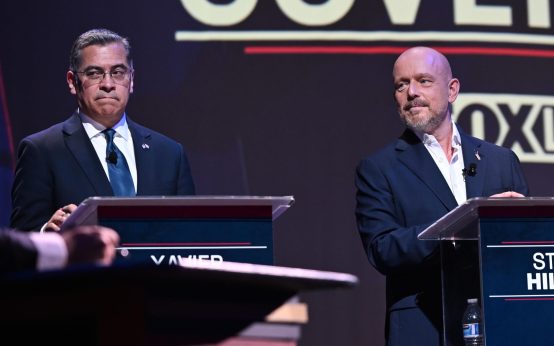 Becerra and Hilton Clash in California Gubernatorial Debate
  California Voters to Decide on $7.5 Billion State Research Fund
 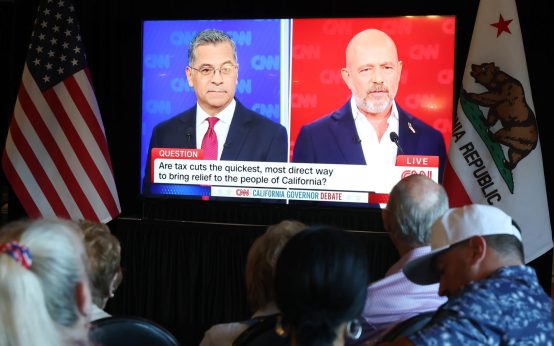 Highlights from the California Gubernatorial Debate: Becerra vs. Hilton
  Becerra vs. Hilton: The Debate and Key Issues in the California Governor Race
  Senate Confirms New Labor Secretary