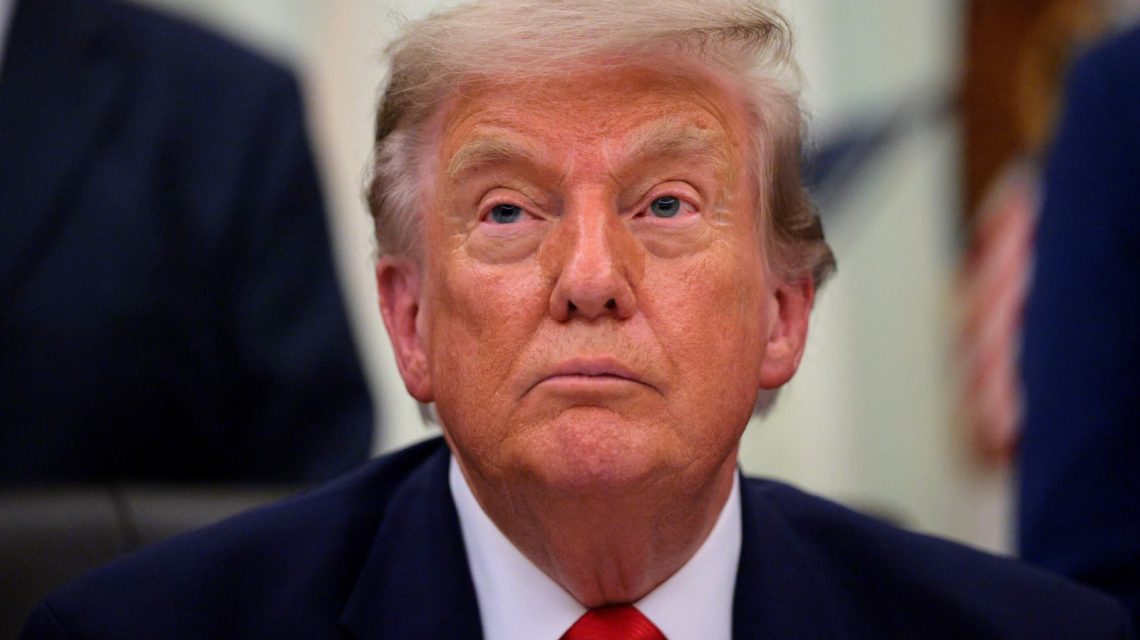
President Donald Trump’s approval rating faces challenges in several states he previously won by a significant margin in the 2024 election. As of July 30, his national approval rating stands at 36 percent, with a disapproval rate of 59 percent, resulting in a net approval rating of -24, according to Civiqs’ ongoing poll of registered voters. This poll has collected over 120,000 responses since January 20, 2025, when Trump began his second term.
Despite the higher approval ratings in strong Republican states, a breakdown by state reveals a decline in 11 states that Trump carried by at least 10 points during his 2024 presidential election against Democratic former Vice President Kamala Harris. This decline could impact the upcoming November midterm elections, where shifts in voter sentiment might affect the control of Congress. Republicans aim to maintain their narrow majorities in the House and Senate throughout Trump’s second term.
State-by-State Approval Decline
Initially, Trump’s approval was positive in the states he won by a significant margin during his 2024 inauguration. However, it has since dropped below expectations in at least 11 of those states. As certain state policies have unfolded, such as new tariffs on trading partners and the announcement of conflict with Iran, the approval rating has notably decreased.
States with net negative approval ratings include:
- Alaska: -14 (40 percent approve, 54 percent disapprove)
- Florida: -12 (42 percent approve, 54 percent disapprove)
- Iowa: -14 (44 percent approve, 49 percent disapprove)
- Kentucky: -3 (39 percent approve, 53 percent disapprove)
- Louisiana: -4 (45 percent approve, 49 percent disapprove)
- Missouri: -7 (44 percent approve, 51 percent disapprove)
- Mississippi: -1 (47 percent approve, 48 percent disapprove)
- Nebraska: -3 (45 percent approve, 48 percent disapprove)
- Ohio: -13 (40 percent approve, 53 percent disapprove)
- South Carolina: -9 (42 percent approve, 51 percent disapprove)
- Texas: -13 (40 percent approve, 54 percent disapprove)
Even in states like Wyoming and North Dakota, where Trump began with +45 and +31 net approval, respectively, ratings have declined steeply to +19.
Critical Races and Their Impact
Democrats need to gain four seats in November to control the Senate, making key races in Iowa, Ohio, and Texas crucial. In Iowa, Democratic State Representative Josh Turek is competing against Republican U.S. Representative Ashley Hinson for a pivotal Senate seat. Ohio’s Democrats rely on former Senator Sherrod Brown to challenge Republican incumbent Jon Husted. In Texas, Democratic State Representative James Talarico faces Republican Attorney General Ken Paxton in a highly watched Senate race. These states, once solidly in Trump’s favor, now show decreased approval, potentially affecting election outcomes.
Key Battleground States
Trump’s approval ratings are also underwater in seven swing states that he carried in the 2024 election. Continued declines in these states could damage Republican chances in the midterm elections and present opportunities for Democrats to secure vital House and Senate seats.
Notable changes in swing states:
- Arizona: -12 (42 percent approve, 53 percent disapprove)
- Georgia: -22 (36 percent approve, 58 percent disapprove)
- Michigan: -21 (37 percent approve, 58 percent disapprove)
- Nevada: -21 (37 percent approve, 58 percent disapprove)
- North Carolina: -15 (40 percent approve, 55 percent disapprove)
- Pennsylvania: -18 (38 percent approve, 56 percent disapprove)
- Wisconsin: -16 (40 percent approve, 56 percent disapprove)
Responses from the White House
The White House has dismissed concerns about low approval ratings, citing Trump’s 2024 electoral victory as evidence of strong public support. Spokesman Davis Ingle emphasized that Trump continues to deliver on his agenda, stating, “He has already achieved historic progress across America and globally.” Ingle asserts that Trump remains a dominant figure in American politics.
 Maryland First State to Restrict Electronic Pricing in Grocery Stores
  Activists Push for Nationwide Ban on Child Marriage in the U.S.
  Democratic Hopes and Historical Warnings in 2026 Senate Race
  Republicans Face Challenges Amidst Cost of Living Concerns
  A Different Kind of Fall for Congress This Year
  Cornel West and Sean Hannity Discuss Differences on Podcast