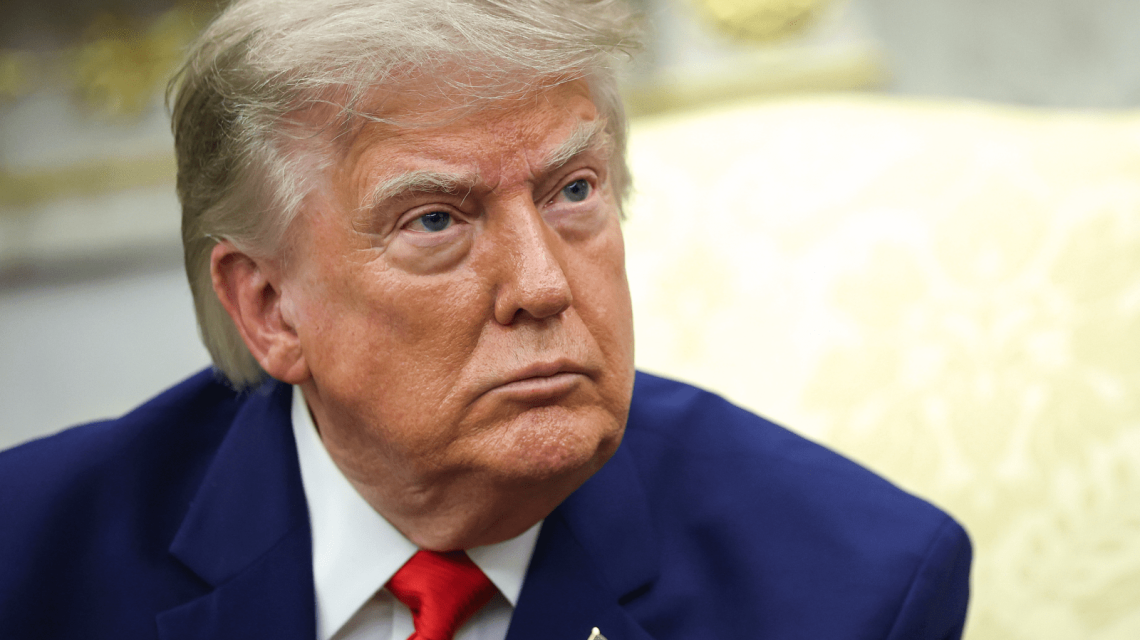
With 100 days until the 2026 midterm elections, polling illustrates President Donald Trump facing a divided political landscape by geography, with less favorable conditions than when he resumed office. Data from Civiqs’ polling of 118,886 registered voters reveals these insights.
National and State Approval
Nationally, Trump’s approval sits at 38 percent with 57 percent disapproval, resulting in a 19-point deficit. Republican strongholds show the best performance, yet Trump remains underwater across key states likely impacting the upcoming midterms.
Trump shows negative net approval in all major battleground states as of 100 days before the 2026 midterm elections. Several states with initially positive net approval at his second term’s start now show negative ratings.
Impact of Approval on Midterm Elections
Trump’s negative standing in pivotal swing states suggests that even small shifts in voter sentiment could significantly influence congressional control post-midterm elections. Use the map below to view Trump’s approval ratings in each state 100 days prior to the polls.
Republican States Show Support but Decline
Trump retains strong backing in Republican territories. Wyoming leads with a +26 net approval, followed by North Dakota, West Virginia, Alabama, and Idaho. Despite this, even strong states report declines since January 2025.
Wyoming saw a drop from +47 to +26, Idaho from +34 to +14, and West Virginia from +35 to +18. Kentucky decreased from +23 to -1, indicating significant shifts in the map’s landscape.
Swing State Shifts
States crucial for national elections show Trump underwater: Arizona (-11), Georgia (-21), Nevada (-16), North Carolina (-13), Pennsylvania (-12), Wisconsin (-14), Florida (-9), Ohio (-8). Florida changed from +9 to -9, and Ohio from +8 to -8, illustrating a marked shift in these regions.
Demographic Trends
The demographic breakdown offers insight into the state-level approval trends. Trump maintains his weakest support from younger voters, with only 25 percent aged 18 to 34 approving, and among independents, women, and postgraduates.
Independent voters show 32 percent approval and 60 percent disapproval, while women register a 63-to-32 margin against Trump. Education creates a gap, with only 27 percent of postgraduates approving Trump’s performance.
Approval Decline Overview
Every tracked state notes a lower net approval than on January 20, 2025. Notable declines appear in states where Trump started strong, such as Kentucky and Wyoming.
Key drops include Kentucky’s decline from +23 to -1 and Wyoming’s from +47 to +26. The declines reveal a significant shift, not confined to Democrat-dominated states.
Persistent Opposition in Democratic States
Democratic-leaning states continue to show strong opposition. Hawaii posts the lowest approval rating at -59, followed by Vermont, Maryland, California, Massachusetts, Washington, and New York. These states began with Trump underwater, and the trend persists.
Tightened Margins in Middle-of-the-Map States
Many states sit near the balance between positive and negative approval. Indiana records +5, Utah +6, and Kansas +7. Louisiana stands at -3 and South Carolina at -4, showing potential shifts as elections approach.
Uncertain Political Map
One hundred days before the elections, Trump’s map resembles its beginning form but displays weakened margins. Trump’s support remains strong in Republican areas, but margins are smaller, raising concerns over his standing before midterms.
White House Reaction
The White House dismisses polling variations, citing Trump’s 2024 election victory as a sign of public support. Spokesman Davis Ingle emphasizes Trump’s achievements, labeling him as the most accomplished President in U.S. history.
 Maryland First State to Restrict Electronic Pricing in Grocery Stores
  Activists Push for Nationwide Ban on Child Marriage in the U.S.
  Democratic Hopes and Historical Warnings in 2026 Senate Race
  Republicans Face Challenges Amidst Cost of Living Concerns
  A Different Kind of Fall for Congress This Year
  Cornel West and Sean Hannity Discuss Differences on Podcast