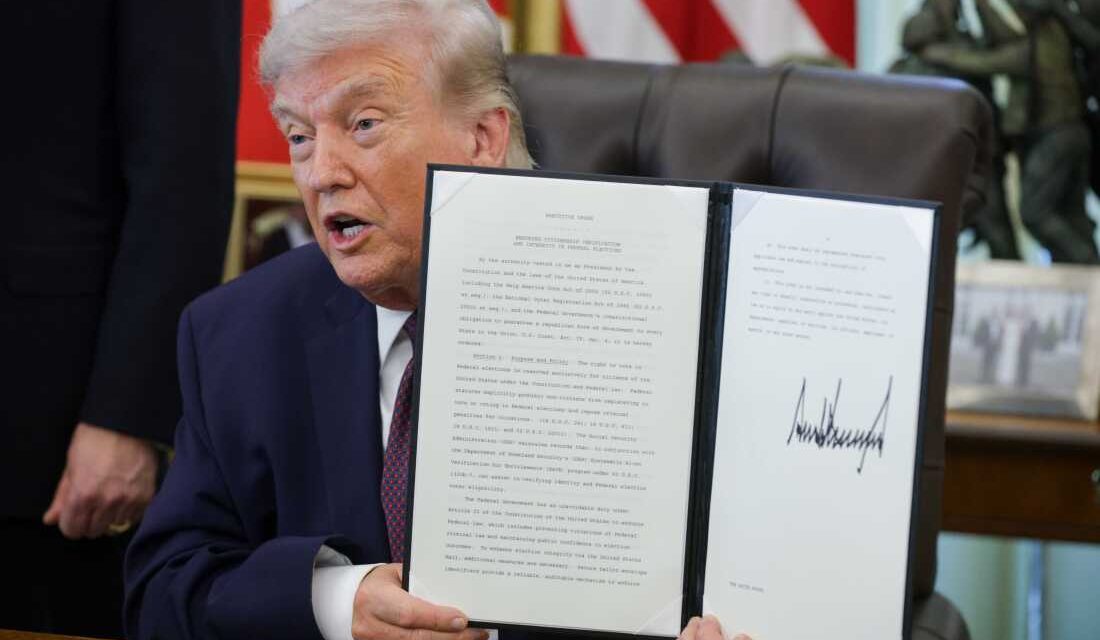
In March, President Trump issued an executive order aiming to restrict mail-in voting across multiple states and Washington, D.C. This move has become the center of a legal battle, with the Supreme Court recently pausing a lower court’s block on key directives from Trump’s order.
With absentee voting for the midterms commencing soon, significant legal and practical challenges stand in the way of implementing Trump’s directives. The order, released on a Monday, is part of Trump’s broader efforts to influence election procedures.
In the midst of a related lawsuit, the U.S. Postal Service remains restricted by a nationwide ruling from U.S. District Judge Indira Talwani in Boston. This ruling prevents USPS from following Trump’s directives, adding complexity to the legal situation.
The Supreme Court has not commented on the legality of the executive order, which has yet to affect the ability of eligible absentee voters to vote by mail. Previously, Judge Talwani blocked parts of Trump’s order in predominantly Democratic states and Washington, D.C. Her decision was based on the constitutional limits of presidential power regarding election rules.
Trump’s order demands the Department of Homeland Security to compile lists of adult U.S. citizens and mandates the Postal Service to acquire lists of eligible mail voters from states. USPS is supposed to send mail-in ballots only to individuals on these lists, and election officials must use specific barcodes on mail ballot envelopes.
Trump, who has used mail voting himself, claims the order is to prevent illegal voting by non-citizens, although research shows such occurrences are rare. The court’s decision pointed out Trump’s overreach and established that USPS lacks legal authority to regulate mail-in voting independently.
The Supreme Court’s emergency decision upheld the administration’s and Republican-led states’ appeal to pause the June ruling temporarily in some states. However, this pause does not resolve the question of the executive order’s legality.
While the effect of the Supreme Court’s decision on mail-in voters remains unclear, the ongoing lawsuits led by Democrats and voting rights groups continue to challenge Trump’s efforts. The timeline for implementing Trump’s order is narrowing, and legal resolutions may not come in time for the midterms.
In July, U.S. Solicitor General D. John Sauer acknowledged the tight schedule for the rule or policy implementation by USPS or DHS. He noted that actions would need to commence well before Election Day to be effective for upcoming elections.
Editor’s note: USPS is a financial supporter of NPR.
 State Department Simplifies Passport Process with Online Applications
 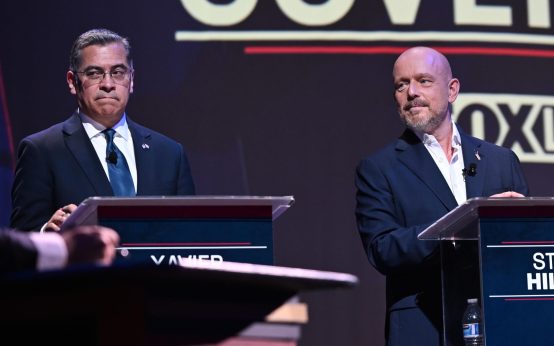 Becerra and Hilton Clash in California Gubernatorial Debate
  California Voters to Decide on $7.5 Billion State Research Fund
 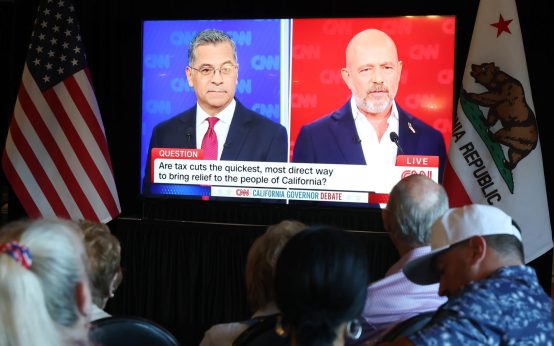 Highlights from the California Gubernatorial Debate: Becerra vs. Hilton
 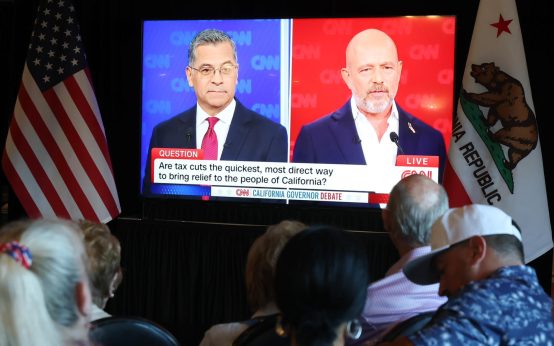 Becerra vs. Hilton: The Debate and Key Issues in the California Governor Race
  Senate Confirms New Labor Secretary