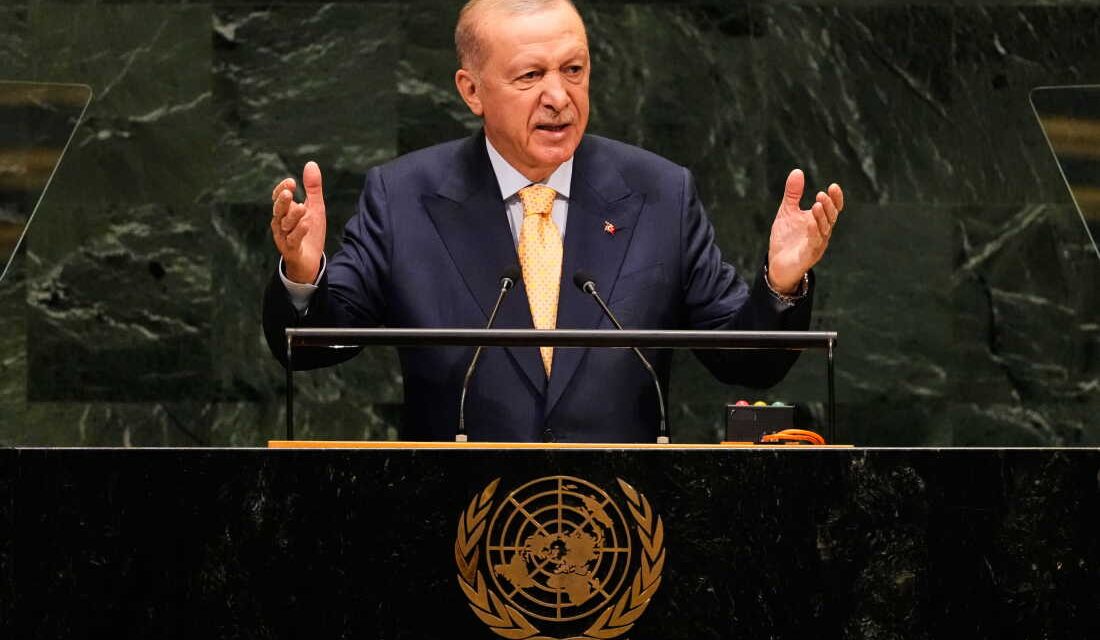
ISTANBUL — Leaders from Saudi Arabia, Turkey, and Pakistan gathered in Mecca on August 7 to sign the Mecca Joint Defense Agreement. This pact, seen by some as the formation of a ‘Sunni Security Triad,’ integrates Saudi Arabia’s oil affluence, Turkey’s expanding defense capabilities with NATO’s second-largest military, and Pakistan’s nuclear arsenal. It includes mutual defense commitment, resembling NATO’s Article 5, and promises to share intelligence and defense technologies.
More than its content, the agreement serves as a building block in an emerging regional security framework, aimed at safeguarding against the uncertain geopolitical landscape after U.S. engagement decreases. Turkey’s Foreign Minister Hakan Fidan reported that Turkey spearheaded these discussions over a span of three years.
Experts suggest Turkey’s increasing influence in the Middle East reflects a strategy to establish itself as a key regional figure amidst decades of war that have disrupted traditional power balances. Turkey’s development of its defense sector lessens its reliance on Western military support, but it continues to seek F-35 aircraft from the U.S. Turkey has expanded its military presence globally, establishing bases in Somalia, Qatar, Libya, and playing a crucial role in Syria’s resurgence post-civil war.
Turkey employs cultural soft power through popular TV series and humanitarian projects like regional school constructions to boost its influence.
Turkey positions itself as a mediator to resolve global conflicts, spanning efforts from Ukraine to Iran. This strategic pursuit aligns with regional disruptions following the October 7, 2023, Hamas-led attack on Israel and the stagnant seven-month U.S.-Israeli war against Iran, where Iran’s proxy influence across Syria and Lebanon wanes.
Discussions in Washington propose minimizing the U.S.’s Middle East security role post-conflict, questioning the efficacy of its security coverage for the region. Turkish President Recep Tayyip Erdogan, Saudi Crown Prince Mohammed bin Salman, and Pakistani Prime Minister Shehbaz Sharif signed the trilateral pact, endorsing mutual defense against external threats.
Challenges Turkey faces are significant, stemming from economic mismanagement resulting in high inflation, a devaluing currency, and increased energy costs straining national resources. However, the most formidable challenge may be Israel’s increasing assertiveness.
Turkey’s aspirations run deeper than its current economic limitations, comments Asli Aydintasbas of the Brookings Institution’s Turkey Project. While Turkey exhibits military strength, turning its rising influence into a Turkey-led regional order remains elusive beyond its borders.
Turkey’s Historic Role
The Ottoman Empire historically governed much of the region from Istanbul for nearly five centuries. President Erdogan’s government views Turkey’s role through a civilizational lens, advocating that the Ottoman governance model was superior to the states that succeeded it.
Aydintasbas suggests the ruling elite believe Turkey is fated to be the region’s dominant force. Yet, due to economic constraints, Turkish policy is focused on managing regional disorder to protect its essential interests, not to construct a neo-Ottoman empire.
Post-U.S. shifts in influence, particularly after the conflict with Iran, will see Turkey maneuvering patiently to fill any emerging gaps in regional power.
President Trump has questioned the value of U.S. bases in the region, leading to troop reductions in Syria and Iraq. The Mecca Defense Agreement is reportedly backed by the U.S. Stability over democratic transition is now the regional preference due to ongoing turmoil.
Israel’s Strategic Movements
Syria represents a focal point for Turkey’s growing regional influence post-Bashar al-Assad’s regime collapse in 2024. Turkey secured substantial contracts for Syria’s reconstruction and partnered in rebuilding its army, contrary to Israel’s strategy post-Hamas’s Israel attacks.
Aydintasbas labels Israel’s regional approach as ‘mowing the lawn,’ an Israeli military term promoting preemptive militarized suppression. More than 74,000 lives were lost in Gaza following Israel’s operations as per Gaza’s Health Ministry.
Israel’s strategy is to maintain neighborly military suppression to prevent regional power rivals and ensure unrestricted action. It encompasses southern Syria territories under Israeli control.
Previously, Israel and Turkey did not directly compete regionally, notes Eldad Ben Aharon of the Peace Research Institute Frankfurt. However, increased tensions emerged when Israel struck a defunct Syrian airbase to thwart presumed Turkish troop deployment—a move called an ‘unnecessary escalation’ by U.S. officials.
Complex Relations with Israel
Turkey maintains a complex, historically tense relationship with Israel. The 1949 recognition of Israel by Turkey marked its status as the first Muslim-majority nation to do so. Yet, contrasting rhetoric surfaced during the U.N. General Assembly post-Hamas strikes.
Erdogan accused Israel from the U.N. platform of a ‘genocidal mindset,’ causing the Israeli delegation to exit. Israel’s politicians, including Naftali Bennett, invoke intense rhetoric, with Bennett equating Turkey to ‘the new Iran.’
Defense tensions escalated when Israeli Defense Minister Israel Katz warned Erdogan ‘not to mess with us.’
Ben Aharon speculates possible violent encounters between Israel and Turkey could unfold amidst current rhetoric and strained relations. However, personal connections between Trump and Erdogan could offer diplomatic opportunities, suggests Aydintasbas at Brookings.
With decreasing trust between Turkey and Israel, Aydintasbas contends the U.S., a crucial ally, holds potential to mediate improved bilateral relations and reduce U.S. Middle Eastern involvement.
The Trump administration should consider establishing a diplomatic framework to initially ease tensions and later foster cooperation between Turkey and Israel. Aydintasbas acknowledges Trump’s unpredictable leadership complicates strategic planning.
The future depends heavily on leadership dynamics post-Erdogan and post-Netanyahu, argues Ben Aharon. Individual leaders’ perspectives will dictate regional shifts more prominently than institutional frameworks.
 Dutch Review Board’s Euthanasia Ruling and International Debate
  Israeli PM Commends Heroic Actions in Flight Emergency
  Rabbi and Jewish Leaders Criticize Adam Brody for ‘Genocide’ Comment
  Flydubai’s Emergency Landing Highlights Cockpit Security
 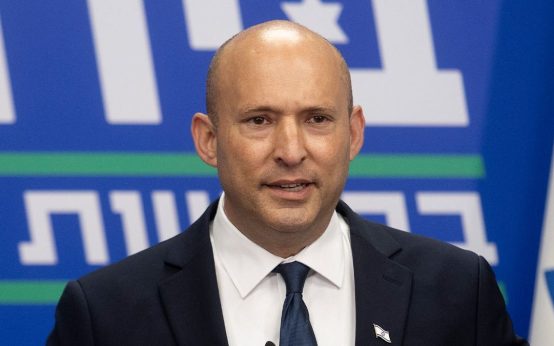 Former Israeli PM Naftali Bennett Commends Passengers and Crew for In-Flight Heroism
 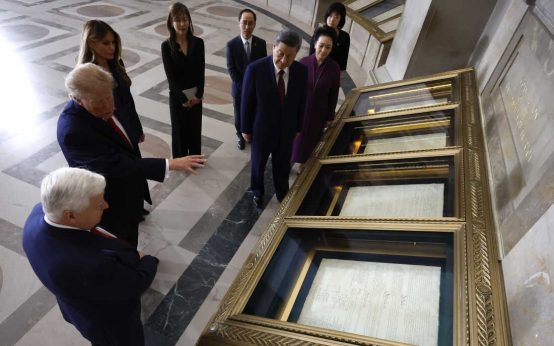 Diplomatic Complexities Unfold at U.S. National Archives Visit