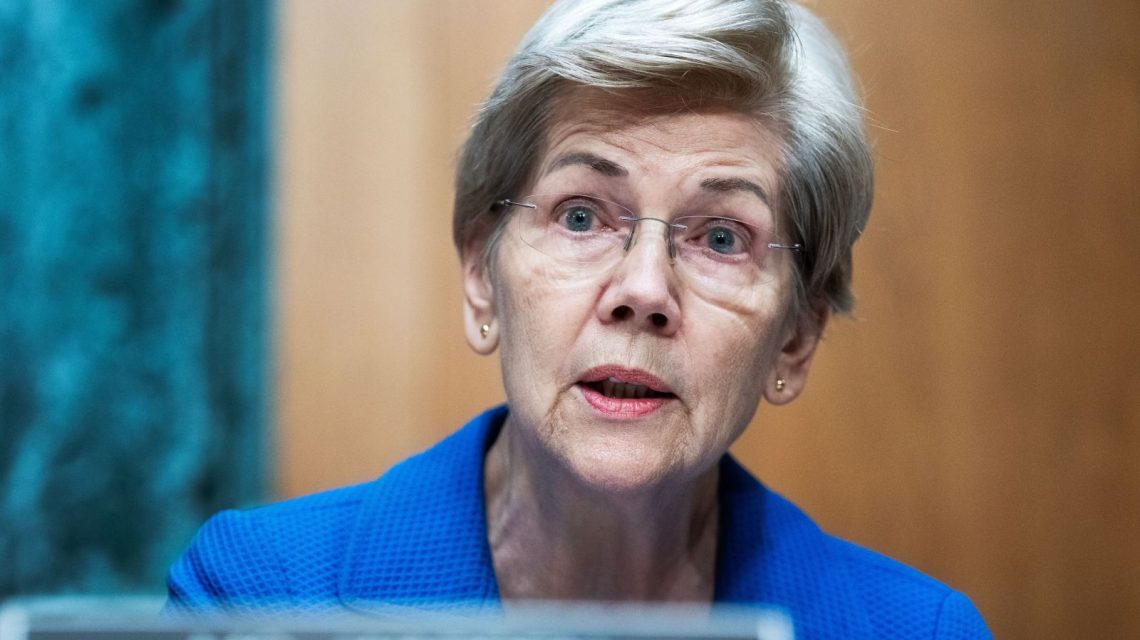
U.S. Attorney Aaron Reitz from the Southern District of Texas urged Democratic Senator Elizabeth Warren to save records associated with potential congressional investigations into individuals and companies linked to President Donald Trump. Reitz referenced two federal criminal civil-rights statutes, 18 U.S.C. §§ 241 and 242, in his letter on Sunday.
Previously, Reitz issued similar public warnings to Democratic Senators Richard Blumenthal of Connecticut and Elissa Slotkin of Michigan. He instructed them to keep documents related to public statements they had made. In his social media post, Reitz accused Warren of abusing her committee authority.
“@SenWarren is on the warpath to wield her committee gavel like a tomahawk, seeking the scalps of those who associate ‘too closely’ with President Trump,” Reitz wrote on Sunday. “Congressional investigations can’t be used to punish Americans for exercising their 1A [First Amendment] rights. My first arrow shot.”
The post included a screenshot of the letter Reitz sent to Warren, referencing her recent interview on CBS News’ Face the Nation with Margaret Brennan. Warren, soon to chair the Senate Banking Committee after a Democratic midterm victory, discussed plans to investigate big tech CEOs and Wall Street executives potentially breaking the law.
When asked if her focus was legislation or investigation, Warren responded, “We have to do both. But I do want to be clear. If you’ve been making your profits by cheating American families and scamming your investors, you better get ready for some investigations, serious ones.”
Warren added during the interview, “They are sick of a White House that wouldn’t enforce the laws even when they got cheated. They are sick of a White House that dropped investigations that said, ‘Oh, if you make a nice contribution to Donald Trump’s ballroom,’ then there won’t be any enforcement of the law when you’ve cheated millions of American customers. That has to end.”
Reitz argued in his letter that Warren’s statements signal her intent to target private individuals close to Trump. A Warren committee aide told Reuters on November 9 that Wall Street executives and major corporations should preserve documents and prepare to answer challenging questions.
Reitz also cited a letter from Warren, Blumenthal, and Representative Robert Garcia seeking details on fundraising linked to Trump’s projects, like the White House ballroom. Blumenthal called the threat “baseless” in his response, requesting Reitz preserve communications concerning the warning.
Legal Context and Responses
Federal law under Section 241 criminalizes conspiring to injure or oppress someone exercising constitutional rights. Section 242 makes willfully depriving someone of those rights under color of law a crime. Failing to comply with document preservation requests can result in sanctions or penalties, although a preservation demand is neither a subpoena nor a criminal charge.
Reitz’s warning escalates the ongoing conflict between Trump and Warren, characterized by personal attacks and policy disagreements.
In response, White House communications director Steven Cheung accused Warren and other Democrats of pursuing politically driven investigations against Trump allies.
“Democrats like Elizabeth Warren are looking to weaponize their positions against people who are simply close to President Trump or work with him,” Cheung commented.
Stephen Miller, White House chief of staff, also commented, emphasizing federal statutes 18 USC 241 and 242.
The situation heightens tensions between the Trump administration and congressional Democrats ahead of expected oversight conflicts. Garcia, poised to lead the House Oversight Committee, indicated they would not be deterred or intimidated by Trump or his administration.
Reitz set a deadline for Warren to confirm by 6 p.m. ET on November 23 that she received his letter and preserved the requested materials.
 Mayor Mamdani’s Policing Reform Plans
 Gen Z Voter Shifts and Their Impact on the 2026 Midterm Elections
 Disappearance of US Senate Candidate Raises Questions
 DOJ Rule Change Reduces Appeal Time for Immigrants Facing Deportation
 Hakeem Jeffries’ Bid for House Speaker Faces Progressive Hurdles
 Ohio Judge Dismisses Defamation Lawsuit by Rep. Max Miller