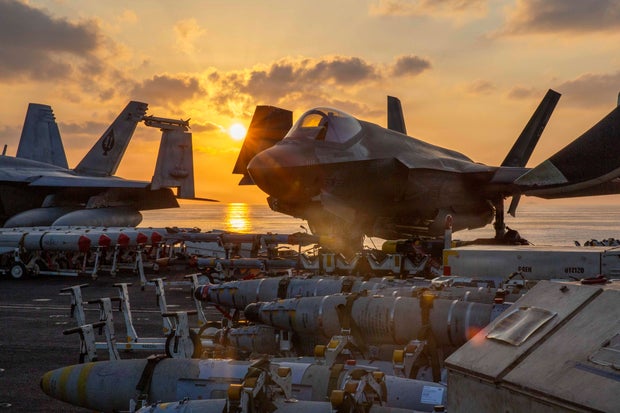
The Defense Department’s inspector general has reported an ammunition deficit in the U.S., linked to the costly conflict in Iran. This is part of a required report to Congress, highlighting the financial and strategic consequences of Operation Epic Fury.
Operation Epic Fury Costs and Challenges
Between February 28 and June 30, Operation Epic Fury incurred an estimated cost of $33.4 billion. A significant portion, $22.3 billion, was attributed to munitions expenses alone. This substantial expenditure has led to strategic inventory shortages and exposed production bottlenecks in resupply.
The munitions expenditure on OEF has resulted in strategic inventory shortfalls and revealed industrial base bottlenecks for munitions resupply.
The operation has also resulted in the loss of several American military assets. Four F-15 fighters were destroyed, an F-35 was damaged, seven KC-135 tanker aircraft suffered damages, and up to 30 MQ-9 Reaper drones were destroyed.
Presidential Responses and Strategic Concerns
President Trump has dismissed concerns about weapon shortages, asserting that the U.S. possesses “virtually unlimited” ammunition. He reiterated this position on his Truth Social platform, claiming the country’s production of “more Exquisite and Elite Weapons than at any time in our History.”
In the initial 24 hours of the Iran conflict, U.S. forces targeted over 1,000 sites. However, such large-scale offensives have not been repeated in recent months.
Impact and Industrial Implications
The report indicates that Iranian strikes have inflicted damage on U.S. bases across several Middle Eastern countries, yet these costs have not been specified in the estimates. It remains uncertain if the affected facilities will be reconstructed, or who will bear the expenses.
Recently, CBS Sunday Morning visited Lockheed Martin’s facility in Arkansas to witness the production of Patriot missiles, designed for interception. With each missile priced around $4 million, Lockheed Martin is producing 750 annually.
Future Concerns and Industry Efforts
Questions have arisen regarding the sufficiency of U.S. munitions, particularly for potential conflicts beyond Iran. Mark Cancian from the Center for Strategic and International Studies states that while there may be enough for a month-long war with China, sustaining such efforts would be challenging.
Despite Pentagon denials of ammunition shortages, Defense Secretary Pete Hegseth urges increased weapon production. Tim Cahill, from Lockheed Martin, describes the situation as “controlled chaos,” emphasizing the need for rapid problem-solving.
It’s just, move fast, figure it out, find what our obstacles are, break them down.
 Becerra and Hilton Clash in California Gubernatorial Debate
  California Voters to Decide on $7.5 Billion State Research Fund
  Highlights from the California Gubernatorial Debate: Becerra vs. Hilton
  Becerra vs. Hilton: The Debate and Key Issues in the California Governor Race
  Senate Confirms New Labor Secretary
  Hegseth’s Ambitious Military Initiatives to Reshape Warfare