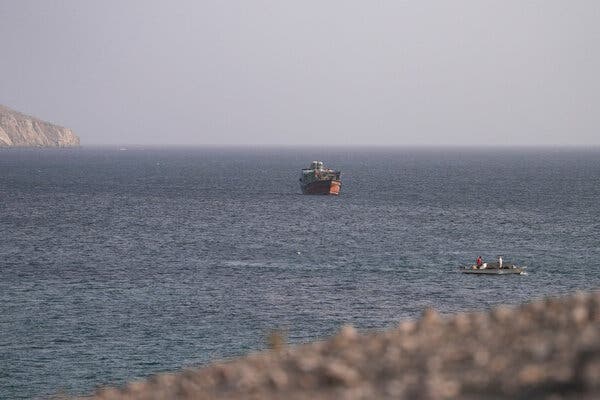
The U.S. naval blockade on the Strait of Hormuz began impacting maritime traffic significantly on its first full day. On Wednesday, only 13 ships passed through the strait, compared to 21 ships the day before, according to data from Kpler, a maritime data firm.
This decline marks a notable change in the flow of vessels, with most opting to use the route mandated by Tehran through Iranian waters. The blockade could potentially disrupt Iran’s control over the strait and diminish its role as a gatekeeper of the vital waterway, which is crucial for oil sales revenue.
On Wednesday, U.S. Central Command intercepted two ships attempting to cross the blockade. Kpler identified five of the transiting vessels as sanctioned. Some ships are sailing with their tracking devices off, which obscures their routes and complicates the tracking of overall shipping activity.
The reduced traffic through the strait coincides with ongoing hostilities between Iran and the United States, now in its sixth day. The blockade has further heightened uncertainties for shippers aiming to move oil in and out of the region. Prior to these events, the strait saw more than 130 vessels on average daily.
 Dutch Review Board’s Euthanasia Ruling and International Debate
  Israeli PM Commends Heroic Actions in Flight Emergency
  Rabbi and Jewish Leaders Criticize Adam Brody for ‘Genocide’ Comment
  Flydubai’s Emergency Landing Highlights Cockpit Security
  Former Israeli PM Naftali Bennett Commends Passengers and Crew for In-Flight Heroism
  Diplomatic Complexities Unfold at U.S. National Archives Visit