The White House has announced a partnership with North American Blue Energy Partners (NABEP). This collaboration is part of President Donald Trump’s initiative to engage with Venezuela’s oil resources. The agreement grants the Pentagon a stake in about 20% of Venezuela’s vast oil reserves.
Details of this sweeping deal emerged on Monday, soon after Trump’s statement on what he called the most significant oil deal in history. Analysts view the plan with skepticism, citing potential delays in reviving Venezuela’s oil production. Meanwhile, Trump and officials present it as a step towards establishing a major oil contender in the Western Hemisphere.
Under the deal, a joint venture with NABEP has been set up, forming a private company. This partnership, previously undisclosed, involves Venezuelan businessman Alejandro Betancourt, who owns NABEP. It is the second-largest operator in Venezuela, following Chevron.
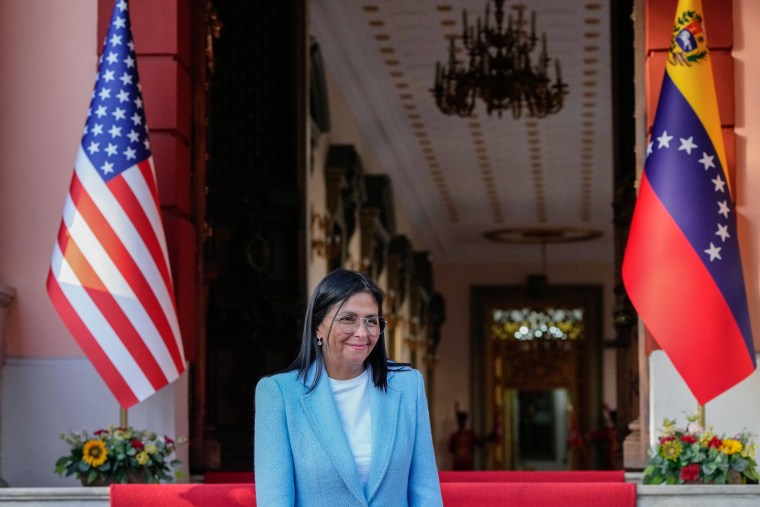
Delcy Rodríguez, Venezuela’s acting president, has granted 100-year rights to the company over 17 oil fields with proven reserves totaling 65 billion barrels. These fields were once controlled by Russian or Chinese companies, according to the White House.
The agreement ensures the Pentagon a 35% ownership stake, while the State Department commits to purchasing 20% of production at cost. NABEP has pledged to invest $100 billion in new oil infrastructure.
Venezuela is “blessed with an abundance of natural resources, hardworking people and untapped potential,” Betancourt stated, expressing optimism for the partnership’s benefits to both nations.
The agreement follows Trump’s pursuit of increased oil output from Venezuela after the military operation in January that dethroned Nicolás Maduro, who faced charges of narcoterrorism and drug trafficking.
The White House claims the deal incurs no cost to the U.S. The government retains veto power over board appointments, with the majority being U.S. citizens. NABEP’s operations will be audited and regulated under U.S. law.
Despite the potential benefits, former U.S. energy advisers warn of political risks. Future administrations might dispute the agreement. Analysts note that the revitalization of Venezuela’s oil sector could take significant time.
Though President Trump predicts a drop in gas prices, he acknowledges the timeline is uncertain. At a White House event, he anticipated a gradual decline, possibly taking years.
In Venezuela, Rodríguez supports the deal as an opportunity to modernize and revive the oil industry. She has refuted claims that the agreement compromises national sovereignty.
U.S. lawmakers have requested further details. Rep. Rick Crawford seeks prompt clarification from the Trump administration. Sen. Jack Reed criticized the deal, arguing it improperly involves the military in a private venture and demands a full legal review.
Trump is scheduled to meet with oil refiners on Tuesday to explore ways to enhance America’s refinery capacity. This meeting follows rising gasoline prices influenced by the Iran conflict, with a national average of $4.08 per gallon.
The White House remains focused on expanding refinery capabilities, including processing Venezuelan oil, to alleviate consumer prices. Interior Secretary Doug Burgum, Energy Secretary Chris Wright, and Jarrod Agen, director of the White House National Energy Dominance Council, will attend the meeting.