The U.S. military has deployed sea drones in combat for the first time. They targeted a key Iranian site used for submarine repairs in the south. While Ukraine has used explosive sea drones since 2022 to strike Russian ports, this marks the first usage by a significant Western military force in a combat scenario.
The U.S. utilized three Corsair naval drones to hit the port at Iran’s naval base in Bandar Abbas. This city, crucially positioned just north of the Strait of Hormuz, houses much of Iran’s naval forces. The sea drones, often called kamikaze sea drones, are built by the Texas-based company Saronic. Measuring 24 feet, these drones travel at speeds of approximately 40 miles per hour and cover distances up to 1,150 miles, as stated by the manufacturer.
Saronic expressed pride in having contributed to this mission. In December 2025, the U.S. Navy signed a $392 million contract with Saronic for the Corsair drones. The U.S. confirmed a Corsair drone had previously been involved in rescuing two U.S. soldiers from a helicopter crash near the Strait of Hormuz.
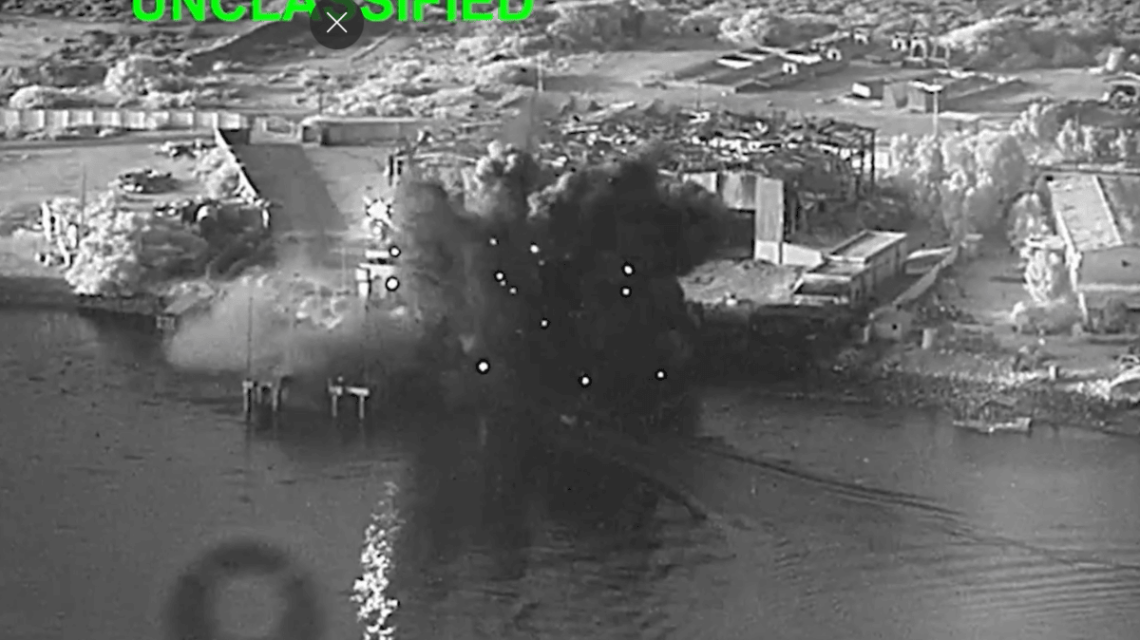
On Monday, the U.S. Central Command showed a clip, allegedly of the Bandar Abbas attack, where three sea drones are seen heading towards the port. The footage displays the drone’s perspective as it reaches the pier, leading to a significant explosion, though Newsweek could not independently verify the video.
State-controlled media in Iran reported the death of three people in the incident. The U.S. military stated the attack impaired Iran’s capacity to disrupt commercial shipping. While tensions rose, with Iran claiming the strike on UAE tankers, the fragile truce between the U.S. and Iran is under strain.
Iran’s military claimed attacks on U.S. facilities in Jordan and Bahrain, escalating the conflict. The war, initiated by joint U.S.-Israeli actions against Iran in late February, prompted a series of retaliatory assaults by Iran targeting U.S. allies and vessels in the region.
Reopening the Strait of Hormuz has proven challenging for the U.S., which enforces a blockade to control access. President Donald Trump announced a reimplementation of the blockade, including a 20 percent levy on goods transported through the strait. Iran responded with legislative efforts to solidify its hold over the Strait of Hormuz, in reaction to U.S. drone activities.
 Activists Push for Nationwide Ban on Child Marriage in the U.S.
  Investigation into Alleged Incident at Cornell University
  Rising Drone Threats Highlight Vulnerabilities in Moldova’s Airspace Defense
  Bolivia Faces Security Test Amid Unrest
  Incident on FlyDubai Flight Raises Security Concerns
  Journalist Gershkovich Discusses Wrongful Detention and Release in Russian Prisoner Swap