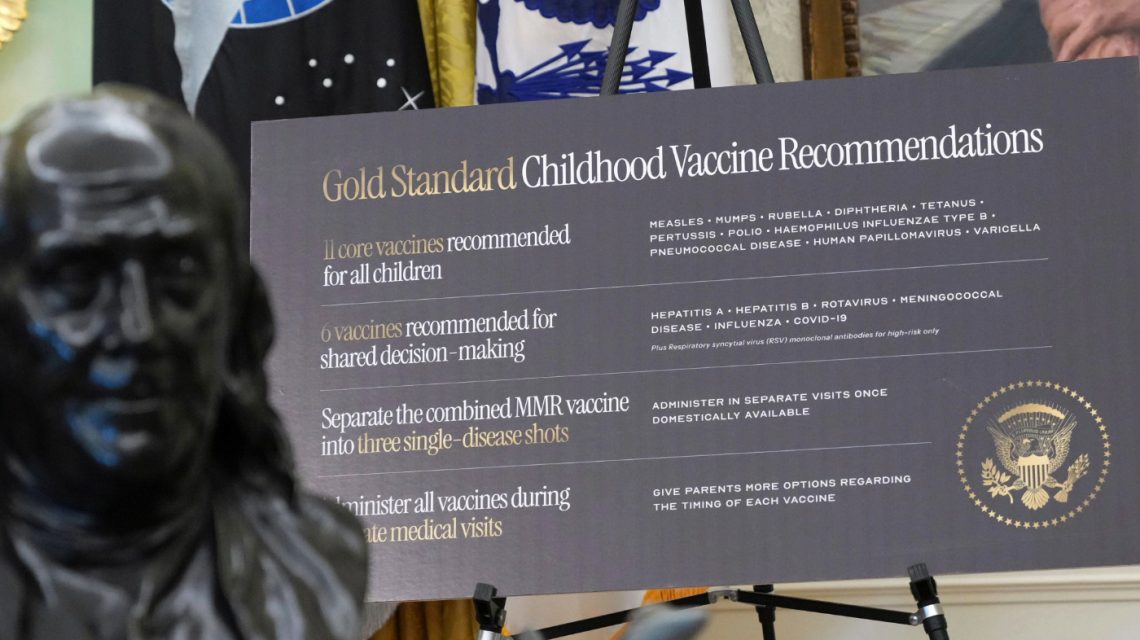
President Donald Trump signed an executive order on Aug. 10, 2026, mandating a reduced childhood vaccine schedule in the U.S. Trump claimed this change would align the U.S. with other developed nations. However, this decision raises concerns about worsening health outcomes in the nation.
Global Health Insights
The U.S. can learn much from international practices, but altering the vaccine schedule is not a lesson to adopt. Despite high healthcare spending, Americans face shorter lifespans and poorer health compared to residents in countries like Denmark, Germany, and Japan. These nations excel in health metrics, benefiting from different healthcare system investments, not vaccine schedules.
The U.S. vaccine schedule resembles that of many peer countries in terms of diseases targeted, vaccines used, and timing. Some countries, like Denmark, have unique schedules due to their smaller, homogeneous populations and strong healthcare systems that don’t fit U.S. conditions. The fragmented U.S. system requires additional doses to ensure comprehensive coverage.
Healthcare System Differences
Countries with better health outcomes, such as Denmark, have invested in universal health coverage and affordable care. They prioritize access to primary care, affordable prescription drugs, and free vaccines. Investment in maternal and child health, along with public health policies, enhances these systems further.
These healthcare infrastructures result in earlier disease diagnosis, effective chronic condition management, and healthier populations. Denmark stands out due to long-term wise policy choices, not its vaccine schedule.
Challenges in U.S. Healthcare
In contrast, many Americans remain uninsured or underinsured. High medical expenses lead to delayed care and medication rationing. Preventable illnesses and medical debt are prevalent. Despite substantial spending, the U.S. sees lesser returns in health.
Path to Improved Health
To improve health in America, policies should focus on increasing healthcare accessibility and affordability. Investment in primary care and public health, as well as restructuring the healthcare system, is crucial. Other nations demonstrate that health investment yields better outcomes that make care a fundamental right for all.
The lessons from countries like Denmark, Germany, and Japan highlight the importance of universal health security rather than mere changes in vaccine schedules.
Reginald D. Williams II serves as senior vice president at the Commonwealth Fund.
 Understanding Inflammation: Myths and Facts
  Calm Parenting: Strategies to Manage Stress
  Trump’s Executive Order to Combat Mosquitoes and Ticks in D.C.
  Overcoming Weight Loss Challenges: Brain Health and GLP-1 Medications
  Supporting Children’s Mental Health at Home: Practical Steps for Parents
  Abdul El-Sayed’s Strategy to Attract Health-Conscious Voters in Michigan