
Temple University professor Bryant Simon explores the pivotal role of public bathrooms in American social movements in his latest book, For Customers Only: Public Bathrooms and the Making of American Inequality. Simon, an academic with a background from Caltech, delves into how public restrooms have intersected with civil rights, farm labor movements, and current trans debates. A notable case happened in Long Beach over a century ago, where public bathrooms became a focal point in the city’s campaign against homosexuality.
Public Restrooms and Historical Movements
Simon identifies public bathrooms as integral to many historical movements. Social practices around these spaces evolved from the Gilded Age, creating both anonymity and opportunities for gay men to meet. This social dynamic led to vice operations, notably in Long Beach, where public restrooms became central in the struggle against perceived moral deviance.
The 1914 Long Beach Purity Campaign
Long Beach’s aggressive purity campaign in 1914 targeted homosexuality in public restrooms. Two actors, B.C. Brown and H.W. Warren, took part as vice officers, dressing to attract and entrap suspects. Their tactics included conversations, passing notes, and suggesting intimate acts. Marking suspects with ink led to swift arrests, with high financial penalties for those apprehended.
Financial Impact and Societal Repercussions
The campaign became lucrative for the vice officers, earning substantial sums per arrest. The arrests ostracized individuals from society, causing personal and financial ruin. Notably, Scottish immigrant Josh Lamb took his life after public exposure.
The Gay Rights Movement and Public Restrooms
The late 1960s brought the gay rights movement to Long Beach, challenging police tactics and advocating for privacy. Activists hoped to minimize public sex, suggesting nighttime closure of bathrooms as a solution. However, the tensions between law enforcement and activists saw a shift to bars and clubs as new policing grounds.
Forgotten Public Spaces
Eventually, restrooms faded as a primary concern, with raids moving elsewhere, leaving them largely forgotten in public discourse.
The public restroom is a microcosm of society’s struggles and prejudices.
From the history of public restrooms, Simon’s work highlights broader issues of inequality and social justice, sparking reflection on past and current societal norms.
 Navigating Grief After a Sibling’s Overdose
  Tragedy and Immigration: The Impact on a Family
  The Journey of a Fox News Correspondent: From Infectious Diseases to On-Air Reporting and Beyond
 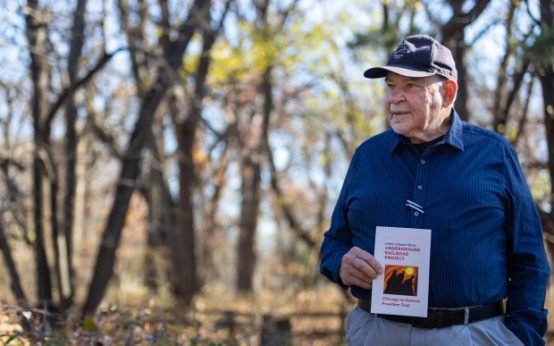 Midwest Underground Railroad Network Gains National Recognition
  Journalist Jodie T. Allen Passes Away at 88
  Art Collective Critiques Administration with Mall Installation