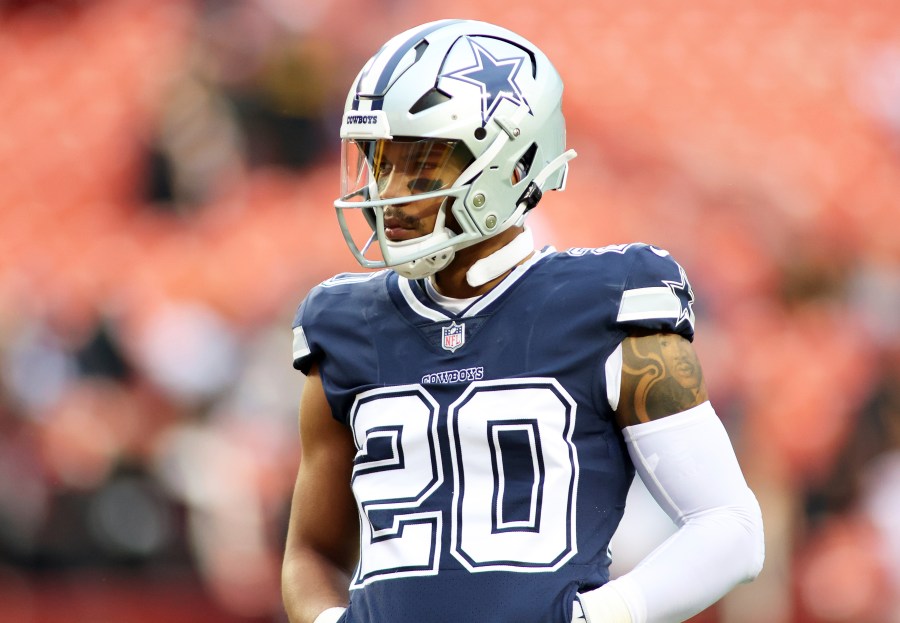
If you’ve been watching NFL games, you might have seen players with white or black horseshoe-shaped collars around their necks. These are known as Q-Collars. They are not new; former Carolina Panthers linebacker Luke Kuechly wore them as early as 2016. Now, more players seem to be adopting them weekly.
The Q-Collar aims to protect athletes’ brains during impacts. The Food and Drug Administration (FDA) permitted the marketing of Q30 Innovations’ Q-Collars in 2021. The FDA noted that these collars “may reduce the occurrence of specific changes in the brain associated with brain injury.”
During a head or body impact, traumatic brain injuries (TBI) can occur. Blunt trauma is a leading cause, often experienced in sports. According to the National Institute of Neurological Disorders and Stroke, a person’s brain can move unrestrained within the skull, often called a “slosh.”
The FDA explains that the Q-Collar presses against the jugular veins in the neck, increasing blood volume in the skull’s blood vessels. This increase leads to a tighter brain fit inside the skull, reducing “slosh” movement.
The use of Q-Collars is not limited to athletes. The U.S. Army Medical Research and Development Command awarded Q30 Innovations a $2.8 million contract for research to assess if the collar can reduce blast-induced TBIs among soldiers. Despite their potential, the FDA cautions that Q-Collars are unsuitable for athletes with certain conditions and do not prevent concussions or severe head injuries.
Adil Hussain, D.O., a brain injury medicine specialist in California, compared the Q-Collar to a seat belt for the brain. However, experts voice concerns about overestimating the collar’s ability to prevent concussions. Research has not yet fully supported these claims.
In October 2022, the FDA mentioned uncertainties regarding the study behind the Q-Collar’s approval. Athletes wearing the collar showed fewer changes in brain tissue on scans. Yet, experts argue that the connection between these changes and actual brain injuries remains unvalidated. The data from the study was challenging to interpret, with limited conclusions available.
Q30 Innovations recognizes the need for further research to better understand the collar’s benefits. Nevertheless, expect to see the collars worn by athletes in various sports. Q30’s website lists several athlete ambassadors, including Tony Pollard, Boston Scott, and Vernon Davis.
 Colorado Avalanche’s Nathan MacKinnon Shines in Season Opener
  Yankees Sweep Red Sox in AL Wild Card Series
  Arike Ogunbowale Shines in Dallas Wings’ Overtime Victory
  Dallas Cowboys Acquire Joey Porter Jr. in Major Trade
  Chicago Cubs Struggle in Wild-Card Series Against Padres
  Jalon Daniels to Start for Buccaneers in Crucial Game Against Packers