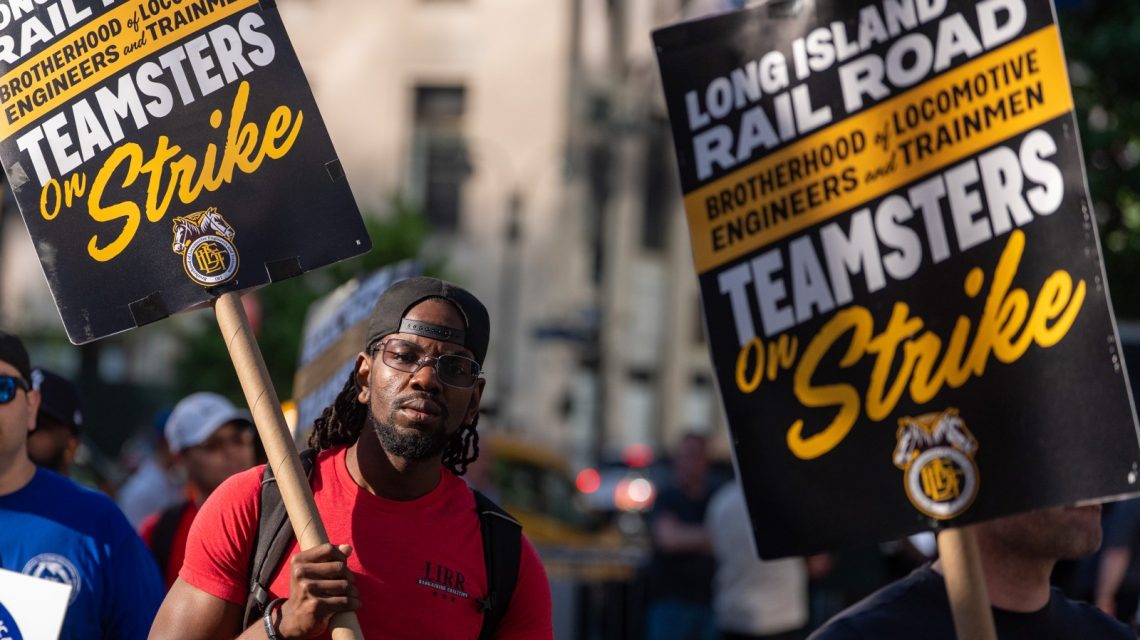
Labor Day and the American Dream
Labor Day serves as a crucial reminder of the need for an equitable pursuit of the American dream. This encompasses securing a job with decent wages, enabling one to support their family and retire with dignity. However, many families face financial stress, struggling to manage expenses like groceries, rent, healthcare, and electricity bills. An alarming statistic reveals that almost four in ten adults lack the means to handle a $400 emergency expense.
Challenges for Black Workers
Black workers, along with other workers of color, encounter increasing difficulties in achieving this dream. Although 2023 saw historic lows in Black unemployment, a weakening economy has started impacting them more severely. In the year’s first half, Black unemployment reached 7 percent, with Black workers experiencing unemployment at approximately twice the rate of white workers. A Federal Reserve study showed that only 60 percent of Black adults felt financially stable or comfortable in 2025, marking a decline from the previous year. Job losses among Black adults have further accentuated these challenges.
Evolving Economic Inequality
While many struggle, those at the top thrive. The AFL-CIO’s Executive Paywatch report highlighted that in 2025, CEOs of S&P 500 firms earned an average compensation of $22.8 million, reflecting a 21 percent increase from the prior year. This figure excludes Elon Musk’s substantial $158.3 billion package from last year. The growing economic inequality stems from deliberate policy decisions, weakening labor laws and facilitating union obstruction due to resistance from affluent and influential individuals who oppose a strong labor movement.
Unions advocate for both economic and racial justice, demonstrating that these struggles are interconnected. True equality demands opportunities for all working individuals to progress.
Personal Experiences with Union Impact
Fred Redmond recounts his upbringing on Chicago’s South Side, witnessing firsthand the transformation a union job can bring. His family’s situation improved significantly when his father secured a union position at an aluminum mill. The union job provided more security and opportunity, leading to a solid middle-class lifestyle. Redmond notes the benefits of better pay, affordable healthcare, retirement security, safer working conditions, fair treatment, and representation at work, all facilitated by union contracts.
Union Advantages for Workers
Unions significantly boost wealth for families of color and the working class. Data reveals that Black unionized workers earn 12.6 percent more than their nonunion counterparts, while Latino workers see a 16.4 percent increase in earnings. Currently, approximately two-thirds of union members are women or people of color. In 2025, unions saw growth primarily among workers of color.
Union representation saw an upswing in 2025, with 463,000 additional workers joining, totaling 16.5 million, the highest figure in 16 years. Workers continue to acknowledge the advantages of unions, and efforts persist in ensuring everyone can organize and join unions.
Union Engagement Beyond the Workplace
AFL-CIO plans to extend worker power beyond workplaces this fall, with union volunteers connecting with millions of union voters through door-to-door outreach, phone calls, and digital engagement. Personal interactions remain vital amidst AI advertising and misleading information from billionaires. Union members engage in conversations about their personal and familial priorities, showcasing the labor movement’s strength.
Conclusion: The Labor Movement’s Enduring Strength
Redmond emphasizes that his family achieved the American dream through union solidarity. Black workers, alongside workers of diverse backgrounds, collectively built the middle class. He advocates for continued unity to ensure future generations access the American dream, reflecting his 50-year dedication to the labor movement.
Fred Redmond holds the distinction of being the highest-ranking African American labor official and serves as the secretary-treasurer of the AFL-CIO, representing 65 unions and around 15 million workers. This article shares his personal insights.
 Reviving Conventional Wisdom: Tracking Political Figures and Forces
  Aaron Sorkin’s New Film Sparks Debate on Free Speech and Tech Regulation
  Accountability Across Boundaries
  Reflecting on a Career at Fox News
  Accountability in Politics: A Call for Reform
  Candy Thompson’s Journey From Feminism Back to Christianity