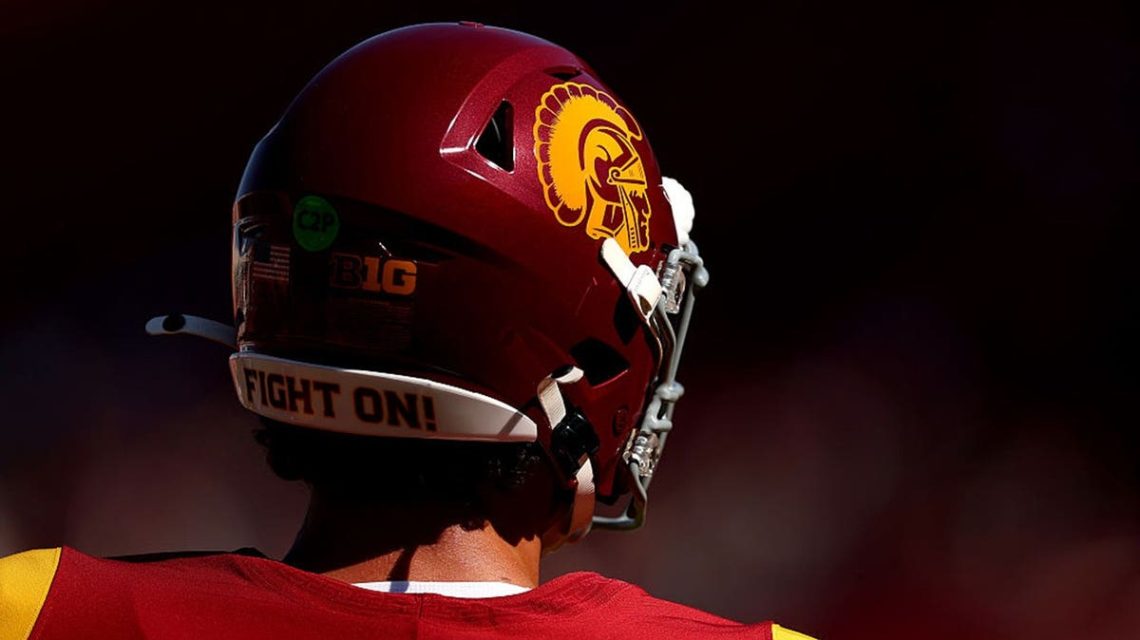
The University of Southern California’s athletic department is once again in the spotlight for its questionable use of Greek literature to boost football enthusiasm. Recently, the USC Trojans attempted to generate hype around their football program by referencing Homer’s epic, “The Odyssey,” without considering a crucial detail: the Trojans lose dramatically.
A notable incident involved a promotional campaign pegging itself to the release of Christopher Nolan’s film adaptation of “The Odyssey.” The USC program utilized social media to showcase a poster featuring the well-known Trojan helmet, boldly stating, “Our Odyssey begins August 29.” The timing seemed ideal with the film grabbing attention in theaters and online.
However, the reference to “The Odyssey” is problematic. Homer’s epic chronicles the journey of Odysseus, a Greek hero, as he travels home following the Trojan War. This odyssey occurs because Odysseus and his Greek compatriots have recently defeated Troy. Therefore, the Trojans are not the protagonists. By the time this saga unfolds, their city lies in ruins, their elite warriors are vanquished, and the victors are homeward-bound following a triumphant campaign.
“The Odyssey features Greek heroes returning after defeating Troy, not celebrating a Trojan victory,” explains Emily Wilson, a renowned translator of the epic.
If you’re affiliated with an academic institution symbolized by the fabled residents of ancient Troy, it’s likely beneficial to grasp the basic narrative outcomes. Marketing should ideally reflect historical alignments. At a minimum, the personnel approving social media content might want to research “Who wins the Trojan War?” before publishing.
This error isn’t unprecedented for USC. Prior to the 2024 season, they unveiled a visually impressive video with USC players emerging from a Trojan Horse, charging into battle. Though visually appealing, the depiction was historically inaccurate, as it was the Greeks hidden inside the wooden horse. The Trojans were the ones deceived into bringing it inside, ultimately leading to their downfall when Greek soldiers unleashed mayhem from within.
After receiving criticism for this earlier narrative mistake, USC has again aligned its campaign with another literary account of Trojan demise. The irony intensifies considering the season’s commencement date. On August 29, 2026, USC Trojans start their football season against the San Jose State Spartans, invoking yet another Greek link.
The humor lies in how USC uses these narratives, highlighted during a New York premiere of “The Odyssey,” furthering the irony involved. Promoting its season linked to a story about Troy’s destruction, two years post a campaign centered around the Greek stratagem in Troy’s fall, and leading into a clash with an opponent named after Greek warriors, underscores the need for careful literary references in sports narratives.
Takeaway:
USC Trojans should perhaps consider leaving any metaphoric wooden horses in the parking lot and refine their messaging related to Greek literature.
 Readers React to Miss Manners Column
  Nick Saban’s Comments on ESPN Spark Debate Over College Sports Regulations
  Freddy’s American Adventure: From Soccer to College Football
  Troy Swanson: Award-Winning Librarian Transforming Academic Libraries
  Brock Purdy’s Impressive Start in the 2026 NFL Season
  The Value of Retaining Miles McBride for the Knicks