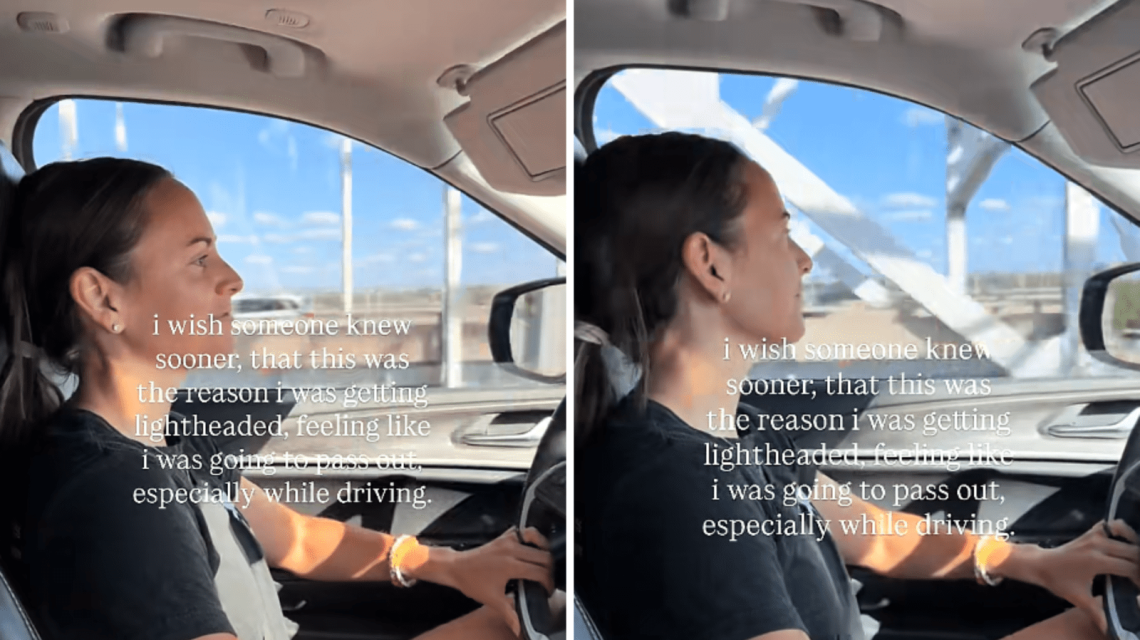
A woman suffered from frequent dizzy spells for months before receiving a diagnosis. Cayla Kranz, 35, from St. Louis, Missouri, experienced a frightening dizzy spell in October 2025. She described it as a ‘day I’ll never forget.’ It occurred while she was driving with her two young children.
‘Suddenly I felt my vision darken, my head became very heavy, and I felt lightheaded as if I was going to pass out,’ Kranz stated. Fortunately, she managed to get her kids, aged three and one, to safety by pulling off the road and calling for help. This event marked what she called the ‘big episode,’ which caused her life to feel ‘flipped upside down.’
Yet, Kranz told Newsweek it wasn’t her first time feeling ‘off’ and ‘lightheaded.’ Before October, these episodes were ‘less severe.’ She often attributed them to issues with her contacts or a challenging workout.
Despite visiting urgent care and undergoing several tests, including an EKG and cardiology tests, results always came back normal. Medical staff couldn’t explain her symptoms. However, after the driving episode, her symptoms persisted.
“I experienced constant shaky and floaty vision, lightheadedness, derealization, heart palpitations, anxiety—something I’d never experienced before—and eventually got stuck in fight or flight,” Kranz explained.
More tests followed, including an MRI scan, but all showed normal results. Her primary care doctor, along with several specialists such as ear, nose, and throat doctors, cardiologists, an optometrist, and an ophthalmologist, couldn’t provide answers.
The breakthrough came when a client who works as a physical therapist recognized her symptoms. These ‘sounded like a vestibular issue.’ Kranz researched vestibular migraines, and her symptoms made sense.
Vestibular migraines can cause balance issues, nausea, vertigo lasting days, and sensitivity to light. Patients might not experience every symptom. Johns Hopkins University notes that onset of dizziness may not coincide with other symptoms, making diagnosis tough.
Kranz expressed gratitude towards her client. “Who knows how much longer I would have been searching for answers if it weren’t for her,” she said. The experience taught her to value every day.
She relied on her family and support system to get through challenging times. Despite the condition being incurable, it is treatable. ‘Lately I’ve been experiencing more better days and am hopeful for continued progress,’ Kranz shared.
To others in similar situations, she advised, ‘Know you’re never alone, and better days are possible.’
 Freddy’s American Adventure: From Soccer to College Football
  Increased Funding Needed for Psychiatric Hospitals
  Trump Administration Distributes ACA Refund Checks
  Higher Consumption of Ultra-Processed Foods Linked to Increased Health Risks
  The Quest for the Knuckleball Dream
  Navigating Grief After a Sibling’s Overdose