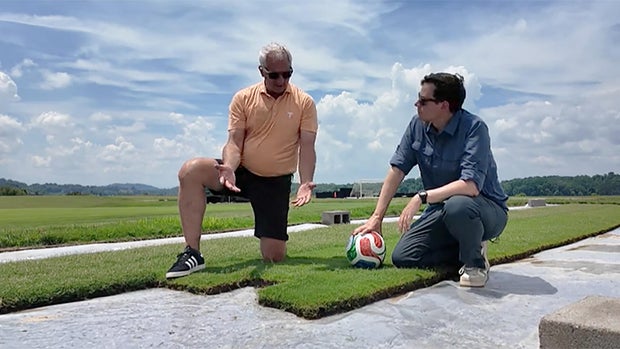
The World Cup has created a surge in soccer viewership, especially in the U.S. This year’s event is setting records as it unfolds across 16 stadiums in three countries. Each match must be played on high-quality natural grass. A professor from Tennessee finds this exciting, as the effort behind the fields gains recognition.
The Man Behind the Grass
Dr. John Sorochan, a professor of Turfgrass Science at the University of Tennessee, plays a crucial role. He considers the quality of the pitches essential for the games. Despite the focus generally being on the players, the field is foundational. His work underscores the importance of factors unnoticed by many viewers.
Collaborating with Michigan State University, Sorochan’s work on the FIFA Pitch Research Project has been ongoing for five years. Different stadiums require various grass species due to differing climates and altitudes. This necessitates the use of scientifically-engineered sod and unique growing conditions.
Challenges of Grass Cultivation
Testing how grass adapts to different environments is vital. At the University of Tennessee, a facility mimics domed stadium conditions with grow lights. These lights operate for 12-14 hours daily to ensure grass health over weeks of gameplay.
Sorochan’s research includes stress-testing the grass with robots that simulate the impact of soccer players. This helps achieve consistency across pitches. Understanding ball interactions with grass is another key aspect. Different grass types affect how the ball rolls, skips, and bounces.
The Business of Turfgrass
Local sod farms, such as Crossroads Sod Farm in Tennessee, benefit from this research. The farm’s owner, Brad Jean, collaborates with university experts to overcome challenges like diseases. Sod farming is a multi-billion dollar industry, with major clients including golf courses and residential users.
Jean prefers natural grass over artificial turf, citing its cooler feel and absence of synthetic residues. He notes both play comfort and a reduced injury risk as grass advantages despite advancements in artificial turf technology.
The Aesthetic Appeal of Grass
Dr. Sorochan insists that natural grass enhances the beauty and flow of the sport. A mix of Kentucky bluegrass and perennial ryegrass is used in the tournament. Players appreciate these pitches, as they contribute to a natural playing experience.
For enthusiasts wanting a piece of the tournament, FIFA offers slices of match-day sod for purchase. This grass, central to the World Cup experience, continues to captivate both professionals and hobbyists alike.
For additional information, you can connect with Dr. John Sorochan at the University of Tennessee, learn more about the FIFA Pitch Research Project, or visit Crossroads Sod Farm in Tennessee.
 Los Angeles Chargers Face Criticism Amid Team’s Poor Start
  White Sox’s Pope Hat Promotion Shines Amid Playoff Push
  Phillies Edge Braves in 10th, Push Series to Game 3
  Arike Ogunbowale Sets Playoff Record as Dallas Wings Force Game 3
  Chicago White Sox Triumphs in 2026 Postseason
  Atlanta Dream Defeats Washington Mystics to Advance in WNBA Playoffs