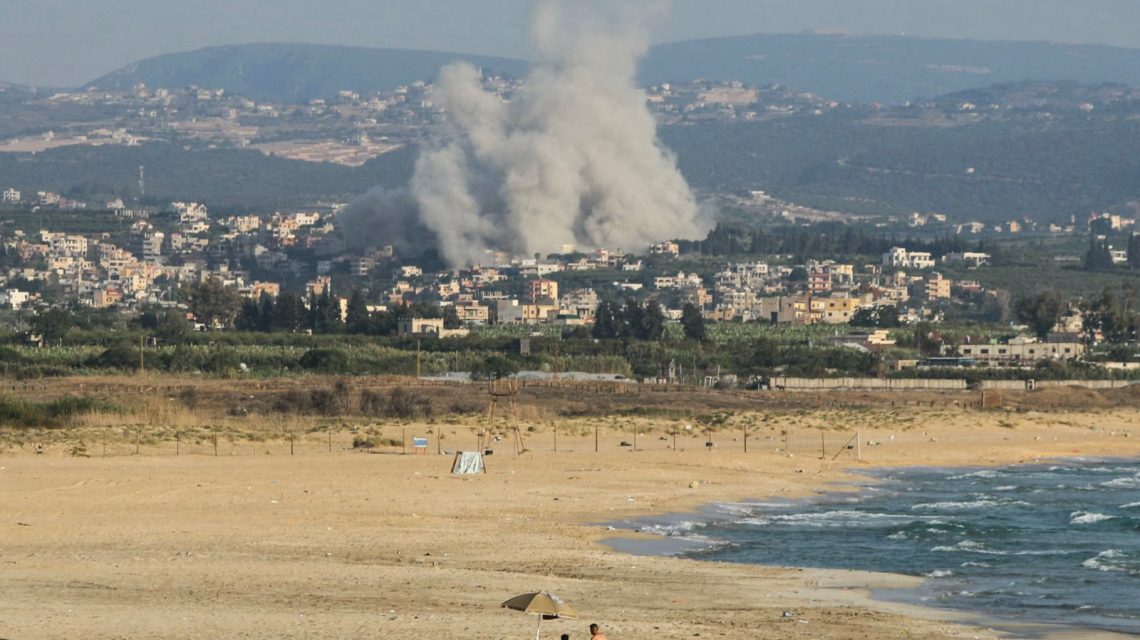
Recent Israeli airstrikes on the city of Tyre in southern Lebanon resulted in the deaths of at least three individuals, adding tension to President Donald Trump’s assertions about an impending resolution to conflicts involving Iran. This development follows recent exchanges of fire between Iran and Israel, which occurred after a ceasefire announced last April. Despite Trump’s appeal for an immediate cessation of hostilities, the latest strikes indicate the potential for escalating conflict.
Lebanon became embroiled in the conflict following the March 2 incident when Hezbollah fired rockets at Israel. This action was in support of Tehran after U.S.-Israeli strikes targeted the Islamic Republic. The violence has displaced over a million people in Lebanon, as Israel targets Hezbollah, which Beirut’s government does not control. Iran insists that peace cannot be achieved until Israel stops its attacks on Lebanon.
Footage shared online captured smoke rising above Tyre after the Israeli strikes. Lebanese media reported fatalities, with civil defense sources reporting at least eight deaths, though this figure remains unconfirmed. The Israel Defense Forces (IDF) ordered evacuations for Tyre’s residents, including those in Christian neighborhoods, advising relocation north of the Zahrani river. They cited Hezbollah’s threat to Israel’s civilians as justification for their actions.
Israel’s demolition of homes and military presence in southern Lebanon have sparked concerns about a prolonged occupation resembling the situation that ended in 2000. These actions occurred despite President Trump’s directive to Israeli Prime Minister Benjamin Netanyahu to halt the strikes. Trump, who expressed his frustration with Netanyahu, spoke to the BBC about the necessity for ‘common sense.’ He emphasized that the two nations were nearing a major deal.
In contrast, Iranian officials issued strong warnings. Vice President JD Vance told Fox News that the U.S. remains strategically positioned to achieve its goals with Iran, though Iranian leaders are skeptical about reaching an agreement. Iranian lawmaker Ali Haddad warned that American bases and Israel would face retaliation if further aggression occurred. Ebrahim Rezaei, an Iranian parliamentary spokesman, remarked that negotiations with the U.S. were akin to warfare and reiterated Tehran’s commitment to the ‘resistance front,’ highlighting Lebanon’s significant role in their strategy.
 British Police Arrest Man Suspected of Terror Plot
  Activists Push for Nationwide Ban on Child Marriage in the U.S.
  Investigation into Alleged Incident at Cornell University
  Rising Drone Threats Highlight Vulnerabilities in Moldova’s Airspace Defense
  Bolivia Faces Security Test Amid Unrest
  Incident on FlyDubai Flight Raises Security Concerns