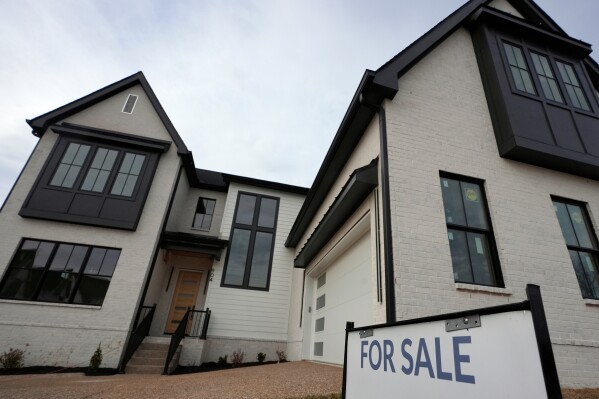
Sales of previously occupied homes in the U.S. saw a significant increase last month, marking the fastest pace since December. This shift follows a slow start to the spring homebuying season.
Recent Sales Data
The National Association of Realtors (NAR) reported that existing home sales jumped by 3.2% in May compared to April. This brought the seasonally adjusted annual rate to 4.17 million units. Year-over-year, sales also rose by 3.2%.
The increase varied by region, with home sales rising in the Midwest, South, and West, while declining in the Northeast. Economists, according to FactSet, had anticipated a pace of approximately 4.07 million units.
Historical Context
Since 2023, home sales have largely hovered around a 4-million annual pace, considerably below the historical average closer to 5.2 million. This rise in sales occurred despite climbing mortgage rates, though they remain lower than last year’s rates.
Nationally, the U.S. median sales price climbed by 1.3% year-over-year in May, reaching $429,300. NAR also notes that home prices have increased annually for 35 consecutive months.
Affordability Trends
While home prices continue to rise, their growth rate is lagging behind income growth in several areas. Combined with slightly lower mortgage rates than last year, housing affordability is experiencing some improvement.
Lawrence Yun, NAR’s chief economist, highlighted that affordability could boost market momentum. However, uncertainty around oil prices and future mortgage rates remains, potentially influencing future market trends.
Market Challenges
Since 2022, the U.S. housing market has faced challenges due to rising mortgage rates. Sales remained flat last year, hitting a 30-year low, and have stayed sluggish in 2023. Experiencing a temporary decline in early months, home sales stabilized in April.
The early 2020s saw soaring home prices, driven by pandemic-era low rates. A shortage in available homes, due to prolonged low levels of new construction, has kept prices high amid a sales slump.
Impact of Current Mortgage Rates
The average rate on a 30-year mortgage ranged between 6% and 6.46% in March and April, according to Freddie Mac. This was close to the lowest level in three and a half years. Last week, the average rate was 6.48%, down from 6.85% the previous year.
The global conflict, particularly the war with Iran, has influenced long-term bond yields. Higher oil prices, fueled by passage disruptions, have driven these yields up, impacting mortgage rate increases.
Ted Rossman from Bankrate pointed out that without the conflict-driven inflation, mortgage rates might have settled in the mid-to-upper 5’s.
Buyer Behavior
Despite rate uncertainties, first-time buyers made up 35% of purchases last month, the highest share since June 2020. Historically, first-time buyers account for 40%. Current buyers benefit from favorable market conditions.
Median list prices in May fell by 2.4% compared to the previous year, the steepest decline since 2017. More homes are now available, although inventory levels remain below normal.
At the end of May, there were 1.55 million unsold homes, up from previous months but still below the pre-pandemic typical level of 2 million. May’s inventory represents a 4.5-month supply. A balanced market is traditionally seen at a 5- to 6-month supply.
 Navigating Los Angeles Real Estate on a Budget
  Mortgage Rates Return Above 7% After Twenty Months
  Inland Empire Grapples with Growing Housing Affordability Concerns
  Challenges in Los Angeles’ Multifamily Housing Market
  Jevon Carter Sells Chicago Town Home
  Charming River Forest Home With Custom Features