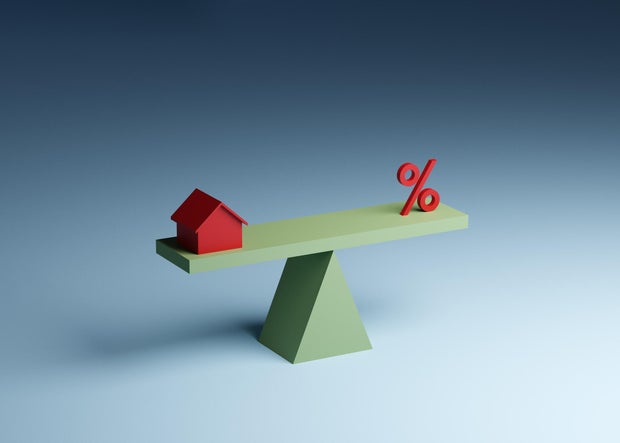
Prospective homebuyers are seeing favorable inflation news this week. Recent inflation reports indicate easing pressures after prolonged price growth. The Consumer Price Index (CPI) increased 3.4% annually in July, slightly below 3.5% in June and a noticeable drop from 4.2% in May. Core inflation, excluding food and energy prices, also slightly decreased, shifting from 2.6% in June to 2.5% in July.
Current Mortgage Rate Landscape
The timing is crucial for potential homebuyers as mortgage rates remain elevated. As of August 12, the average 30-year fixed mortgage rate stands at 6.75%, significantly higher than rates below 3% at the beginning of the decade. The Federal Reserve is closely monitoring inflation trends and labor market shifts. These economic reports could influence future borrowing cost directions, making the recent inflation figures significant for homebuyers and those considering refinancing.
Understanding Inflation’s Impact
Falling inflation is generally seen as positive news for mortgage rates, although this doesn’t guarantee immediate rate drops. Mortgage rates depend on various economic factors, with inflation being one significant driver. Mortgage rates are closely tied to the bond market, especially the 10-year Treasury yield. High inflation leads to higher long-term bond returns since inflation erodes the purchasing power of future returns. This scenario typically raises Treasury yields, pulling mortgage rates up along with them.
The reverse trend occurs when inflation decreases. As investor confidence in slowing price growth increases, Treasury yields may fall, providing room for mortgage rates to decrease. With inflation declining for two consecutive months, as indicated by the July CPI report, mortgage borrowers might find this development encouraging.
Federal Reserve’s Potential Influence
The latest inflation figures could shape expectations for the Federal Reserve. The Fed doesn’t directly set mortgage rates but does influence the financial markets that determine them. High inflation usually restricts the Fed’s ability to lower its benchmark interest rate. As inflation moves closer to the 2% target, the Fed may gain more flexibility to cut rates, provided other economic conditions are favorable.
Besides inflation, other economic indicators signal potential changes. The latest jobs report shows a reduction of 23,000 jobs in July, deviating significantly from economists’ predictions. This, combined with cooling inflation, might prompt expectations of lower Fed rates. Once investors predict reduced borrowing costs, mortgage rates may adjust even before the Fed’s official actions.
However, no significant mortgage rate drops are guaranteed. Inflation still exceeds the Fed’s 2% target despite recent decreases, and isolated favorable reports can’t define the economy’s direction. For homebuyers, the July inflation report is a piece of a larger puzzle. If inflation continues dropping and the labor market softens, conditions for lower mortgage rates could improve. Future inflation and employment reports, along with market reactions, will further determine mortgage rate movements.
Strategies for Finding a Low Mortgage Rate
With mortgage rates still above 6%, slight differences in offered rates can significantly impact monthly payments and overall borrowing costs. Focusing on controllable factors is more practical than trying to predict broader rate trends.
- Shop around with multiple mortgage lenders. Rates, fees, and terms vary among lenders.
- Get quotes from three to five lenders to identify competitive rate and closing cost combinations.
- Improve your borrower profile before applying. Higher credit scores, lower debt-to-income ratios, and larger down payments might help secure better terms.
- Check for credit report errors and avoid new debt before applying.
Compare more than the advertised interest rate. Review each loan’s annual percentage rate (APR), which includes borrowing costs, providing a clearer picture of expenses. Consider purchasing mortgage points to lower your rate if you plan to stay in the home long enough to recoup costs. Explore different loan types too. Depending on your eligibility, government-backed or adjustable-rate mortgages might offer lower initial rates than some conventional fixed-rate loans. Ensure the loan structure supports your long-term plans rather than deciding based solely on starting rates.
While the July inflation report indicates easing price pressures, suggesting a potentially favorable environment for mortgage rates, mortgage rates depend on more than inflation. With inflation above the Fed’s target and ongoing economic uncertainty, a significant rate drop soon is unlikely. However, buyers ready to act can benefit from understanding current conditions, comparing lenders, and strengthening their financial profiles.
 Navigating Los Angeles Real Estate on a Budget
  Mortgage Rates Return Above 7% After Twenty Months
  Inland Empire Grapples with Growing Housing Affordability Concerns
  Challenges in Los Angeles’ Multifamily Housing Market
  Jevon Carter Sells Chicago Town Home
  Charming River Forest Home With Custom Features