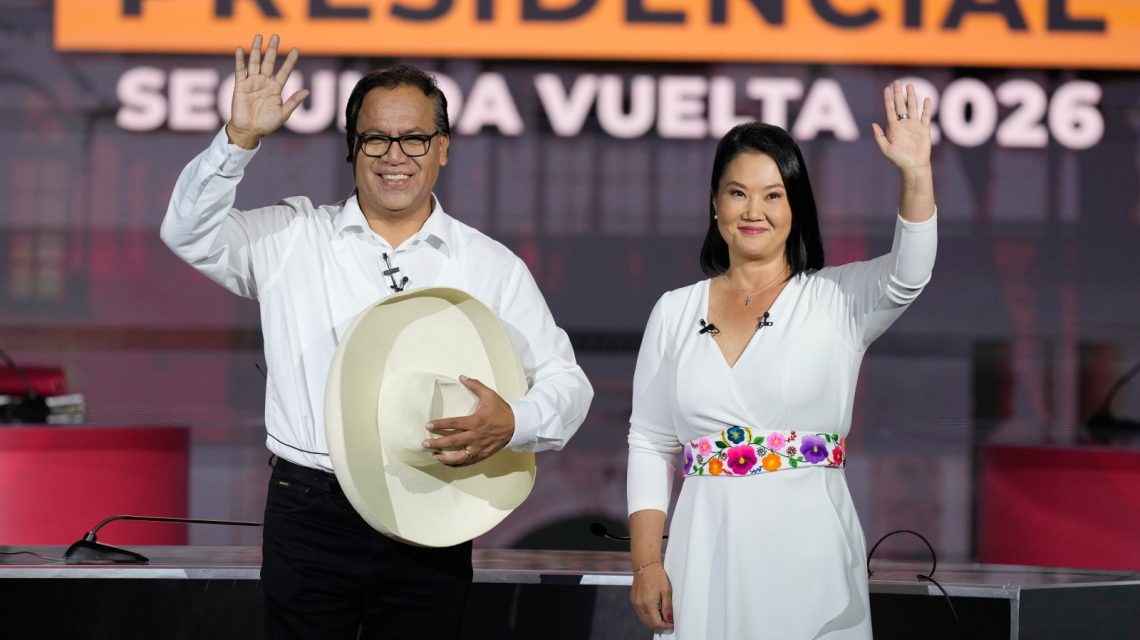
The presidential race in Peru is intense and closely contested. Right-wing candidate Keiko Fujimori and left-wing candidate Roberto Sánchez are neck and neck, even as 97 percent of votes have been tallied. The impact of overseas ballots, particularly those from Florida, may be decisive.
Current Vote Standings
With most votes counted, Sánchez holds a slight lead of 50.05 percent over Fujimori’s 49.94 percent. This advantage is fragile, especially since a significant portion of the overseas vote supports Fujimori.
“It could happen (unprecedented in our history) that Roberto Sánchez receives more votes in national territory but loses the election, because in the total (including votes from abroad), Keiko Fujimori surpasses him,” wrote political analyst Jeffrey Radzinsky on X.
Voting Patterns Overseas
The Peruvian National Office of Electoral Process reports that 62.5 percent of the overseas votes favor Fujimori, accounting for 132,004 votes, while Sánchez received 79,327 votes. About 1.2 million Peruvians living abroad were eligible to participate in this election’s second round.
In the United States, where the largest demographic of overseas Peruvian voters resides, 76.56 percent favored Fujimori. Florida, home to the largest group of Peruvian-Americans, shows even greater support for Fujimori. In Miami, she leads with 88.79 percent of the votes.
Factors Influencing Diaspora Support
Many Peruvians abroad left due to the instability during the 1980s and 1990s, a period under the rule of Keiko’s father, Alberto Fujimori. Despite controversies surrounding his regime, many in the diaspora credit him for restoring order through policies like economic liberalization and opposition to left-wing insurgents.
On the other side, Sánchez’s alliance with former President Castillo, removed from office in 2022, adds a shadow of doubt. Castillo’s controversial tenure and downfall impact Sánchez’s campaign.
Potential Influence of Overseas Votes
While overseas votes represent a smaller electoral fraction and have historically had slower turnouts, they may prove pivotal in a race as close as this one. As of the latest reporting, 67.47 percent of overseas votes have been counted, which could still affect the outcome.
In Peru itself, 98.21 percent of votes are counted, where Sánchez maintains a slim advantage. Both candidates show commitment to respecting the election’s results, with Sánchez voicing the importance of a peaceful process and Fujimori advocating for patience.
The election results are expected to be officially announced by mid-July. The upcoming presidential inauguration is set for July 28.
Implications of the Election Outcome
Regardless of the election’s winner, challenges are anticipated. According to Dr. Christopher Sabatini from Chatham House, Sánchez may face a divided Congress, while a victory by Fujimori could provoke political tensions due to her party’s past strategies.
 The Trump Team’s Challenge to the Military Leadership
  Maryland First State to Restrict Electronic Pricing in Grocery Stores
  British Police Arrest Man Suspected of Terror Plot
  Activists Push for Nationwide Ban on Child Marriage in the U.S.
  Democratic Hopes and Historical Warnings in 2026 Senate Race
  Republicans Face Challenges Amidst Cost of Living Concerns