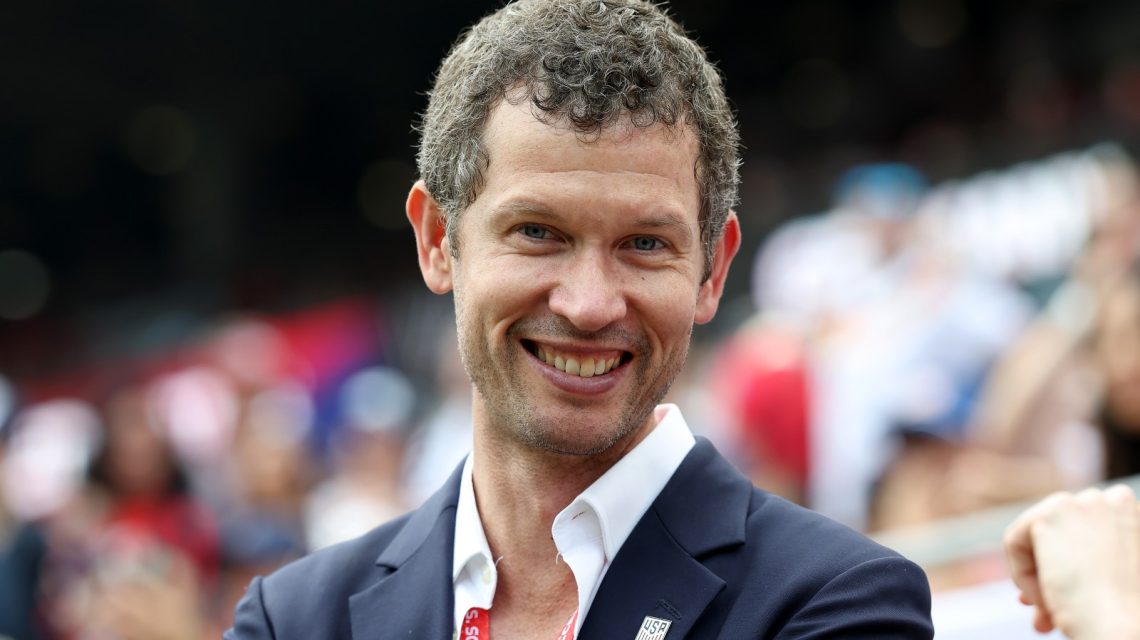
Sports have the power to mark memories in your life. You never forget your first game or when your favorite team wins big. With the 2026 FIFA World Cup on the horizon, JT Batson, CEO and Secretary-General of the U.S. Soccer Federation, recalls his early days on the soccer pitch. In an interview with Newsweek for the Newsmakers Impact series, Batson shared, “My earliest memory was playing at the YMCA in Augusta, Georgia. I remember the hot jerseys, as jersey technology wasn’t great back then. Growing up in Augusta, soccer wasn’t well-known, so it involved a lot of chasing the ball. However, Augusta College, now Augusta University, had a soccer team with players from around the world, and they became our coaches, teaching us ‘real soccer.’
Batson’s experiences are more than anecdotes; they shaped his current work. “Growing up, I played baseball, basketball, tennis, golf,” he said. “I stuck with soccer because I had better coaches, found it more fun, and my friends played it. The coaches’ impact was unforgettable.” The upcoming World Cup offers another chance to foster American soccer culture.
Hosting the 2026 World Cup with Canada and Mexico sets a backdrop for U.S. soccer ambitions. Batson emphasizes ensuring the men’s team is primed for success. Yet another priority aligns with his early experiences. “We want this World Cup to inspire millions more Americans to play soccer,” Batson stated. Soccer needs little to play; a pickup game requires only a ball. But in the U.S., basketball often dominates public spaces and attention. Batson noted, “Neighborhood parks all have basketball hoops, encouraging more kids to play basketball. Through the Soccer Forward Foundation and our Soccer at Schools initiative, we aim to bring soccer to every U.S. school over the coming years.” With Bank of America partnerships and initiatives like “Places to Play,” U.S. Soccer strives to make soccer accessible nationwide.
“For soccer to be everywhere, we must truly be everywhere,” Batson explained. “Kids play on blacktop surfaces, old tennis courts, high school gyms, and beautiful suburban fields. Success depends on being where kids are and using big events like this summer to inspire them.” U.S. teams reflect America’s diversity, fostering inclusivity in soccer.
While formal coaches might be absent in parks and schoolyards, guidance helps support the generation. Batson noted, “Coaching is crucial at U.S. Soccer. We’re responsible for coaching education nationwide. Whether aiming to coach professionally or starting as a parent, resources are available at ussoccer.com.” U.S. Soccer invests in coaching education, recognizing the need for great coaches to achieve soccer goals.
Access and Affordability
A significant thread for the 2026 World Cup has been access and affordability. Criticism surrounds ticket prices and transportation costs, potentially deterring average fans. Even full stadiums can’t accommodate all enthusiasts. Batson stressed making the World Cup accessible, noting tens of millions can’t attend. He queried, “How do they engage in FanFest or community events nationwide?” U.S. Soccer aims to connect fans without major expenses. Collaborating with local governments and events seeks to integrate fans with the World Cup.
“99.9% of World Cup followers watch on TV due to billions globally caring about this competition,” Batson explained. “Our focus is ensuring fans, whether in host cities or nationwide, feel part of the tournament.” U.S. Soccer’s initiatives like launching jerseys with Nike, selling merchandise, and engaging fans in communities help sustain engagement beyond stadiums.
Producing on the Pitch
With the U.S. hosting a World Cup, mere participation isn’t enough; results matter. “We prioritize soccer success, aiming to win World Cups,” Batson stated. “We’ve won four times on the women’s side, aiming for a fifth in Brazil. Success requires more players, better pathways, and infrastructure investments.” Hiring top coaches Mauricio Pochettino and Emma Hayes aligns with U.S. Soccer’s strategic goals. Batson described them as world-class leaders championing youth development and long-term organizational success.
As Batson articulated, “Success means tens of millions of Americans believing in the team and being proud of their performance. Our fan base is sophisticated, and they’ll be proud of this team. Beyond attendance records, we aim for the World Cup’s legacy to span years, inspiring more players and sustaining success.” Transformative impacts of the World Cup encompass national teams and youth soccer growth.
 Nick Saban’s Comments on ESPN Spark Debate Over College Sports Regulations
  Freddy’s American Adventure: From Soccer to College Football
  Brock Purdy’s Impressive Start in the 2026 NFL Season
  The Value of Retaining Miles McBride for the Knicks
  Penguins Make History with Dominant Season Opener
  Sonny Gray Expresses Frustration After Game Against Yankees