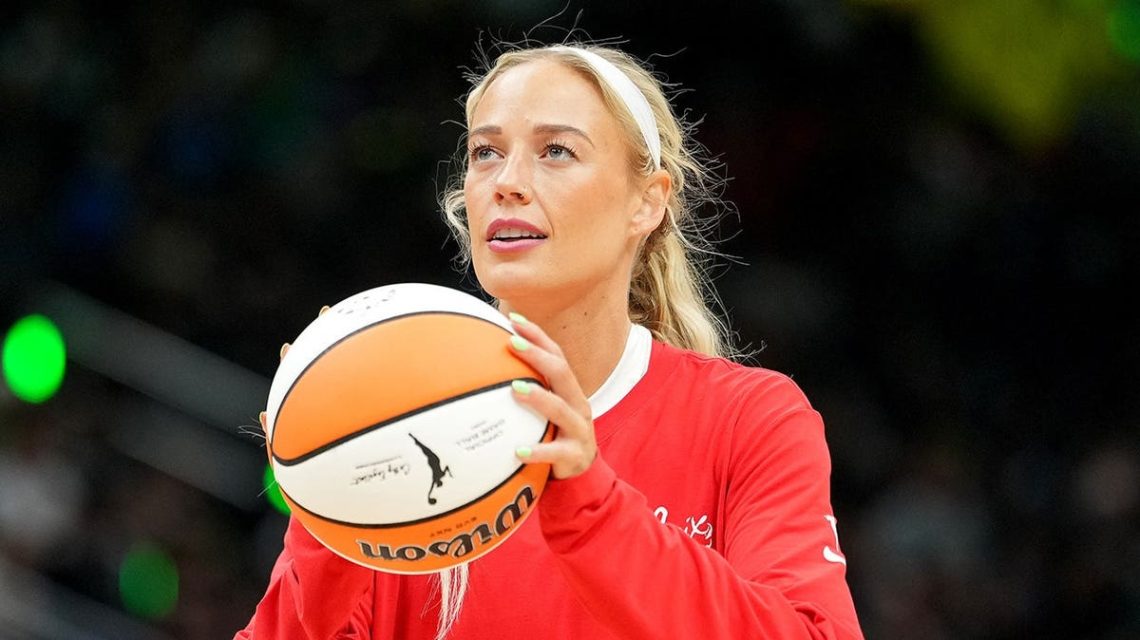
Sophie Cunningham recently voiced her opinion on a sensitive issue that women have been encouraged to speak about for generations: fairness in women’s sports. Her stance sparked a broader conversation beyond the sport itself.
For decades, women have been urged to express their thoughts and stand against unfairness without fear. But Cunningham’s comment that women’s sports should cater to biological females has ignited controversy. She expressed an opinion shared by many women privately, that while supporting transgender people, women’s sports must prioritize biological sex.
Women have long struggled for their voices to be valued. When it comes to sports, some hesitate to voice concerns about how biological differences impact athletic competition. Women’s teams, scholarships, and records exist to address these differences.
“The separation was not incidental. It was the point.”
This isn’t a fringe viewpoint. Over two dozen U.S. states have passed laws restricting transgender participation in women’s sports. The Supreme Court upheld such laws in Idaho and West Virginia, supporting eligibility based on biological sex. As a result, this perspective is legally recognized in much of the country.
Yet, when women like Cunningham express these views publicly, they face backlash. Criticism in the WNBA and protests against Cunningham’s team, the Indiana Fever, are examples. This controversy has grown enough to push the league to address the issue of transgender athletes; however, the resulting silence among women speaks volumes.
Women often question these issues privately, supporting transgender individuals’ rights but maintaining that sports should consider biological differences. Publicly, though, many remain silent out of fear of negative reactions.
This self-censorship arises not from formal rules but from social pressure. Observing the consequences faced by others can lead people to avoid speaking up. Teenagers, in particular, are highly attuned to these cues, learning what opinions are acceptable to express.
In the past, women were urged to accommodate others, often at personal cost. Feminism countered this, encouraging women to voice their opinions boldly. Now, some find themselves holding back on issues like women’s sports. They question the fairness of current rules and the role of biological sex in competition but fear the repercussions of public discussion.
“The vocabulary may be new, but the instruction is old: Stay quiet.”
Women needn’t agree on transgender athletes’ inclusion, nor should they. Those who prioritize inclusion alongside those who advocate for eligibility based on sex have the right to speak up. Respecting transgender people doesn’t mean ignoring the conflicts or questions present in these discussions. Women, too, have a significant stake in the conversation.
Cunningham spoke up when she saw something unfair. Despite backlash, she stood by her statement. While disagreements with her views are valid, the reactions she faced illuminate why many women remain silent, despite long fighting for their voices to be heard.
 Nick Saban’s Comments on ESPN Spark Debate Over College Sports Regulations
  Freddy’s American Adventure: From Soccer to College Football
  Brock Purdy’s Impressive Start in the 2026 NFL Season
  The Value of Retaining Miles McBride for the Knicks
  Penguins Make History with Dominant Season Opener
  Sonny Gray Expresses Frustration After Game Against Yankees