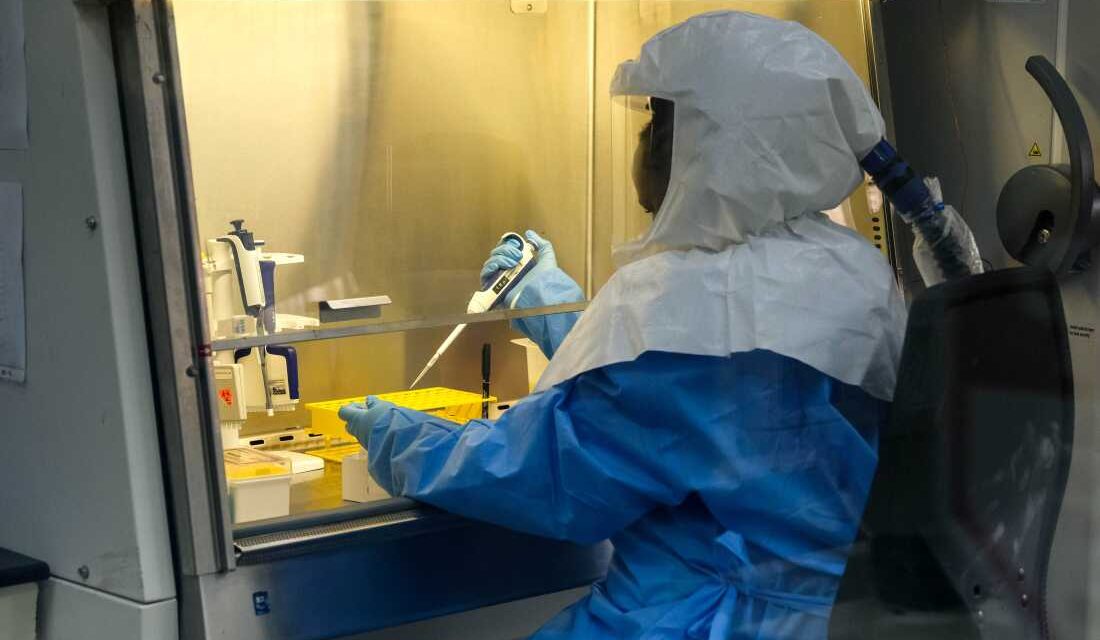
Inside the Viral Hemorrhagic Fever Laboratory at the Uganda Virus Research Institute in Entebbe, Uganda, Sophia Mulei, a laboratory technologist, handles control samples. This lab plays a key role in testing Ebola samples, crucial for the Democratic Republic of Congo’s (DRC) recent health scare.
Early Concerns and Initial Testing
In mid-April, health officials in the DRC noticed suspicious deaths in the northeast possibly caused by Ebola. Samples were swiftly sent to Bunia for testing. Jean-Jaques Muyembe, the general director of DRC’s national biomedical research center, INRB, stated that initial samples were tested on April 30 using GeneXpert machines. These tests returned negative results for Ebola. Even after further testing, results remained negative. It was only after samples reached Kinshasa that they tested positive for a rare Ebola species, Bundibugyo.
The delay, over a month long, allowed the outbreak to escalate. About 1,100 suspected cases surfaced, highlighting shortcomings in local diagnostics. Caia Dominicus from the International Pandemic Preparedness Secretariat attributed the sluggish initial response to inadequate ground diagnostics.
Improving Diagnostic Capacity
Progress has been made since then with diagnostic capabilities seeing substantial improvement. Abdirahman Mahamud, from the World Health Organization, cautions that while current testing has caught up slightly, it remains insufficient. The CDC projects that cases might hit 20,000 by August. Additional diagnostic surge may be necessary if transmissions expand further.
The RADI-One machine has notably enhanced diagnostics. Simplified to require less training, it detects Bundibugyo and is operational even in smaller, remote clinics like those in Mongbwalu. Presently, seven labs and a mobile unit facilitate testing across northeastern DRC. In Bunia, larger labs manage over 100 samples daily, ensuring quick turnaround.
Africa’s CDC plans to supply up to 50 additional RADI-One units by June, but this will take time. Talks with KH Medical, the South Korean manufacturer, are underway. Training staff for alternative testing systems is also necessary.
Challenges of Sample Transport
Sample transportation remains a bottleneck. Some regions are difficult to access, delaying sample delivery for days. Conflict, displacement, and community distrust exacerbate these logistical issues.
The Potential of Rapid Tests
Rapid tests may help improve response times. Similar to those used during COVID, they offer results in minutes instead of hours. Though less sensitive, they can help contain outbreaks by identifying cases swiftly. Rapid tests could also ensure safe burial practices, mitigating transmission risks when handling the deceased.
However, rapid tests specific to Bundibugyo aren’t yet approved. Existing tests for common Ebola species show promise, but field efficacy remains uncertain. Developing Bundibugyo-specific rapid tests might take a few months, according to Robert Garry from Tulane University. Ranu Dhillon, a global health physician, believes it’s worthwhile. Validating existing tests could provide quick insights.
A robust diagnostic infrastructure remains key. Though frequently undervalued compared to vaccines, diagnostics enable crucial health decisions. Dominicus stresses that lacking these diagnostics risks poorly navigating outbreaks. Early diagnostic abilities could have lessened this outbreak’s impact, highlighting the ultimate importance of preparedness.
 Early Detection of Atherosclerosis and Heart Disease Prevention
  Church Attendance Linked to Increased Sexual Satisfaction for Married Couples
  Dining with Loved Ones May Benefit Blood Sugar Levels
  Urgent Need for Action in East Africa’s Food Crisis
  Facing Terminal Illness: Embracing Life’s Moments
  Eating with Partners May Impact Blood Sugar Regulation